
Spotlights
Floodlights for high-intensity work and outdoor lighting
Floodlights for sites, yards, garages, or workshops provide concentrated light where standard lamps are insufficient. They are used in construction, renovation, installation, maintenance, perimeter security, and the lighting of entrances, warehouses, and garden areas. The product range includes solutions for fixed installation, portable use, emergency lighting, and tasks requiring high brightness, a durable housing, and convenient adjustment of the light direction.
Modern floodlights primarily use LED light sources, as they provide a high luminous flux with lower energy consumption and less heat generation compared to older halogen models. When selecting a floodlight, factors such as wattage, lumens, beam angle, color temperature, power supply type, dust and moisture protection rating, housing, and mounting options are all important considerations.
Types of floodlights by application
Permanent-mount floodlights are used for facades, yards, parking lots, storage areas, and entrance zones. They are typically mounted on a wall, metal structure, or stand and feature an adjustable bracket for beam direction. For outdoor use, models with good IP protection, durable glass or a diffuser, an aluminum housing, and reliable cooling are preferred.
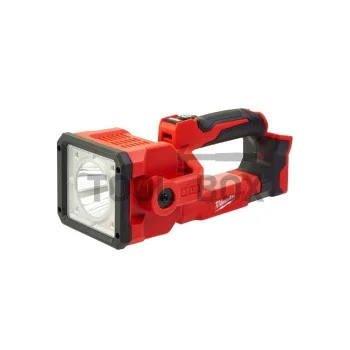
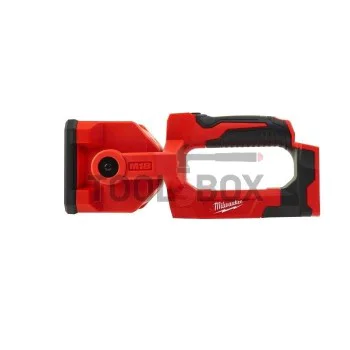
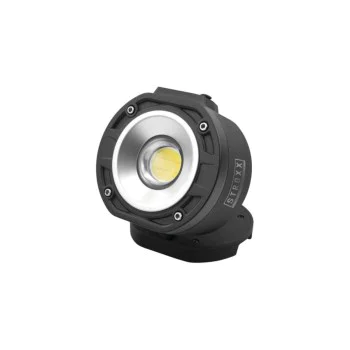
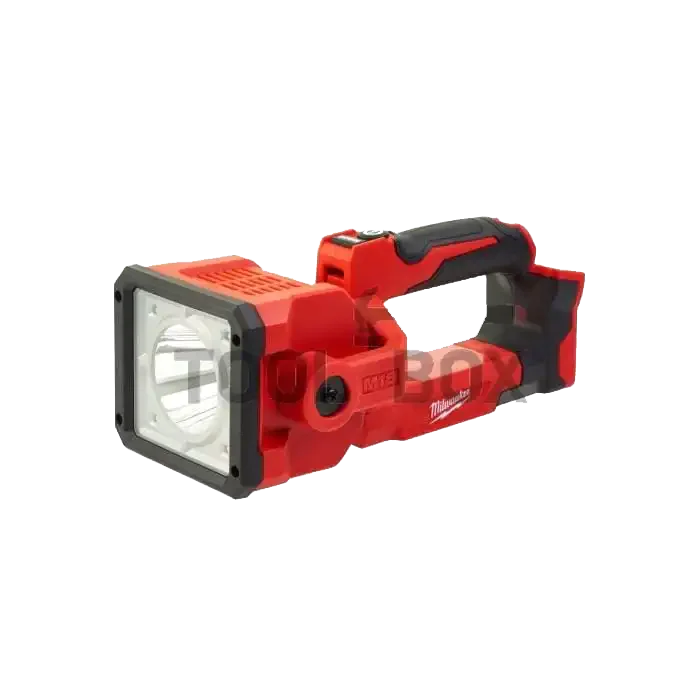
Portable floodlights are convenient for repairs, installation work, working under a vehicle, finishing tasks, and temporary sites without permanent lighting. Some are corded, while others run on a rechargeable battery. Battery-powered models are valuable for on-site service, emergencies, gardening, or locations without access to the electrical grid. Floodlights with a stand or tripod provide a higher light position and illuminate a larger area without causing glare at close range.
| Type | Practical Use | Purchase criteria |
|---|---|---|
| LED mains-powered floodlights | Facades, yards, warehouses, work sites | Luminous flux, IP rating, housing, cable, and mounting bracket |
| Battery-powered floodlights | Repair, maintenance, emergency operations, work away from power outlets | Battery capacity, runtime, charger, lighting modes |
| Floodlights with stands | Construction, painting, installation, lighting of larger areas | Stand height, stability, adjustable angle, folding and portability |
| Motion-sensor floodlights | Entrances, walkways, garages, outdoor areas | Sensor range, on-time, sensitivity adjustment |
How to determine the required power and luminous flux
For work lights, lumens are more indicative than watts because they describe the actual brightness. For a small area around a workbench or a car part, a compact model with a focused beam is sufficient. For a room, yard, or facade, a higher luminous flux and a wider beam angle are needed. When mounted at a height, the beam spreads out more, so a more powerful fixture or several smaller spotlights spaced evenly should be chosen.
Color temperature affects comfort and visibility. Neutral white light is good for renovations, painting, installation, and inspecting details because it does not significantly alter colors. Cool white light creates a brighter sensation outdoors and for security lighting. For courtyards and entryways, some customers prefer softer light that doesn't strain the eyes when passing through.
Power Supply, Installation, and Protection
Corded floodlights are suitable for locations with constant access to the electrical grid and continuous operation. Key considerations include cable length and gauge, plug type, mounting method, and heat dissipation. Battery-powered floodlights offer freedom of movement and are valuable for mobile teams, tradespeople, mechanics, and homeowners who work in various locations.
For outdoor installation, the IP rating indicates protection against dust and water. For exposed facades, awnings, gardens, and temporary construction sites, a housing designed for weather exposure is required. The bracket must hold the body securely in place after adjustment, and the screws and cable connections must be properly tightened. For models with a motion sensor, the detection angle, activation distance, and low-light sensitivity settings are important.
Materials, Safety, and Maintenance
The floodlight's housing affects cooling, durability, and weight. Aluminum housings dissipate heat more effectively and are preferred for higher-power LED models. The diffuser or protective glass shields the light source and helps ensure even light distribution. For portable floodlights, rubberized grips, a comfortable handle, a stable base, and a hook or magnet are practical features for maintenance work.
Safe operation begins with proper installation and inspection of cables, plugs, chargers, and seals. Do not direct a strong beam directly into the eyes, protect the body from impact, and do not cover the cooling vents. When working outdoors, cables must be protected from kinking, water, and being run over by machinery. Periodic cleaning of the lens and housing maintains good illumination and reduces dust buildup around the cooling fins.
Floodlights for professional and home use
Floodlights are essential for construction crews, installers, mechanics, and technicians, as well as for maintaining a house, garage, yard, or vacation home. For professional use, durability, continuous operation, easy portability, replaceable batteries in compatible systems, and precise light adjustment are highly valued. For home use, compact LED models are often sufficient for the yard, entryway, basement, home repairs, or seasonal gardening activities.
Browse the selection at Toolsbox.bg and choose spotlights based on the installation location, required brightness, power source, and operating conditions. This way, you'll get practical lighting for renovation, construction, service, workshops, and outdoor spaces, tailored to the specific tasks at hand.