
Telferi
Hoists for lifting and moving heavy loads
Hoists are used for the controlled lifting, lowering, and positioning of engines, gearboxes, assemblies, metal parts, and other heavy equipment in auto repair shops, garages, warehouses, or workshops. They reduce the physical strain on the operator and provide better control during installation, removal, and repair work, where precision of movement is directly linked to safety.
The selection includes manual, chain, lever, and electric lifting mechanisms designed for different load capacities, working heights, and load intensities. During service work, the hoist is a practical aid for removing heavy assemblies from a vehicle, installing parts in awkward positions, lifting metal structures, or servicing machinery. For workshops and small production areas, these devices facilitate daily operations where the load must be moved smoothly, without sudden jerks and without unnecessary effort.
Types of hoists and their applications
Different hoists differ in their drive type, construction, control, and operating range. Manual models rely on a chain or lever mechanism and are convenient for infrequent use, mobile repairs, or locations without a power supply. Electric models save time during more intensive work, ensure smooth movement, and are preferred for serial operations, warehouse operations, and service areas with a fixed lifting point.
| Type | Practical Application | Distinctive features |
|---|---|---|
| Manual chain hoist | Lifting of motors, beams, metal workpieces, and service components | Does not require electricity, operates via a manual chain, convenient for controlled slow movement |
| Lever hoist | Tightening, pulling, and positioning of loads during installation and repair | Compact housing, lever-operated, practical in confined spaces |
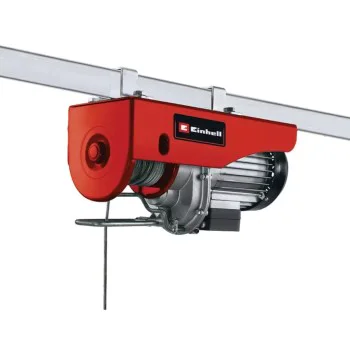
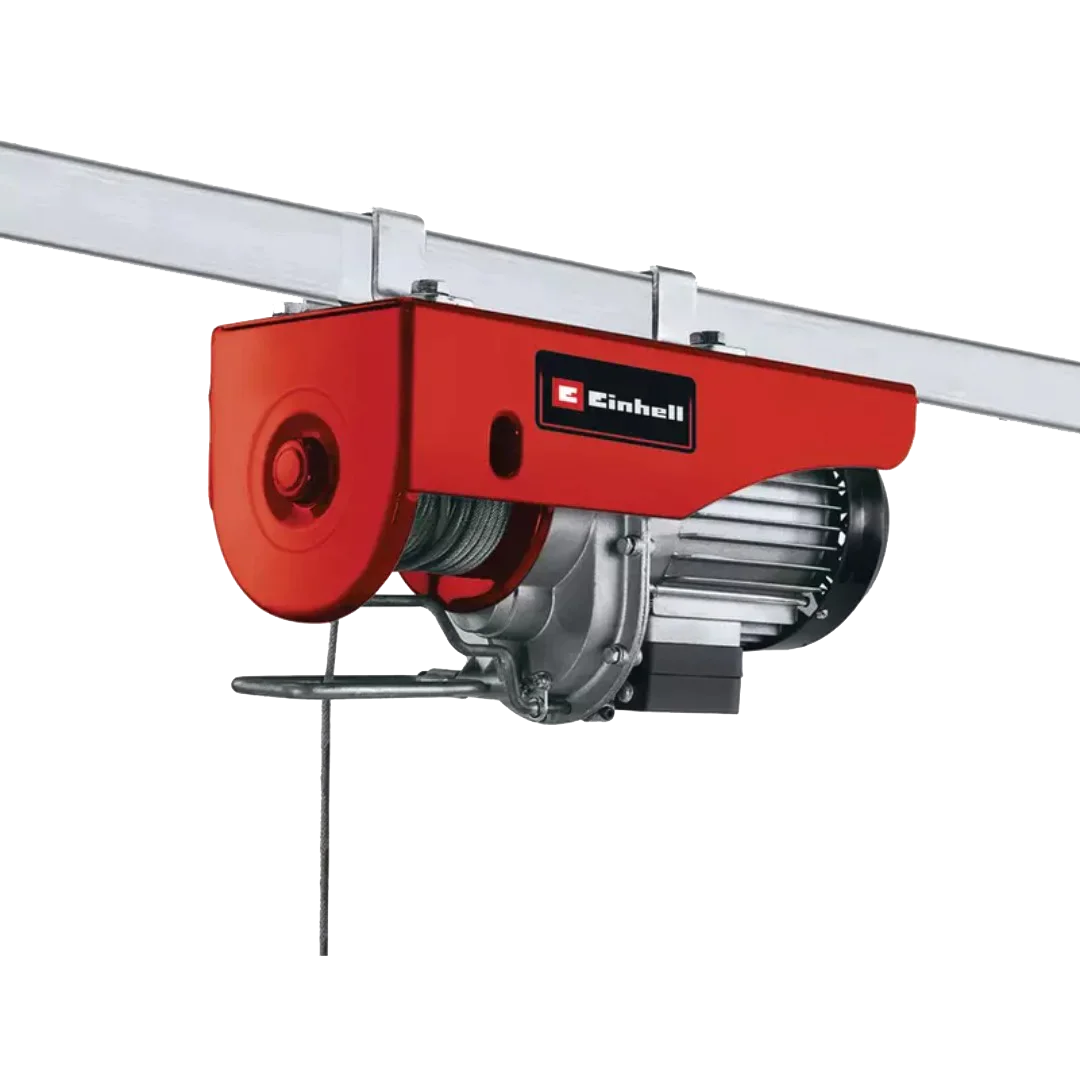
| Electric hoist | Frequent use in a service shop, warehouse, or work area with a fixed point | Electric motor drive, push-button control, smooth lifting |
| Trolley hoist | Horizontal travel along a beam after lifting the load | Combines vertical movement with travel along a support rail |
How to select the right mechanism for the job
When selecting a hoist, the first consideration is the load capacity. It must correspond to the actual weight of the parts to be handled, with a reasonable margin for safe operation. For an auto repair shop, these include engines, transmissions, axles, large wheels, frames, and other heavy components. For a workshop or warehouse, the load includes metal profiles, machines, palletized items, or repair equipment.
The next parameter is the lifting height. This depends on the ceiling, the supporting structure, the workbench, the pit, or the lift around which the equipment will be used. In low-ceilinged spaces, compact models with a short body provide a greater working stroke. In areas with beams and high-ceilinged warehouses, a longer chain or rope allows for more convenient access to the load.
The drive system also affects the pace of work. Manual hoists are easy to transport and operate, while electric ones require a suitable power source and installation space. For electric models, consider power, control type, cable length, lifting speed, and the ability to mount to a beam, stand, or trolley. For manual models, the chain length, lever comfort, body weight, and smoothness of the mechanism are important.
Installation, Support Structure, and Compatibility
The hoist operates safely only when suspended from a sturdy support point designed for the corresponding load. In industrial settings, this is often a metal beam, gantry crane, cantilever rack, or special frame. The attachment must match the hook, shackle, trolley, or other connecting component. For models that run along a beam, the flange width, profile shape, and permissible load on the rail must be considered.
Compatibility with accessories is also important. Slings, chains, hooks, clamps, and crossbeams must be suitable for the weight and shape of the load. When handling engines and assemblies, multiple lifting points are often used to maintain the correct angle during removal or installation. This reduces the risk of twisting, impact on the car body, or uncontrolled rotation.
Safe Operation and Maintenance
Working with heavy loads requires attention to every part of the mechanism. Before loading, perform a visual inspection of the hooks, chain or rope, the body, the locking elements, and the control panel on electric models. The load must be attached centrally, without pulling to the side and without sudden movements. The operator must stand outside the area beneath the load, and bystanders must maintain a safe distance.
Maintenance extends the hoist's service life. For chain models, check for wear, deformation, and contamination of the links. For electric hoists, pay attention to the cable, control buttons, limit switch, brake, and the condition of the mounting. Regular cleaning of dust, oil, and metal shavings prevents the mechanism from jamming and ensures smooth operation.
Hoists for auto repair shops, garages, and workshops
Hoists are a valuable part of service equipment when repairs involve heavy components and precise positioning. In auto shops, they are combined with cranes, engine stands, lifts, workbenches, and hand tools. For home garages, the more compact manual models allow for safe lifting when repairing a car, motorcycle, trailer, or metal structure. For professional use, electric models provide higher productivity during repetitive operations.
When selecting a hoist, consider the actual load, installation space, working height, frequency of use, and necessary lifting accessories. Browse the options at Toolsbox.bg and choose a hoist suited to the tasks in your service shop, workshop, or garage.