
Hydrophore pump for water
Pressure water pump for a reliable water supply at home, in the garden, and on the job site
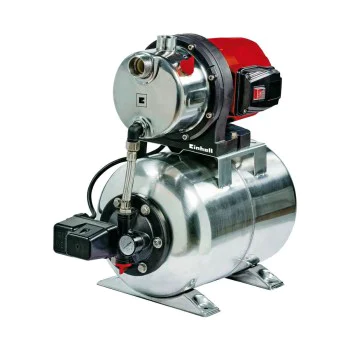
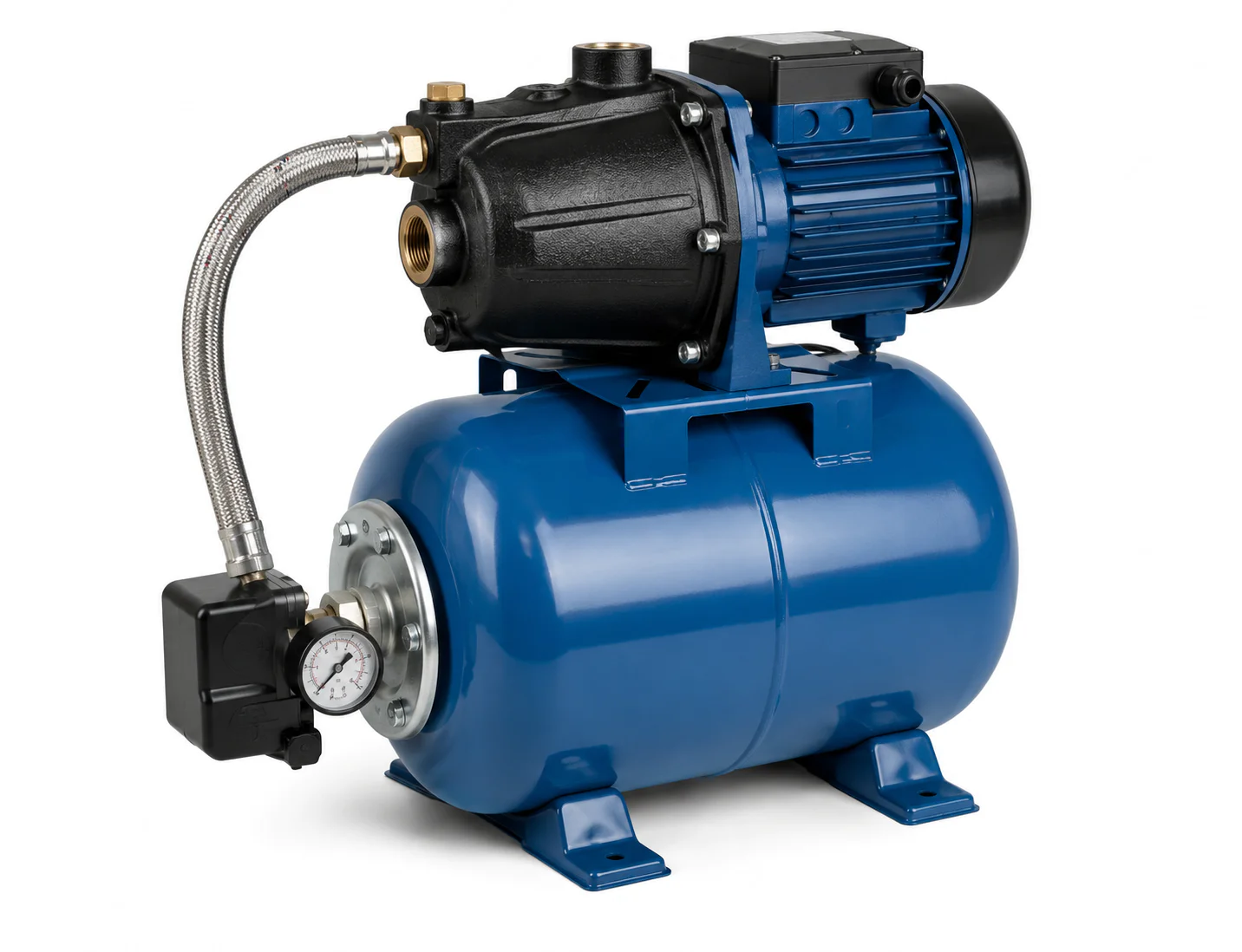
A pressure booster pump is a practical solution for supplying pressurized water from a well, borehole, tank, or cistern to domestic, garden, or service installations. It combines a pump, a pressure tank, a pressure switch, and a pressure gauge to maintain a steady water flow to faucets, plumbing fixtures, irrigation lines, or water-powered machinery. This allows water to reach the point of use with less manual intervention and better pressure control.
This section features booster pumps with varying power, flow rate, head, tank capacity, and connection sizes. The differences between models are critical to the system's operation: a small house with one bathroom, garden irrigation, and powering multiple consumers require different specifications. A precisely selected pressure booster pump reduces frequent motor cycling, protects the system from sudden pressure changes, and facilitates daily water use.
What do pressure booster pumps consist of?
A pressure booster pump typically consists of an electric pump and a diaphragm expansion tank. The pump draws water from the source, and the tank holds part of the volume under pressure to prevent the motor from starting every time a faucet is briefly opened. The pressure switch controls the on/off cycle, and the pressure gauge displays the current pressure in the system.
Among the models, there are self-priming variants, pumps with cast iron or stainless steel housings, kits with different tank capacities, and solutions for domestic water supply or irrigation. Some booster pumps are designed for compact installations, while others are better suited for higher flow rates and multiple water draw-off points. When working with water from a well or reservoir, the suction depth, water purity, and pipeline length are also important factors.
Applications of a pressure booster pump
A pressure booster pump is used in single-family homes, vacation homes, farm buildings, gardens, small workshops, and construction sites where there is no permanent water supply or the pressure is insufficient. It connects to a water source and supplies water to indoor plumbing, outdoor faucets, drip irrigation systems, hoses, showers, toilet tanks, or other consumers.
For the garden, flow rate is more important, as hoses and sprinklers require a steady supply of water. For a home, a good balance between pressure, consistent performance, and sufficient tank capacity is sought. For service or construction environments, the focus is on the durability of the housing, ease of maintenance, connection sizes, and the ability to work with filters and a check valve.
How to choose the right model
Flow rate, head, and pressure
When selecting a booster pump, start by determining the number of outlets to be supplied and the distance between the water source and the end users. Flow rate indicates how much water passes through per unit of time, while head describes the pump's ability to overcome elevation and pressure losses in the pipes. For longer runs, more bends, and greater elevation changes, a more powerful model is needed.
Expansion tank volume
The pressure tank affects the frequency of pump starts. A smaller tank saves space and is convenient for confined areas, while a larger tank reduces the number of starts and protects the motor during more active water use. For a home with multiple consumers, a larger capacity ensures smoother operation of the system.
Tank Material and Operating Environment
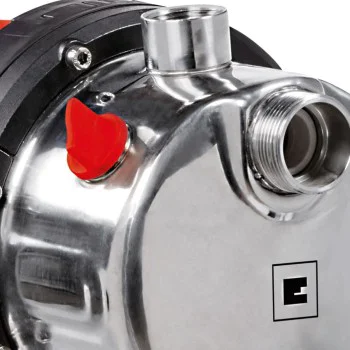
The housing can be made of cast iron, stainless steel, or another durable material. Stainless steel options are preferred in more humid environments, while cast iron is valued for its stability and reliable performance in stationary installations. For water containing sand or mechanical particles, a filter is required before the pump, as the standard pressure booster pump is designed for clean or slightly contaminated water, not for muddy liquids.
| Application | What to Look For | Good choice |
|---|---|---|
| House or villa | Pressure, tank capacity, noise level, number of consumers | A pressure booster with sufficient head and a tank with a larger capacity |
| Garden and watering | Flow rate, suction height, hose compatibility | Model with higher water flow and a stable motor |
| Tank or cistern | Water purity, filter, check valve | Kit with easy connection to existing plumbing |
| Workshop or service center | Operating mode, housing, service access | More robust design with convenient maintenance |
Installation, compatibility, and maintenance
A pressure booster pump works best with properly sized pipes, a stable foundation, and well-sealed connections. The suction line should be short, straight, and protected from air ingress. The check valve keeps water in the system, and the filter protects the impeller and seals from solid particles. The electrical supply must match the motor specifications, and the plug and cables must be protected from moisture.
Maintenance includes periodically checking the pressure in the diaphragm tank, cleaning the filter, inspecting for leaks, and checking the pressure switch. For seasonal outdoor use, the pump should be drained and stored or protected from freezing. This ensures that the pressure booster pump maintains its performance characteristics and reduces the risk of damage during the active season.
Accessories for safer operation
A suction hose, check valve, filter, fittings, quick connectors, pressure gauge, pressure switch, or spare diaphragm are often added to the pressure booster system. These accessories help ensure proper connection and easier maintenance. When replacing an old pump, pay attention to the threads, pipe diameter, available space, and installation direction to ensure the new model is compatible with the existing water line.
At Toolsbox.bg, you can browse various options and select a booster pump based on flow rate, head, power, tank capacity, and application type. Select a model that matches your actual installation, planned load, and operating conditions to ensure a stable water supply for your home, garden, or work site.