
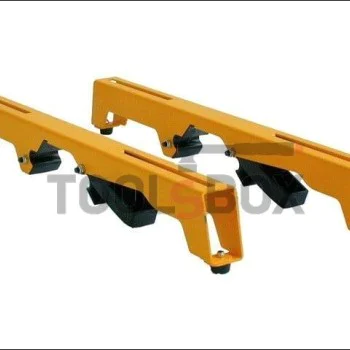

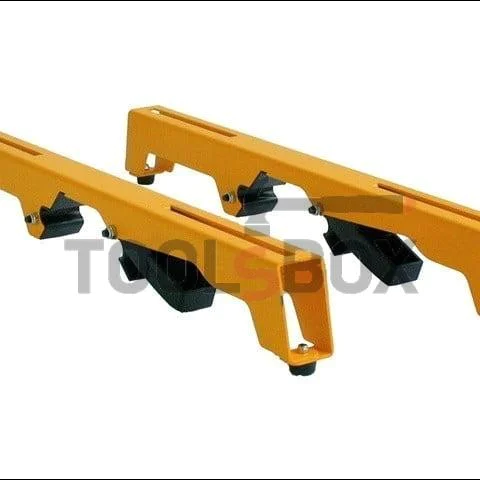
Beam for engine
Engine mount for stable support during service repairs
An engine support beam is specialized automotive service equipment that holds the engine in a controlled position during work on the transmission, shock absorbers, clutch, front axle, or other components around the powertrain. It is placed across the fenders or sturdy support points in the engine compartment and supports part of the weight via chains, hooks, pins, or lifting screws. This gives the mechanic better access to the repair area without the engine sagging, twisting the mounts, or straining adjacent components.
In auto repair work, the engine support beam is used in operations where the engine's lower mount is temporarily released. This is typical when removing the transmission, replacing the flywheel, repairing the clutch, replacing an engine mount, working on the subframe, or servicing the drivetrain. For demanding DIY enthusiasts, this type of mount also offers significant practical benefits when repairs require secure support and more space under the vehicle.
What Is an Engine Support
An engine support stand typically features a metal support structure, adjustment elements, support legs, and attachment points. The support structure is positioned above the engine compartment, and the adjustable screws allow for precise lifting, holding, or fine-tuning of the engine's position. On many models, the legs can be adjusted lengthwise to rest on stable parts of the body without damaging painted surfaces or plastic components.
The differences between the various models are most evident in their load capacity, spread width, number of support points, hook type, and adjustment method. The more robust versions are suitable for service shops where various vehicles are serviced and work is performed for extended periods. The more compact models are practical for garage use, provided their specifications match the engine weight and vehicle width.
Main Applications in the Auto Shop
An engine lift is used when a jack or a stand under the oil pan is not convenient enough or poses a risk of deformation. When working from below, it frees up space around the transmission and subframe, which facilitates the removal of fasteners, half-shafts, the starter, mounts, and other components. In front-wheel-drive vehicles, such a mount is highly practical, as the engine and transmission are often positioned transversely and access is limited.
- Clutch and transmission replacement-the engine remains stable while the transmission is separated from the engine block.
- Replacing bushings-the unit can be held at the correct height when the support is released.
- Subframe work-the beam supports the weight when lower mounts and load-bearing components are removed.
- Drivetrain service-provides better access when servicing half-shafts, the flywheel, the starter, or peripheral components.
Selecting an Engine Mounting Beam Based on the Vehicle and Repair
When selecting an engine mount, pay attention to several practical parameters. The load capacity must cover the weight of the engine with a margin for safe operation. The working width is essential for wider vehicles, vans, or models with a large engine compartment. Adjustable supports are useful when the shape of the fenders and the location of the mounting points vary between different vehicles.
The type of attachment also matters. Chains are sturdy and allow attachment to factory engine lugs, while hooks and threaded studs provide finer height adjustment. For repairs that require slight tilting of the engine, two independent lifting points provide more precise control. If the equipment will be used in a busy workshop, pay attention to the profile thickness, the quality of the threads, the stability of the legs, and the ease of adjustment with hand tools.
Materials, Construction, and Compatibility
The load-bearing structure of an engine stand is typically made of steel profiles, as the load during service work is constant and requires good resistance to bending. A protective coating reduces the risk of corrosion, while rubber or cushioned support elements protect the vehicle's contact points. The adjustable sliders and threaded mechanisms must move smoothly, without play, which would hinder precise positioning.
Compatibility is determined by the width between the supports, the maximum load, the adjustment height, and the availability of attachment points on the engine. On some vehicles, the factory lifting lugs are easily accessible, while on others an additional strap, chain, or suitable bolt is required. Proper preparation before lifting reduces the risk of improper loading on hoses, cables, plastic covers, or other sensitive parts.
Safe Operation and Maintenance
An engine sling should only be placed on sturdy load-bearing areas. Before loading, inspect the supports, chains, hooks, threads, and locking elements. Apply the load smoothly, without sudden movements, and the vehicle must be secured with appropriate stands when working underneath it. Do not rely on a hydraulic jack as the sole support during prolonged repairs.
After use, clean the threaded parts of dust, oil, and metal particles. Lightly lubricating the screws maintains smooth adjustment and reduces wear. If there are visible deformations, cracks, damaged welds, or worn hooks, the equipment should not be used until the affected parts have been inspected and replaced. This ensures that the engine support remains a reliable tool for repairs that require control over heavy and expensive engine assemblies.
A practical piece of auto service equipment
An engine lift is a sensible investment for service centers, workshops, and garages where maintenance is performed on the transmission, clutch, engine mounts, and front axle. It saves time during disassembly, keeps the unit in a stable position, and provides clearer working access around the vehicle. Browse the offerings at Toolsbox.bg and choose a model with a load capacity, size, and design that meet the needs of your workshop.