
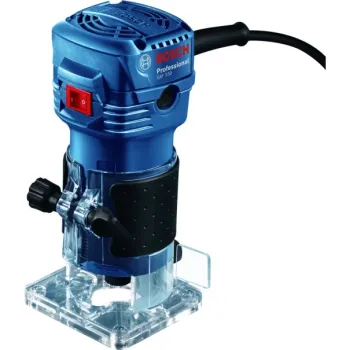
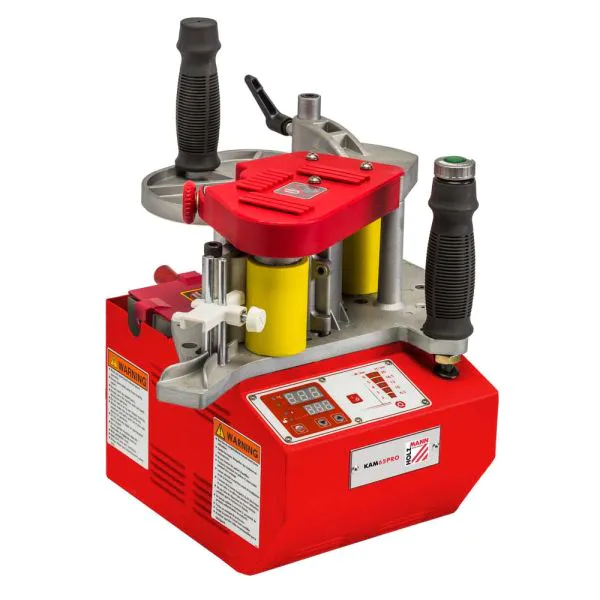
Edging machines
Edge banding machines for precise gluing and finishing of furniture components
Edge banding machines are used for processing panels made of particleboard, MDF, plywood, and solid laminated panels when the exposed edge needs to be protected and finished with edge banding. They are part of the equipment used in furniture manufacturing, furniture repair, workshop finishing operations, and the production of kitchens, wardrobes, office furniture, shelves, countertops, and cabinetry. A well-chosen model facilitates the application of adhesive, the pressing of the edge band, the trimming of excess material, and the creation of a clean, even edge.
When working with furniture panels, edge banding affects both the appearance and the durability of the piece, as well as protection against moisture, dust, and mechanical wear. Edge banding machines are particularly valuable where manual processing is time-consuming or does not yield sufficiently consistent results. They enable repeatability in series of identical parts and better control over pressure, temperature, and the feeding of the edge banding tape.
What do edge banding machines include?
This group of woodworking machines includes manual, portable, bench-top, and stationary solutions for edge banding. Different models can work with PVC, ABS, melamine, and veneer edges, and some versions are designed for straight parts, curved shapes, or combined operations. With more compact machines, the operator guides the tool along the edge of the workpiece or feeds the workpiece manually. With larger machines, feeding is more stable, and processing occurs at a higher throughput.
Models differ in gluing method, glue pot capacity, operating temperature, feed speed, acceptable edge width and thickness, pressure roller adjustment, and the option for post-processing of the edge. Some machines feature a cutting knife, milling units, sanding cycles, or polishing elements. In simpler setups, finishing operations are performed using separate hand tools or additional machines.
Applications in furniture manufacturing and the workshop
The edge banding machine is used in the production of cabinet furniture, doors, drawers, sides, shelves, countertops, and decorative panels. In a small workshop, it saves time on single orders and small batches. In a furniture workshop with a higher volume of work, the machine ensures consistency in the dimensions, appearance, and strength of the edge banding. For installation teams and service operations, portable models are convenient for on-site adjustments, processing non-standard parts, and repairing already installed furniture.
For home use, edge banding machines are practical for advanced DIYers who build custom furniture or refurbish existing surfaces. For professional use, load stability, ease of adjustment, feed accuracy, and compatibility with various types of edge banding tape and adhesives are of greater importance.
Types of edge banding machines based on operating method
| Machine type | Characteristics | Tasks |
|---|---|---|
| Manual or portable | Compact, easy to move, manually guided | Curved parts, assembly, repairs, and small production runs |
| Bench-top | Stable work surface and better feed control | Straight edges, furniture components, and workshop use |
| Stationary | Higher productivity and advanced settings | Batch processing, furniture workshops, and heavy-duty operation |
| With additional units | Cutting, routing, sanding, or polishing after gluing | Finished edge with less subsequent manual processing |
Criteria for selecting an edge banding machine
The selection of a machine must be tailored to the type of workpieces, the volume of work, and the expected level of finish. For one-off orders, repair work, and off-site operations, a compact model is often sufficient. For daily processing of custom-sized panels, a machine with a more stable feed, precise adjustments, and the ability to work with different edge thicknesses is a better solution.
- Edge banding type: Check the acceptable materials, width, and thickness of the edge banding-PVC, ABS, melamine, or veneer.
- Adhesive system: the machines can work with granular hot melt adhesive, adhesive cartridges, or pre-applied adhesive on the tape.
- Workpiece shape: straight edges require stable guidance, while radii and curved shapes demand more flexible operation.
- Temperature control: uniform heating affects the adhesion and cleanliness of the glue line.
- Feed speed: Higher speed is useful for production runs, while lower speed provides more control for complex shapes.
- Finishing functions: built-in knife, milling, smoothing, and polishing reduce the need for additional processing.
- Service and cleaning: Easy access to the glue unit, rollers, and cutting parts reduces setup time.
Compatibility, Consumables, and Maintenance
Stable operation requires compatibility between the machine, the edge banding, and the adhesive. Different adhesives have their own temperature range, open time, and cooling behavior. If the adhesive is too cold, the edge banding may peel at the edges; if it is overheated, smudges, strings, and an uneven line will appear. The adjustment of the pressure rollers must ensure tight contact without deforming the edge banding or the surface.
Maintenance includes cleaning the glue reservoir, removing residue from the rollers, inspecting the knives and cutters, replacing worn parts, and checking the guide surfaces. Sharp cutting tools provide a clean cut and reduce chipping of the laminated surface. When working with hot melt adhesives and rotating parts, safety goggles, hand protection appropriate for the specific operation, and caution around heated components are required.
Edge banding machines for a precise and clean finish
Edge banding machines are a valuable part of the equipment for anyone who processes furniture panels and values a straight edge, secure bonding, and a professional appearance. At Toolsbox.bg, you can choose a machine based on your workload, the type of edge, the required mobility, and the level of finishing. Select a solution that suits your workshop, repair business, or furniture production, and ensure more precise, clean, and predictable processing of every detail.