
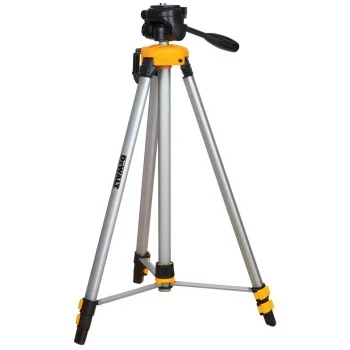
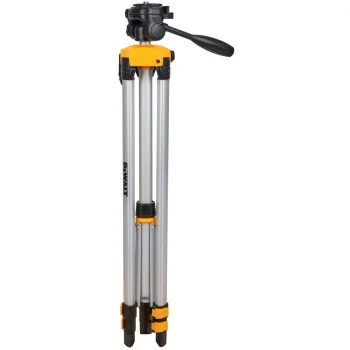
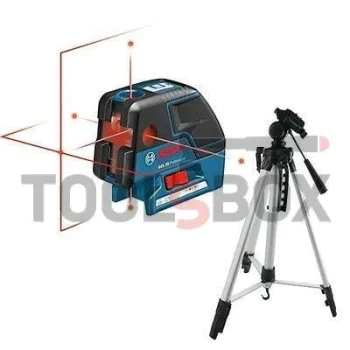
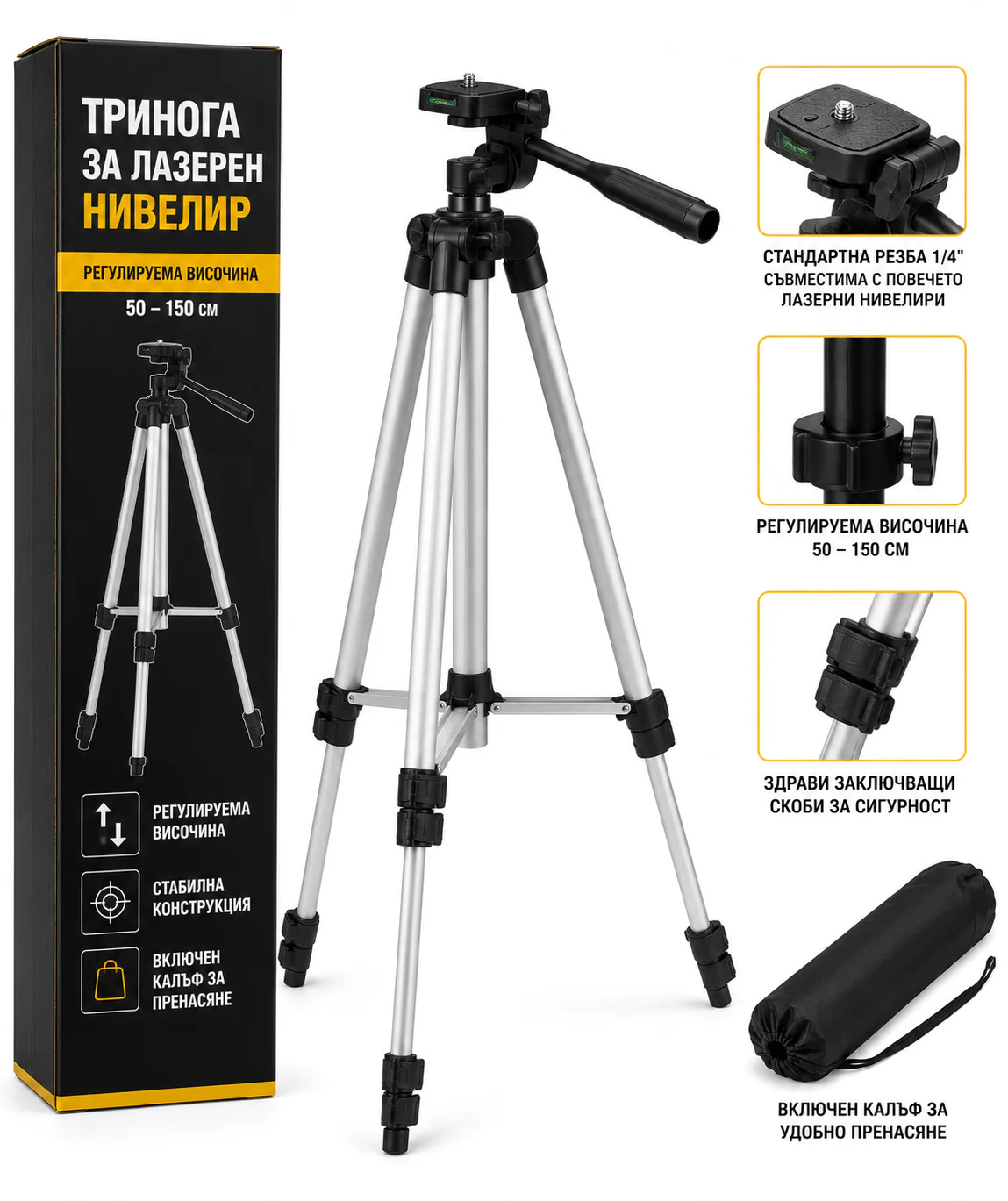
Tripod for laser level
Tripod for Laser Level - A Stable Base for Precise Marking
A tripod for a laser level is a practical stand for securing the measuring instrument at a precise height and in a stable position. It facilitates leveling during construction, renovation, and installation when the laser line must remain constant during work. This approach is convenient when installing suspended ceilings, tiles, partition walls, profiles, cabinets, doors, windows, electrical installations, and plumbing routes. A well-chosen tripod reduces the risk of the device shifting, saves on repeated measurements, and ensures a more precise workflow.
With laser levels, the stability of the base is directly related to the accuracy of the projection. Even a high-quality device loses its advantage when placed on an unstable surface, a box, a ladder, or a makeshift support. A tripod for a laser level solves this problem with adjustable legs, locking mechanisms, and a mounting head for the device. This allows the working height to be adjusted quickly, while the laser remains aimed at the desired area.
Applications in construction, renovation, and installation
Tripods for laser levels are used in a wide range of tasks where a straight horizontal, vertical, or cross line is required. In interior renovations, a tripod for a laser level helps align wall coverings, kitchens, shelves, railings, cornices, and decorative elements. In drywall construction, it aids in the precise positioning of profiles, leveling structures, and controlling heights throughout the entire room.
In professional use, the tripod is crucial for the speed and repeatability of measurements. Tradespeople, installers, and technicians work in various spaces, on rough floors, or in sites with limited space. A tripod for a laser level with a wider height range and stable locks provides better control when frequently changing positions. For home use, compact models are convenient for renovations, furniture assembly, painting along a guide line, and other tasks where accuracy visibly improves the final result.
Key differences between models
At first glance, all tripods look similar, but individual models differ in design, height, threading, head type, and load capacity. The choice should match the specific laser level and the method of use. A tripod for a laser level designed for light-duty tools is usually compact and easy to carry, while tripods for more intensive work have sturdier legs, more secure clamps, and more precise adjustment.
- Working height-low tripods are convenient for floor lines and installations close to the ground, while taller ones provide better coverage for ceilings, doors, and large rooms.
- Mounting thread-the most common threads are 1/4" and 5/8". Matching the thread of the laser level is crucial for secure mounting.
- Construction material-aluminum models are lightweight and easy to carry, while heavier tripods stand more stably on uneven surfaces.
- Leg adjustment-telescoping sections and clamping brackets help with quick height adjustment.
- Head and platform-the flat head is convenient for standard mounting, while models with fine-tuning facilitate precise alignment.
How to choose the right tripod
Before purchasing, check the threading of the level against the tripod, as incompatible mounting requires an adapter or a different model. A tripod for a laser level must hold the device securely, with no play in the head and no twisting of the legs. When working in larger spaces, it's worth looking for a taller model, while in tight spaces, a more compact tripod is easier to carry and position.
For installation work at height, models with a central column or smooth adjustment are practical, as they allow for adjustments without having to completely reposition the legs. On rough construction surfaces, a wider base and stable legs are a better choice. If the tripod will be moved between sites, weight, folded length, and the carrying case are important for ease of transport.
| Tripod Type | Intended use | Practical highlight |
|---|---|---|
| Compact aluminum stand | Home repairs, light installations, work in small spaces | Lightweight and easy to store |
| Telescopic tripod | Leveling at various heights during repair and finishing work | Flexible adjustment of the working position |
| Central column stand | Precise positioning during installation of ceilings, profiles, and cladding | More precise height adjustment |
| More robust tripod | Professional use and heavier tools | Better stability on difficult surfaces |
Compatibility, safety, and maintenance
Compatibility between a laser level tripod and the instrument itself isn't just about the thread. The size of the base, the weight of the level, access to the buttons, and the freedom of rotation of the body also matter. When working with rotating or larger laser levels, it is advisable to choose a tripod with a more stable head and better locking mechanism. For lighter cross-line lasers, a compact tripod is usually sufficient for standard installation tasks.
For safe operation, the legs should be spread evenly, and the clamps should be securely tightened before turning on the device. On slippery surfaces, it is advisable not to place the tripod in walkways where there is a risk of impact or tripping. After use, the tripod should be cleaned of dust, plaster, and construction debris, and the thread should be protected from dirt and mechanical damage. This ensures the tripod maintains smooth adjustment and secure mounting of the level.
Tripod for a laser level for more accurate and convenient work
A tripod for a laser level is a small accessory at first glance, but it has a significant impact on the accuracy, speed, and convenience of measurement. The right tripod facilitates the positioning of the laser, keeps the line stable, and assists with repetitive installation tasks. At Toolsbox.bg, you can select a tripod for your laser level based on the thread, height, construction, and type of work to equip your laser level with a practical and secure support.