
Chain
Chains for chainsaws - precise cuts and stable machine performance
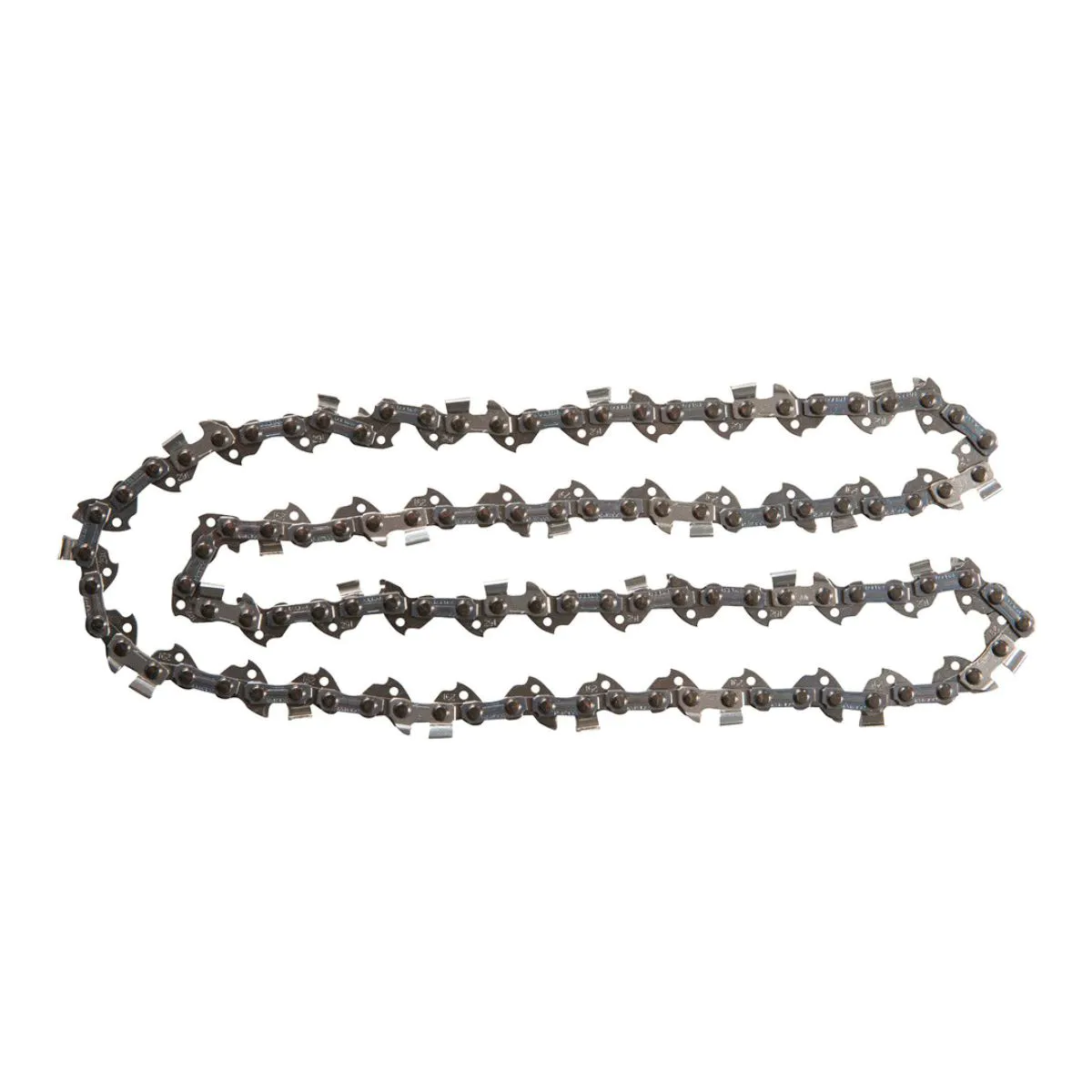
A chainsaw chain is the consumable that determines cutting speed, cut quality, and the load on the engine. A properly selected chain runs smoothly along the guide bar, removes chips evenly, and helps the machine maintain its power when cutting firewood, pruning, trimming branches, working in the garden, logging, and performing repair work around the home or workshop.
The range includes chains for gasoline, electric, and battery-powered chainsaws with varying lengths, pitches, link thicknesses, and numbers of links. This ensures that each chain can be matched to the specific guide bar and drive sprocket, which is crucial for safe operation and smooth movement along the guide bar's groove. An incorrect size can cause overheating, wear, the chain falling off the bar, or poor cutting performance even with a properly functioning engine.
Selecting the Right Chain for the Job
Different tasks require different tooth profiles and varying levels of cutting aggressiveness. For cutting dry wood and preparing lumber, a chain with good performance and stability in a harder structure is often preferred. For pruning branches, landscaping, and more precise work, models with more controllable behavior and lower vibration are preferred. In professional use, the load is greater, so the durability of the cutting teeth, proper sharpening, and regular lubrication are important.
A chain with a well-maintained cutting edge reduces the pressure on the saw. The machine is not forced to work with excessive effort, and the operator gains better control. A dull or stretched chain increases the risk of kickback, overheating, and an uneven cut. That is why timely replacement is part of the normal maintenance of any chainsaw.
Chain Selection Parameters
Before purchasing, you need to compare the data from the guide bar, the old chain, or the machine's documentation. Dimensions should not be selected based solely on the guide bar length, because two guide bars of the same length may have different pitch or drive link thickness. Proper compatibility protects the guide bar, drive sprocket, and chain from unnecessary wear.
| Parameter | What it indicates | Why it matters |
|---|---|---|
| Pitch | The distance between links, denoted by measurements such as 1/4", .325", 3/8", or .404" | Must match the drive sprocket and the track |
| Thickness of the drive link | The width of the link that fits into the sprocket groove | If the size is incorrect, the chain may jam or hang loosely |
| Number of drive links | Total number of links along the length | Determines the correct tension on the specific chain |
| Tooth profile | Shape of the cutting tooth and the stop | Affects speed, cut quality, and control |
Pitch, thickness, and number of links
The pitch must match that of the drive sprocket. Smaller pitches are typical for compact machines and finer work, while larger pitches are found on powerful saws for heavy-duty cutting. The thickness of the drive link must fit the groove in the guide bar: a link that is too thin causes instability, while one that is too thick does not move freely. The number of links determines whether the chain will lie flat and allow for proper tension.
Cutting tooth profile
The tooth profile affects performance in the wood. More aggressive teeth cut quickly but require a more stable machine and an experienced operator. More gentle profiles provide better control for home use, pruning, and working at heights. When cutting dirty wood, or in the presence of bark, sand, or contact with the ground, the cutting edge wears down faster, so it's wise to keep a spare chain on hand.
Compatibility with the chainsaw and guide bar
Compatibility is not determined solely by the machine's brand. A chain of the same length may not fit if the pitch or thickness differs. The specifications are often printed on the guide bar or on the packaging of the old consumable. If there is no marking, you can measure the drive links and count them carefully. The right combination of guide bar, sprocket, and chain reduces vibration and protects the saw from premature wear.
For electric and cordless chainsaws, lighter chains are typically selected, tailored to the machine's power and RPM. For gasoline models, the choice depends on the engine displacement, bar length, and type of wood. Professional machines can handle more aggressive chains, but only when all dimensions match the technical specifications.
Maintenance, Sharpening, and Safe Operation
Even a properly selected chain requires regular care. Tension should be checked before work and after the chain has warmed up, because metal expands. A chain that is too tight puts strain on the guide bar and bearings, while one that is too loose can come out of the groove. Lubricating with chain oil reduces friction and protects the cutting links.
Sharpening is done with a file, a guide, or a specialized machine depending on the tooth profile and angle. All teeth must be sharpened evenly to prevent the saw from pulling in one direction. Depth stops also affect cutting aggressiveness and must be adjusted carefully. Wearing gloves, safety goggles, a hard hat, ear protection, and cut-resistant clothing significantly reduces the risk when cutting.
When to Replace
A new chain is needed when the teeth are worn down to the sharpening limit, when the links are damaged, there are visible cracks, or it no longer holds tension properly. If the saw produces dust instead of large chips, cuts slowly, or requires heavy pressure, the chain must be sharpened or replaced. Keeping a spare chain on hand is a practical solution for working in the forest, yard, or construction site, where downtime slows down the entire process.
Browse the options at Toolsbox.bg and select a chain based on pitch, thickness, number of links, and type of work. This way, the chainsaw will cut more evenly, and machine maintenance will be easier and more predictable.