
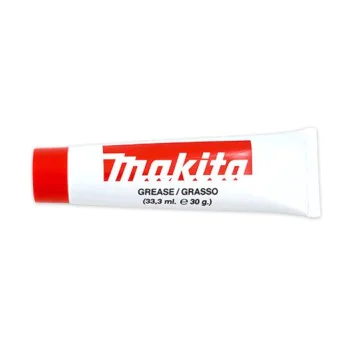
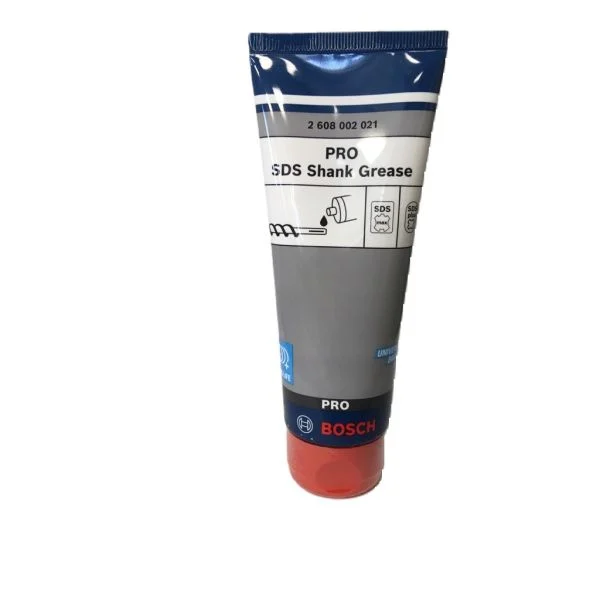
Grease for perforators
Hammer Drill Grease - Lubricant for Heavy-Duty Impact Tools
Grease for hammer drills is a specialized lubricant for the maintenance of hammer drills, SDS chucks, drill shanks, chisels, and chisels. When working with concrete, stone, brick, or plaster, contact areas are subjected to impact, dust, vibrations, and heat. A well-chosen lubricant reduces dry friction, facilitates smooth movement of the tool in the chuck, and limits premature wear of working joints.
Grease for hammer drills is in demand both for power tool maintenance and for daily work on construction sites, installations, and repairs. It belongs to the group of lubricants but has a thicker consistency than standard oils and remains on loaded surfaces longer. This makes it suitable for areas where liquid lubricants would be washed away or dispersed quickly.
Where to use grease for hammer drills
Its primary use is on the shanks of SDS-plus and SDS-max accessories. A small amount of grease on the drill bit or chisel shank aids proper sliding into the chuck and reduces stress during hammer mode. For some machines, the manufacturer permits greasing of certain internal components, gear trains, or gearbox parts, but only as specified in the service documentation.
- For SDS drill bits-when drilling in concrete, brick, stone, and masonry.
- For chisels and chisel bits-for chiseling, creating channels for installations, and demolition work.
- For chucks and working joints-during regular maintenance of impact-driven machines.
- For power tool maintenance-during preventive maintenance, cleaning, and replacement of worn parts.
For home use, grease for hammer drills helps keep the tool in good condition during repair tasks, drilling for anchors, and installing shelves, window frames, or plumbing. For professional use, proper lubrication is even more important because the machines operate longer, under heavier loads, and with more dust particles in the work area.
Differences between lubricants
Not every grease is suitable for hammer drills. Greases for hammer drills differ in composition, consistency, temperature range, adhesion to metal surfaces, and performance in dusty environments. Some variants are primarily intended for tool shanks, while others are designed for gearboxes or maintenance operations. Formulations with pressure additives are valued for heavy-duty chiseling, and finer greases are easily applied during daily maintenance.
| Lubricant Type | Practical use | What to look for |
|---|---|---|
| Grease for SDS shanks | Lubricating drill bits, chisels, and chisels before inserting them into the chuck | Compatibility with SDS-plus or SDS-max accessories |
| Grease for gear assemblies | Maintenance of certain mechanical parts | Manufacturer's instructions and correct quantity |
| Grease with pressure additives | Heavy-duty drilling and chiseling with repeated impact | Operating temperature, adhesion, and vibration protection |
| Tube, syringe, or small package | Workshop, service center, installation team, or home repair | Frequency of use and ease of application |
How to choose grease for hammer drills
When choosing grease for hammer drills, check the machine type, chuck type, and the recommendations in the manual. For drill shanks and chisels, you need a grease that adheres to the metal surface, does not run easily, and does not attract excessive amounts of dust. It is not advisable to use just any grease on internal mechanisms, as the wrong viscosity or unsuitable additives can strain the gearbox and seals.
Packaging size also matters. A small tube is convenient for a toolbox and for on-site work. A larger package is practical for a service center, crew, or workshop where multiple machines are serviced regularly. When choosing, also consider the application method-syringe, tube with a nozzle, or can. Precise dosing reduces consumption and protects the cartridge from contamination.
Compatibility with machines and accessories
Hammer drill grease is most commonly used with electric and cordless hammer drills, jackhammers, and combination impact tools. Accessories may include SDS-plus drill bits, SDS-max chisels, flat chisels, awls, slot-cutting tools, and other working bits. Whenever changing an accessory, it is advisable to clean the shank of dust and old grease, then apply a thin layer of new grease.
Maintenance, Safety, and Proper Application
Excessive grease does not improve performance. It traps dust, contaminates the chuck, and hinders the movement of the accessory. A thin, even layer along the shank grooves is sufficient. After finishing work, clean the machine and the bits, and close the packaging tightly to prevent abrasive particles from entering the grease.
During maintenance, disconnect the machine from the power source or remove the battery. Work with clean gloves, and remove the old grease carefully. Mixing different greases without checking compatibility is not a good practice, because the individual formulations have different bases and additives. If in doubt, follow the manufacturer's instructions or the information on the label.
At Toolsbox.bg, you can browse grease options for hammer drills in various sizes and for different maintenance needs. Choose a grease based on the machine, attachments, and workload to keep your hammer drill ready for drilling, chiseling, and installation tasks.