
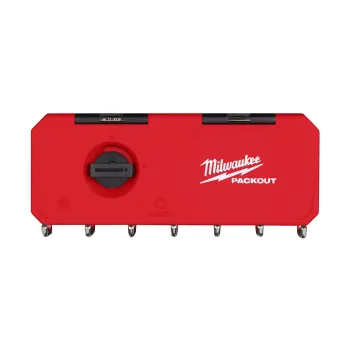
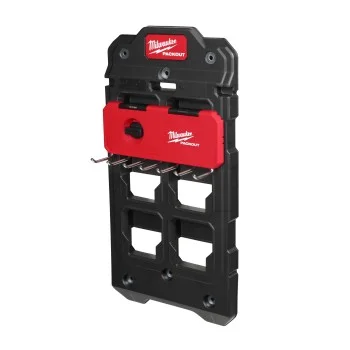
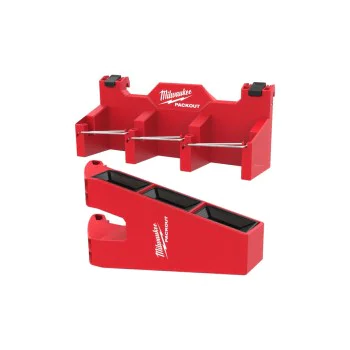
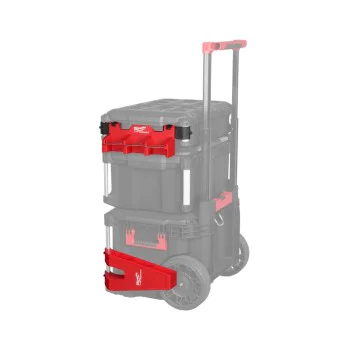
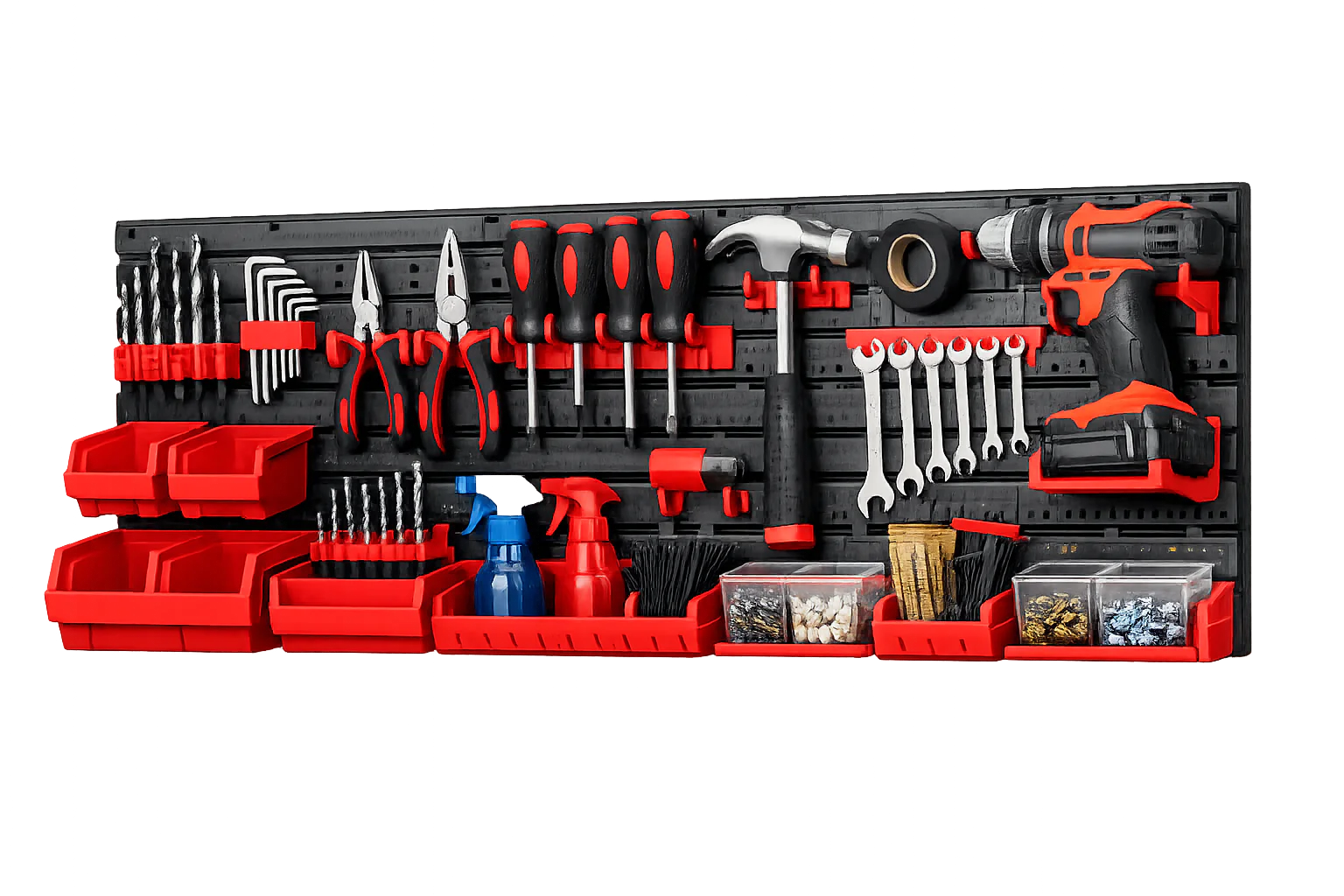
Wall organiser for tools
Wall-mounted tool organizer for a tidy workspace
A wall-mounted tool organizer is a practical system for vertical storage of hand tools, small power tools, fasteners, consumables, and accessories for repair, installation, and maintenance work. Instead of screwdrivers, pliers, wrenches, sockets, and accessories cluttering the workbench or getting lost in drawers, the wall-mounted system keeps everything visible and accessible. This keeps the workshop, garage, or service area cleaner, and the right tool is found more quickly while working.
This section includes wall panels, perforated boards, rails, hooks, holders, screwdriver holders, small parts cups, and modular wall-mounting kits. Each wall-mounted tool organizer has a different configuration depending on the number of hanging slots, load capacity, material, and mounting method. Some models are compact and save space above the workbench, while others cover a larger area and allow for the organization of an entire set of hand tools.
Applications in workshops, garages, and service centers
A wall-mounted tool organizer is invaluable for assembly, equipment repair, car maintenance, carpentry, furniture assembly, construction finishing work, and home repairs. For professional use, it streamlines daily operations in a service center, tool warehouse, or mobile repair shop. For home use, it is ideal for garages, basements, hobby workshops, and small spaces where every inch of free surface area counts.
Screwdrivers, pliers, wrenches, hex keys, hammers, utility knives, tape measures, levels, brushes, cables, bits, drill bits, dowels, screws, and other small items can be organized on the wall panels. The more sturdy holders are used to hang cordless tools, chargers, or frequently used accessories, provided their size and weight do not exceed the system's load capacity.
Types of wall-mounted storage systems
The different models differ not only in appearance but also in construction. Metal panels are preferred for more intensive work and heavier tools, while plastic elements are lightweight and convenient for small accessories. Perforated panels allow for flexible placement of hooks and holders, while rail systems are convenient for linear organization above a countertop or workbench.
| Wall system type | Suitable for | Key features |
|---|---|---|
| Perforated panel | Workshop, garage, service station | Flexible positioning of hooks, holders, and small shelves |
| Wall rail with hooks | Quick access to frequently used tools | Compact organization above a countertop, cabinet, or workbench |
| Modular set | Expansion of existing organization | Combination of panels, containers, and holders |
| Holder for a specific type of tool | Screwdrivers, wrenches, pliers, sockets | Arrangement by size, shape, or tool group |
How to choose the right wall-mounted tool organizer
When choosing a wall-mounted tool organizer, start with the available space and the type of tools you'll be storing. For a small corner above a workbench, compact panels or rails are sufficient, while for a service area with many hand tools, it's better to plan for a larger wall area. Check the width, height, and depth of the system against the actual space so that opening cabinets, moving around the workbench, and working with longer tools remain comfortable.
The material directly affects the load capacity. Metal components can withstand heavier use, while plastic cups and boxes are convenient for screws, washers, dowels, bits, and small consumables. For concrete or brick walls, select appropriate dowels and screws. For drywall, you need to assess the load-bearing surface and distribute the load so that too much weight isn't concentrated in a single point.
A wall-mounted tool organizer should also be tailored to your workflow. For tools used dozens of times a day, choose open hanging at eye or arm level. For less frequently used accessories, upper rows, small boxes, or individual compartments are convenient. If you work with many bits, drill bits, and fasteners, combine holders with containers for small parts to prevent different sizes from getting mixed up.
Installation, Compatibility, and Safety
Proper installation is essential for the stability of any wall-mounted system. Before mounting, plan the layout of the panels, check the alignment with a level, and leave enough space between individual tool groups. It is advisable to place heavier machines and metal tools in the lower or middle sections, while lighter accessories and consumables should be placed higher up.
Compatibility between panels, hooks, and holders is important when expanding an already installed wall-mounted tool organizer. Some systems use a specific hole, profile, or fastener, so the size of the perforation and the type of fastening must match. When combining individual elements, ensure they fit securely in the hole or rail, without any play or twisting.
For safe operation, do not overload individual hooks and holders. Sharp tools should be stored with the cutting edge facing inward or in a separate holder. Cables and chargers should not hang near cutting edges, hot surfaces, or moving parts of machines. Good organization reduces the risk of tools falling, injury, and damage to accessories.
Maintenance and Organization Over Time
A wall-mounted tool organizer is easy to maintain when tools are returned to the same place after use. Periodically clean the panels of dust, shavings, and grease marks. For metal components, watch for moisture and corrosion, especially in garages and unheated rooms. Rearranging hooks and holders is a normal part of organization because your tool collection changes over time.
A well-chosen wall-mounted tool organizer transforms an empty wall into a functional storage and work area. Browse the models at Toolsbox.bg and select an option based on the space, load capacity, type of tools, and desired layout in your workshop, garage, or service center.