
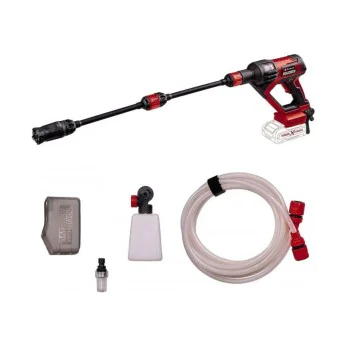
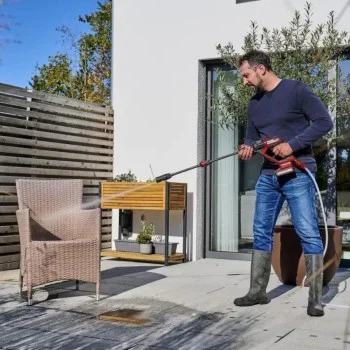
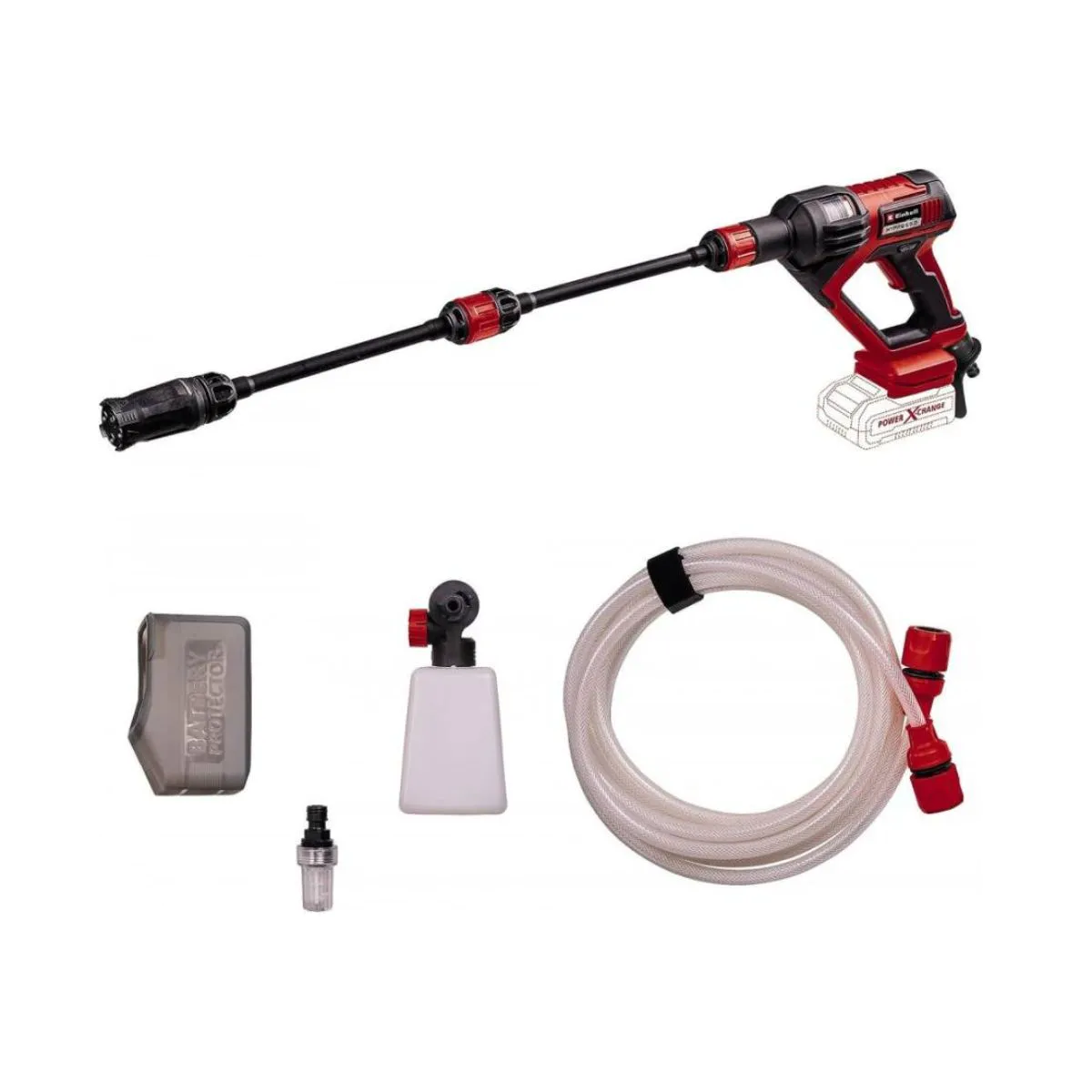
Hose for water jet
Pressure Washer Hose for Safe Operation with Water Pressure
A pressure washer hose is a working component that carries pressurized water from the machine to the gun and nozzle. Its condition directly affects the jet's power, ease of movement around the work area, and safety during cleaning. Replacing a worn, kinked, or burst hose restores the pressure washer to normal operation and protects the other components from unnecessary strain.
The products in this category are designed for household and professional pressure washers used on cars, yards, facades, pavements, construction equipment, agricultural machinery, workshops, and service facilities. The various models differ in length, maximum operating pressure, connection type, flexibility, outer material, and kink resistance.
Applications of pressure washer hoses
The hose is exposed to mechanical friction, twisting, contact with water, mud, cleaning agents, and temperature changes. For home use, a convenient length is typically sought for washing a car, terrace, garage, or garden paving. For service and professional work, pressure resistance, reinforced braiding, and a secure connection to the machine and nozzle are more important.
A properly selected hose allows for greater freedom of movement around the work area. Shorter versions are convenient for working in confined spaces, while longer ones reduce the need to move the pressure washer. Extension hoses are used when a greater distance is needed between the machine and the cleaning site, for example around larger vehicles, building facades, yard areas, or industrial zones.
Types and Design Differences
Pressure washer hoses can be standard, reinforced, extension, or replacement hoses for a specific type of machine. Some of them feature an inner layer for the water flow, a reinforcing braid, and an outer wear-resistant coating. For more intensive work, the reinforced versions better withstand pressure loads and frequent movement over rough surfaces.
Flexibility matters when working around corners, tires, machines, and obstacles. A hose that is too soft can kink easily, while one that is too stiff can hinder movement. Therefore, it is helpful to consider the length, bending radius, and method of coiling after finishing work. Models with a more durable outer casing are practical when in contact with concrete, asphalt, gravel, or metal edges.
| Features | What to look for | Practical significance |
|---|---|---|
| Length | Short, standard, or extension hose | Determines the range around the water jet |
| Operating pressure | Compatibility with the machine's pressure | Prevents damage and leaks |
| Connections | Quick-connect, threaded, bayonet, or other nozzle | Allows for proper connection to the gun and pump |
| Material | Inner layer, braid, and outer jacket | Affects flexibility and wear resistance |
| Temperature resistance | Permissible water temperature | Required for cold or hot water machines |
How to choose a pressure washer hose
When choosing a hose, the parameters of the specific pressure washer are the key factors. First, compare the operating pressure and the maximum permissible pressure of the hose. If the hose has a lower rating than the machine, the risk of deformation, leakage, or rupture increases. Flow rate is also a factor, as the inner diameter affects the free flow of water.
The connections are just as important. Different manufacturers and series of pressure washers may use different connection systems-quick-connect fittings, threaded connections, bayonet nozzles, or specific adapters. Before ordering, compare the nozzle shape, thread size, and locking mechanism. If in doubt, it is wise to check the information on the machine's nameplate, the old hose, or the user manual.
The length should be chosen based on the work area. A standard hose is usually sufficient for cleaning a car and a small yard. For facades, vans, machinery, long driveways, and larger areas, the extended version saves you from having to carry the pressure washer. A hose that is too long can be harder to store and may require more careful coiling, so the size should be chosen based on the actual task.
Compatibility, Safety, and Maintenance
A compatible hose fits snugly onto the connectors, locks securely, and does not leak water under pressure. Seals, O-rings, and nozzles should be inspected periodically, as their wear often leads to dripping or loss of pressure. If there are visible cracks, bulges, abrasions, or damage to the braiding, replace the hose instead of temporarily repairing it with tape and clamps.
To extend its service life, unroll the hose without sharp kinks, do not run over it with a vehicle, and do not drag it over sharp edges. After use, it is advisable to drain the water from the system and coil the hose loosely, without severe kinks. When stored in a cold place, residual water can freeze and damage the inner layer, so draining is an important part of maintenance.
When operating a pressure washer, hold the gun firmly, maintain a stable stance, and pay attention to surrounding surfaces. Do not aim the hose at people, animals, electrical panels, or unprotected cables. Connections should be made with the machine turned off and the pressure released to prevent a sudden release of water.
A Pressure Washer Hose for the Job
For light household maintenance, convenience, length, and easy winding are key. For car washes, service stations, construction sites, and equipment cleaning, models with a more durable casing, higher pressure ratings, and connections designed for frequent on/off cycling are preferred. For hot water machines, the hose's temperature range must be considered, as not every model is designed for hot water.
At Toolsbox.bg, you can choose a pressure washer hose based on the machine, connection method, and task at hand. Compare specifications, length, and nozzles to prepare your pressure washer for cleaning, repair work, yard maintenance, or professional service work.