
Tsangi
Milling collets - precise grip and stable operation
Milling collets are small but crucial clamping elements that hold the shank of the milling cutter in the spindle or chuck. They determine the tool's centering, smooth rotation, and the finish of the machined surface. When working with wood, plastic, composite panels, or soft metals, a well-chosen collet reduces vibrations, protects the cutting tool, and facilitates more precise control during cutting, profiling, grooving, and drilling.
Toolsbox.bg offers a selection of collets for various routers, router bits, trimmers, and machines with interchangeable cutting tools. The items differ in shank size, shape, mounting system, and compatibility with specific machine models. This makes it easier to choose the right tool for service replacements, workshop restocking, or preparing a machine to work with routers with different shank diameters.
What are collets used for in milling?
The collet grips the shank of the cutter evenly around the circumference and presses it against the shank when the nut is tightened. This keeps the cutting tool centered relative to the axis of rotation. A precise grip is necessary when making grooves, chamfers, notches, decorative profiles, joints, holes for fittings, and detailed edge finishing. At higher speeds, even a slight deviation in the grip is noticeable through vibration, noise, an uneven cut, and faster tool wear.
Collet chucks are sought after both for professional use in woodworking shops and installation teams, as well as for home use in hobby workshops. They are particularly useful when a machine works with different router bits-for example, with shanks of 6 mm, 8 mm, 12 mm, 1/4", or 1/2". With the correct size, there is no need for excessive tightening, which protects the spindle, the nut, and the cutting tool itself.
Types of collets and key differences
Different collets look similar but are not interchangeable across all machines. When selecting a collet, check the shank size, the collet's external profile, the chuck system, and the router manufacturer's recommendations. Some models are designed for specific router bits, while others follow common standards for spindles and holders.
| Type | Characteristic | Application |
|---|---|---|
| Metric collets | Shank sizes in millimeters-6, 8, 10, 12 mm, and other sizes | Compatible with metric-shank routers, widely used in Europe |
| Inch collets | Collet sizes 1/4", 1/2", and similar sizes | Milling cutters and machines with inch-sized shanks |
| System collet chucks | Profile according to specific series or holder standard | Router bits, trimmers, spindles, and CNC machines with corresponding systems |
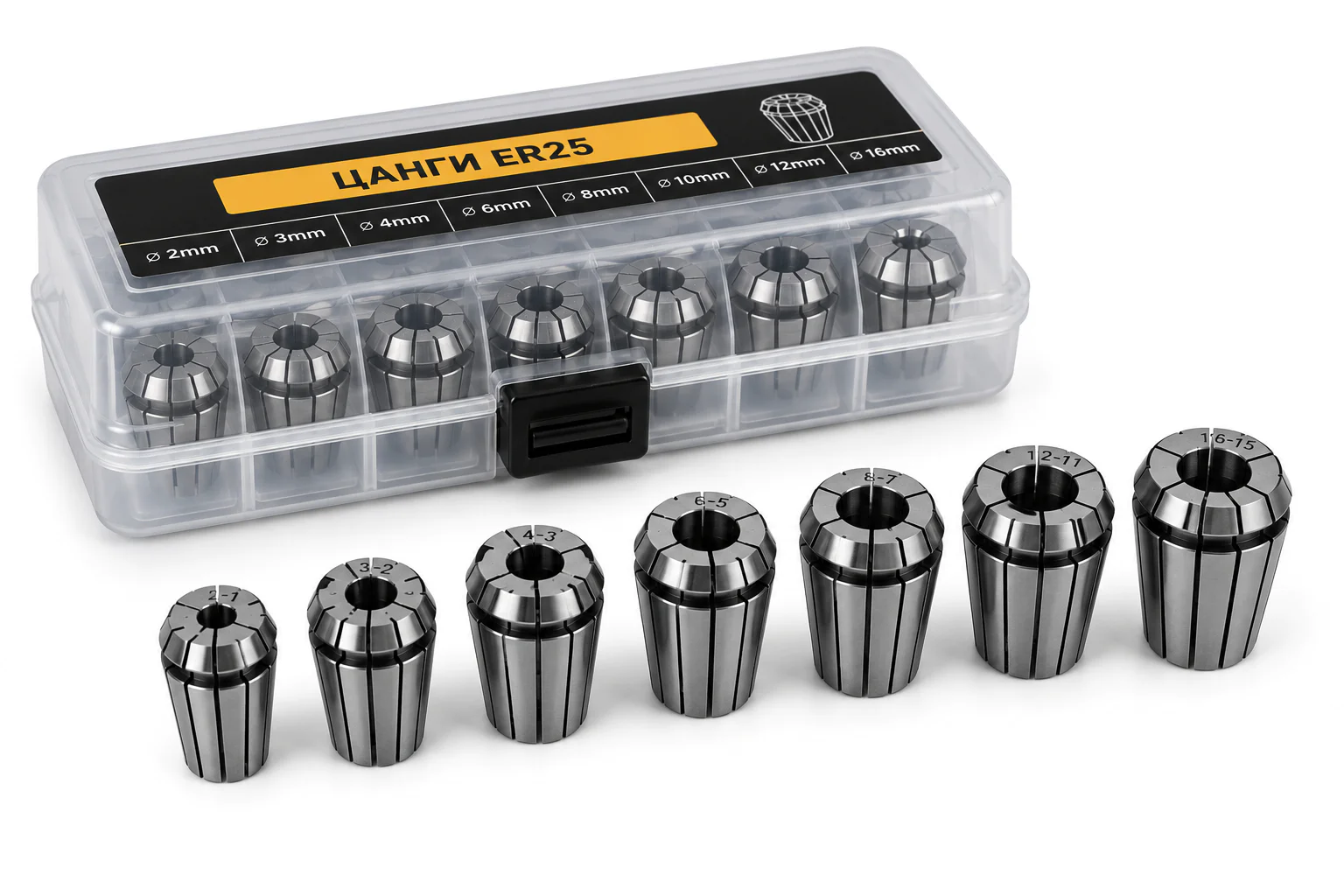
| Sets | Multiple sizes in a single set | Workshops with a variety of routers and frequent tool changes |
Selection based on size, compatibility, and load
The first parameter is the diameter of the cutting tool shank. 8 mm collets are not a substitute for a 1/4" shank, even though the values appear similar. An incorrect size leads to uneven clamping, slippage, or deformation. For precise work, the collet size and the shank of the cutter must match exactly, with no compromises.
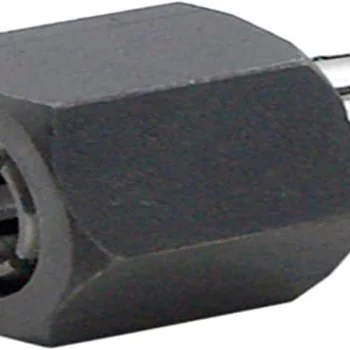
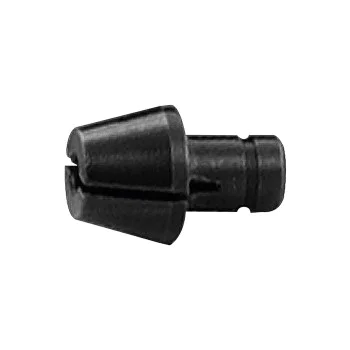
The second parameter is compatibility with the machine. For routers and trimmers, the collet profile, length, taper, and method of attachment to the nut are essential for proper clamping. With CNC spindles, ER-type systems are common, in which the collet is mounted in a special nut and holder. With hand-held power tools, proprietary sizes and shapes tailored to the specific design are often used.
The third parameter is the load. For continuous operation, machining of hard materials, or milling with a larger tool diameter, a collet with a stable fit and uniform clamping is required. For light edge work and finishing details, the focus is on precision, quick change, and clean centering.
Materials, Construction, and Maintenance
High-quality collets are typically made of steel with precision-machined slots that allow for uniform clamping around the tool shank. The surface must be clean, free of scratches, rust, and swarf. Even a small contaminated area between the collet, the nut, and the shank of the milling cutter disrupts centering and shortens the service life of the components.
After use, collets should be cleaned of dust, resin, and metal particles. It is recommended to periodically check for cracks, widening of the slots, ovalization, or signs of overheating. A worn collet does not clamp evenly and is not suitable for precision milling. Storing them in a dry box or organizer protects the surfaces from corrosion and mechanical impact.
Safety When Working with Collets and Milling Cutters
Before starting the machine, the cutter must be positioned at the correct depth in the collet and tightened according to the machine's instructions. Overtightening damages the thread, the nut, or the collet itself, while insufficient tightening allows the tool to slip. The shank must be clean and straight, with no damage to the gripping area.
When changing collets, the machine must be disconnected from the power supply. For cordless power tools, the battery must be removed if the design allows it. After installation, a brief test run is performed without contact with the workpiece to listen for unusual noises and check for vibrations. Safety goggles, a securely clamped workpiece, and the correct feed direction are essential for safe operation in any workshop.
Collets for service, installation, and workshop equipment
Collets are a practical spare accessory for craftsmen, installers, furniture makers, and anyone who works with routers in a service or home setting. Having several precise sizes saves time when changing tools and expands the machine's capabilities. For professional teams, sets are convenient for on-site work, while individual sizes are ideal for replacing worn or lost collets.
Browse the selection at Toolsbox.bg and choose collets based on the size of your router, the machine's system, and the tasks in your workshop. A precise grip ensures cleaner machining, smoother operation, and a longer service life for your router bits.