
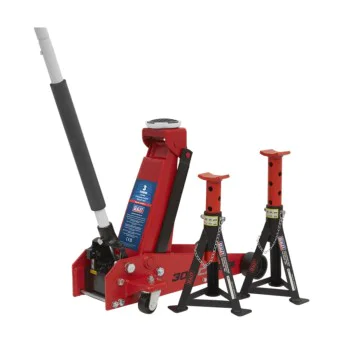
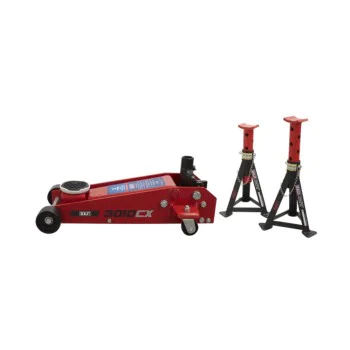
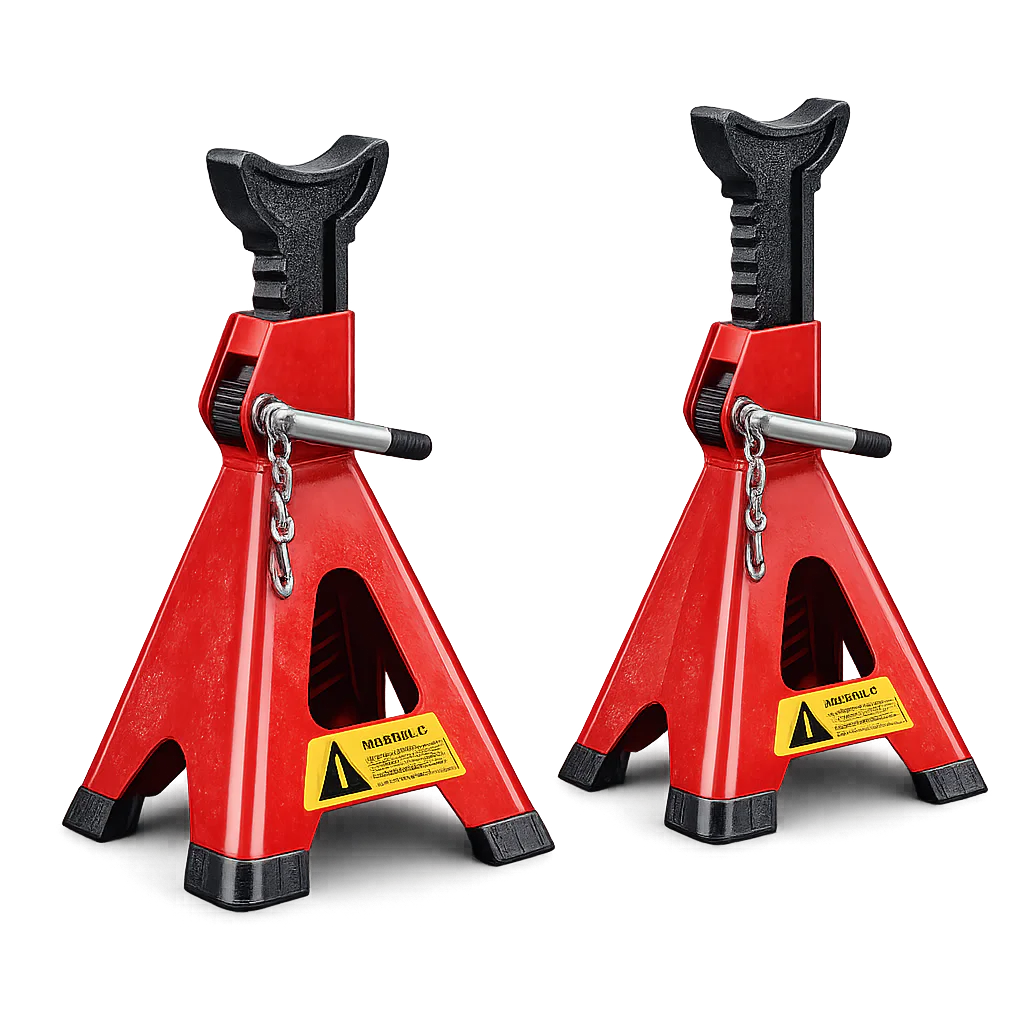
Car stands
Car Jacks - Stable Support for Repairs and Maintenance
Car stands are essential equipment for garages, service centers, and workshops when a vehicle needs to be lifted for inspection, repair, or maintenance. After lifting with a jack, they bear the vehicle's weight and hold the body at the required height, so that work on the suspension, brakes, tires, exhaust, sills, or underside of the engine can proceed safely and efficiently. The jack is used for lifting, and the support stands are used for stable support, which is why these two types of equipment are used together.
In this section, you will find car stands with varying load capacities, height ranges, locking mechanisms, and support head shapes. The differences between the individual models are not just in size-the steel construction, base width, adjustment steps, locking mechanism, and ease of positioning under the vehicle's factory lifting points are also important.
What are car jack stands used for?
Car stands are used for changing tires, repairing the brake system, working on the suspension, installing shock absorbers, replacing bushings, servicing the exhaust system, and visually inspecting the chassis. They are also useful for cleaning, anti-corrosion treatment, or more precise garage tasks that require access under the vehicle.
For home use, compact pairs of stands are often sought after, as they are easy to store and meet the needs of a light vehicle. For service work, more robust models with higher load capacity, a wider base, and a secure locking mechanism are preferred. For SUVs, vans, and heavier vehicles, a wider height range and higher load capacity are selected.
Main Types of Car Jacks
Different car stands differ in how they are adjusted and secured. The most common models feature a toothed rack and pinion, which allow for quick height adjustment. There are also pin-type variants, where the selected position is locked in place with a metal bolt or pin. Both types have their place in garage and service work, provided they are selected according to the vehicle's weight and working height.
| Characteristics | Practical significance |
|---|---|
| Load capacity | Selected based on the vehicle's weight and the number of supports used. |
| Height range | Determines access under the vehicle and compatibility with low or higher chassis. |
| Locking type | Affects the ease of adjustment and securing the working position. |
| Base | The wider support area improves stability on flat, hard surfaces. |
| Support head | The shape must fit the lifting points or sturdy load-bearing elements. |
Selection based on load capacity, height, and application
When purchasing car stands, start with the load capacity. The marking usually indicates the capacity of a set or a single stand, so the data must be read carefully. For light vehicles, a lower load class is often sufficient, while SUVs, pickups, and light commercial vehicles require a higher load capacity.
Working height is just as important. Low-slung sports cars and hatchbacks require jacks with a low starting height so they can be positioned after lifting. For vehicles with higher ground clearance, a greater maximum stroke is beneficial. It is good practice for the jack to operate in the middle of its range rather than constantly at the end position.
The material and construction affect load-bearing capacity. Steel car jacks are preferred for their strength and long service life. Weld seams, profile thickness, base stability, and the quality of the locking mechanism are details that deserve attention when comparing different models.
Compatibility with the vehicle and the work area
Car jacks should be placed under points designated by the manufacturer or under sturdy load-bearing elements of the chassis. Soft panels, plastic trim, unreinforced sills, and exhaust system components are not safe places to place the jacks. For vehicles with delicate lifting points, it is helpful to use rubber pads or adapters that protect the paint and reduce the risk of slipping.
The ground also matters. Jack stands work best on a level, firm, and clean surface-concrete, a slab, or a stable service floor. Soft ground, slopes, gravel, or slippery surfaces reduce stability. The wheels that remain on the ground are blocked with chocks, and the parking brake and gear help keep the car stationary during work.
Safety When Working with Car Jacks
Safe operation begins before getting under the vehicle. Lifting is performed with a jack at the correct point, after which the stands are adjusted to the same height and placed symmetrically. The vehicle is lowered smoothly onto them, without sudden movements. After loading, check that each support is stable and the lock is in the correct position.
Do not work under a vehicle that is supported only by a jack. Do not exceed the specified load capacity, and do not combine stands of different heights on the same side of the vehicle. For heavier repairs, when loosening very tight bolts, or when striking the suspension, it is advisable to place the vehicle on two or four stands depending on the task, ensuring the load is distributed evenly.
Maintenance and Storage
Car jacks have a simple design, but regular inspection extends their service life. After use, it is advisable to clean them of dust, mud, oil, and metal shavings. The locking mechanisms must move freely, without deformation or cracks. If there are signs of impact, bending, or distorted geometry, the stand should not be loaded.
Storing them in a dry place protects the metal parts from corrosion. For models with moving mechanisms, lightly lubricating the contact areas facilitates adjustment. If the stands are frequently transported between locations, their compact design and convenient storage are a real advantage for mobile mechanics and installation teams.
Choose car stands for your garage or service shop
Properly selected car stands enhance safety and convenience during any repair work. Consider the load capacity, working height, locking type, support head shape, and workplace conditions. At Toolsbox.bg, you'll find solutions for home maintenance, service work, and heavier-duty applications, organized so you can easily compare specifications and choose the right stands for your vehicle.