
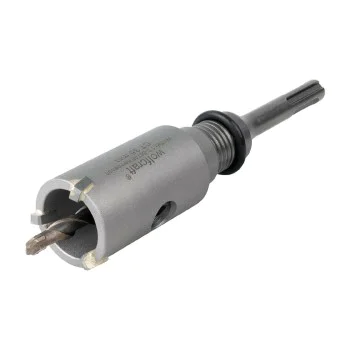
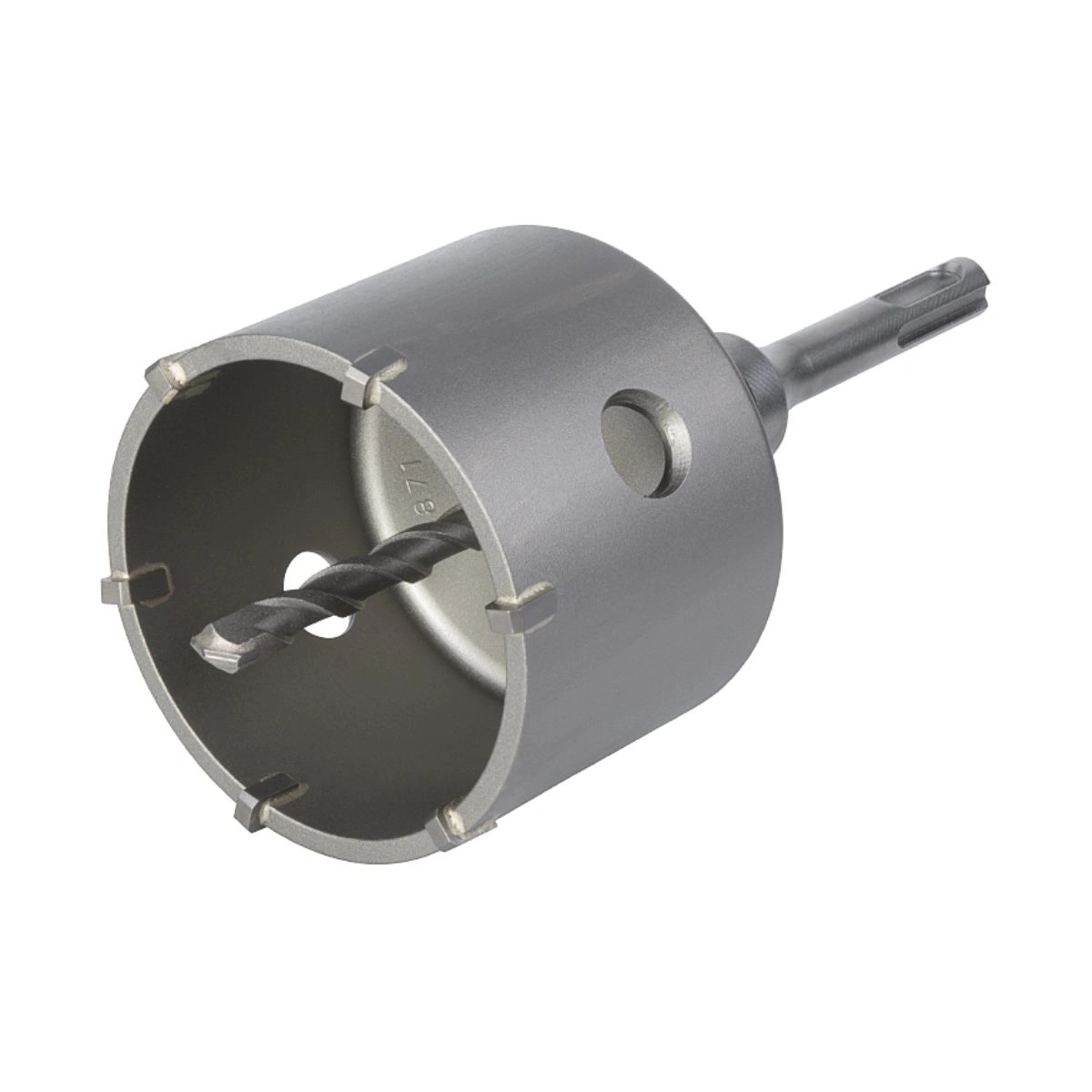
Diamond bullnose for concrete
Diamond core bit for concrete - precise holes in hard building substrates
A diamond core bit for concrete is a tool for drilling round holes in concrete slabs, walls, floors, plaster, and other hard mineral substrates. It is used for installing electrical systems, plumbing lines, ventilation openings, anchors, pipe passages, and construction and renovation work where clean hole geometry and controlled cutting are required. The diamond segments remove material through abrasive cutting rather than impact breaking, which reduces chipping along the edge and helps ensure more precise work.
Toolsbox.bg offers core bits with various diameters, working lengths, shanks, and types of diamond segments. This allows the selection to be tailored to the machine, drilling depth, and the material being worked on. For professional construction crews, this means better control during mass installation, and for discerning DIYers-a cleaner result during repairs without unnecessary damage to the substrate.
What is a diamond core bit used for in concrete?
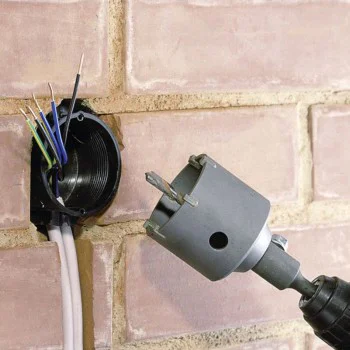
The main application is drilling large-diameter holes where a standard drill bit is insufficient. The diamond core bit works well for holes for junction boxes, pipes, cable routes, ventilation grilles, large-size anchors, openings through concrete walls, and installation holes in floor structures. It is used in home renovations, finishing work, electrical installation, plumbing, construction, and maintenance.
When working in concrete, the hardness of the substrate, the presence of gravel, the thickness of the wall or slab, and the likelihood of reinforced sections are important factors. For clean concrete, a standard diamond core bit can be used, while for reinforced concrete, it is advisable to choose a model designed for contact with rebar. Contact with metal slows down drilling and puts a strain on the machine, so smooth feed, a stable grip, and the correct operating mode protect the segments from premature wear.
Main types of core bits based on operating method
Dry-cutting core bits
Dry drilling models are the preferred choice for repairs in finished rooms where water would contaminate surfaces, fixtures, or flooring. They are practical for installing electrical boxes, small openings, and indoor repair work. In dry mode, periodic cooling through pauses is necessary because the diamond segments heat up more quickly. Working with a dust collector or construction vacuum cleaner limits dust and improves visibility around the hole.
Core bits for wet drilling
Wet drilling core bits are used for larger diameters, deeper holes, and heavy-duty professional applications. Water cools the segments, removes slurry, and promotes more uniform cutting. This method is valuable when drilling slabs, foundations, and solid concrete walls, where prolonged operation under high friction would strain the core bit and the machine. Controlled water drainage and protection of electrical components are required.
Segmented and continuous diamond core bits
Segmented core bits cut more aggressively and perform well on hard concrete, coarse plaster, and construction substrates with coarser aggregate. The continuous-rim bit produces a smoother edge but is typically chosen for materials where a clean cut is paramount. For concrete, segmented options are the most common because they remove dust or slurry more easily and maintain a stable cut under load.
How to choose the right size and grip
The diameter of the core bit is selected based on the hole to be drilled. For electrical junction boxes, standard installation sizes are used, while for pipes, ducts, and passages, the outer diameter of the element is measured, and the necessary installation clearance is allowed. The working length depends on the thickness of the substrate-for deeper holes, a model with sufficient working length or a system with an extension is required.
The chuck must be compatible with the machine. There are drill bits with threads and adapters for various drills, jackhammers, diamond core drills, and drill stands. When selecting a model, consider the thread, centering element, permissible operating conditions, and recommended RPM. An incorrect adapter or excessive load leads to vibrations, an uneven hole, and accelerated wear of the segments.
- Diameter: matches the pipe, box, anchor, or mounting hole.
- Working length: selected based on the thickness of the wall, slab, or mortar.
- Chuck: The thread and adapter must fit the machine being used.
- Drilling mode: dry or wet, depending on the work site and hole size.
- Concrete type: plain concrete, dense concrete, or reinforced concrete require different segment strengths.
Machine compatibility and operating mode
The diamond core bit for concrete is used with machines that provide stable rotation and sufficient torque. For small diameters, a powerful drill or rotary hammer can be used, while for large diameters, specialized diamond core drilling machines, often with a stand, are used. The hammer mode is not suitable for diamond core bits because it can damage the segments and compromise the accuracy of the hole.
The speed is adjusted according to the diameter-larger bits operate at lower speeds, while smaller ones allow for higher speeds. Excessive pressure does not significantly speed up drilling; better results are achieved with a steady feed, a stable machine position, and regular removal of dust or slurry. When drilling through a wall, it is necessary to monitor the opposite side of the hole to avoid unwanted chipping and risks around installations.
Materials, segments, and load-bearing capacity
The body of the core bit is usually made of steel, and the cutting part consists of diamond segments attached to the body by brazing, laser welding, or another manufacturing method depending on the specific model. The number, height, and shape of the segments affect drilling speed, cooling, and performance in hard concrete. A taller segment provides a longer service life, and properly shaped channels aid in the removal of waste material.
To ensure a long tool life, avoid lateral twisting in the hole, excessive pressure, and operating at inappropriate speeds. If the core bit starts cutting more slowly, the cause is often wear on the segments. Brief drilling in abrasive material can restore cutting performance, provided the manufacturer permits this practice. Regular cleaning after use removes slurry and dust residues that hinder cooling.
Safety and precision when drilling in concrete
Drilling in concrete requires personal protective equipment-safety goggles, gloves, ear protection, and a dust mask for dry drilling. The work area must be stable, cables and hoses must not obstruct movement, and the machine must be held with both hands or secured to a stand for large diameters. Before drilling, it is advisable to determine the location of electrical cables, pipes, and hidden installations.
Centering is critical for an accurate hole. Some core bits use a centering drill bit, while others use a template, a guide, or an initial shallow cut at a small angle. After forming the channel, the core bit is gradually straightened and continued with constant pressure. This approach limits slippage on smooth concrete and helps maintain the marking.
Choose a diamond core bit for concrete based on the actual task
A properly selected diamond core bit for concrete saves time, protects the machine, and produces a cleaner hole during installation and construction work. When selecting, match the diameter, length, shank, segment type, and drilling mode to the task, material, and available equipment. At Toolsbox.bg, you'll find solutions for repairs, installation, workshop use, and professional construction work. Choose the right size and configuration to prepare the tool for precise holes in concrete without unnecessary compromises.