
Lines
Measuring and Marking Lines
Measuring and marking lines are practical tools for precise dimensioning, drawing straight lines, checking lengths, and preparing parts before cutting, drilling, or assembling. They are used in workshops, on construction sites, during installation work, in woodworking, metalworking, furniture manufacturing, and for home repairs. A properly selected line makes work easier, reduces cutting errors, and ensures clean markings on various materials.
When it comes to measuring tools, these items may seem simple, but the differences between individual models are significant for the final result. Factors such as length, material, thickness, scale type, starting zero point, wear resistance, and ease of grip are important. For fine assembly operations, a compact ruler with clear markings is needed, while when working with larger surfaces, a longer and more stable model is a more practical choice.
What Do Measuring Rulers Include
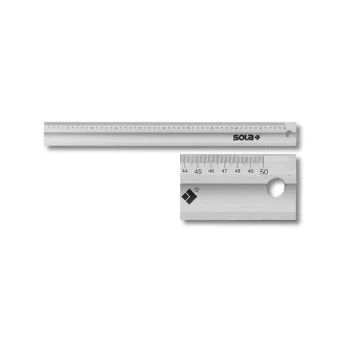
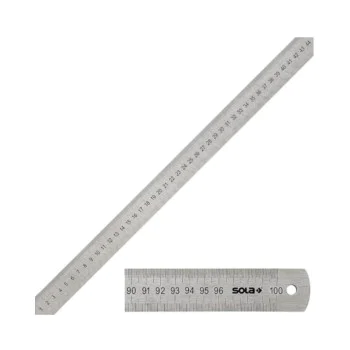
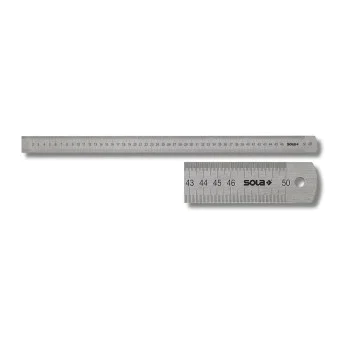
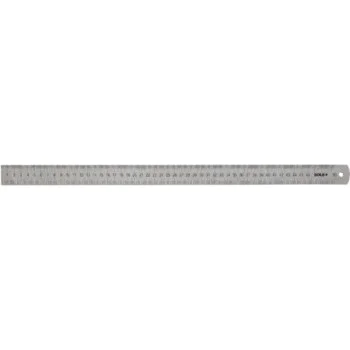
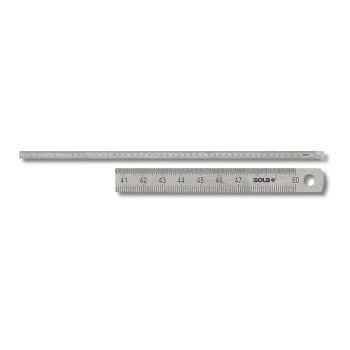
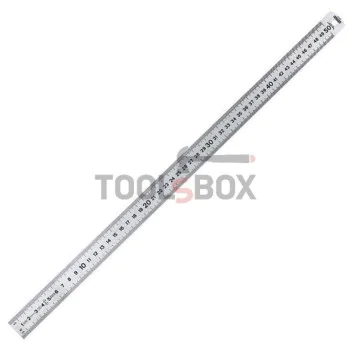
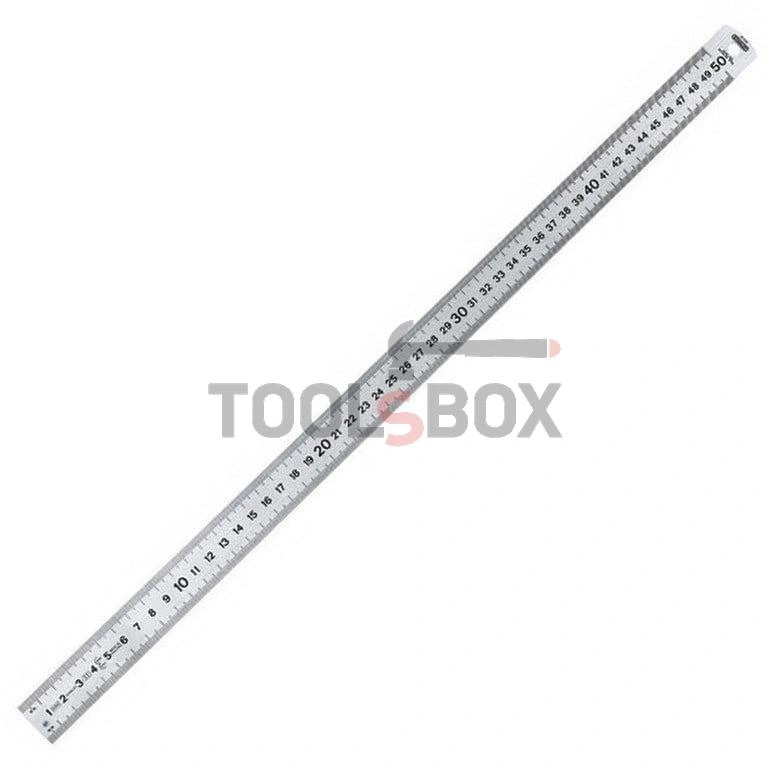
The rulers in this group include straight measuring tools with a metric scale, designed for measuring, marking, and checking straightness. They are available in various lengths, from short models for pocket or service work to longer versions for surfaces, profiles, sheet metal, lumber, and building components.
Material is one of the key characteristics. Steel rulers are preferred for workshop work, metal construction, and technical drafting because they withstand heavy use and maintain a straight line during intensive work. Aluminum rulers are lightweight and comfortable for extended marking on large surfaces. There are also models with a thicker profile that sit stably on the workpiece and provide a secure support when drawing.
Main Applications
Marking lines are used for measuring short and medium distances, transferring dimensions from a drawing onto material, marking holes, checking edges, and drawing a guide line for cutting. In woodworking, they assist in cutting sheets, strips, and panels. In metalworking, they are useful for marking sheet metal, profiles, and workpieces. In construction and renovation tasks, they serve for quick dimension checks when installing cladding, baseboards, moldings, drywall elements, and other details.
For more delicate tasks, such as installing mechanisms, electrical panels, furniture trim, or decorative elements, the clear scale and thin edge help with precise positioning. When working with a craft knife or cutter, a more stable edge and damage-resistant material are preferred.
Types of lines based on material and application
| Line type | Practical application | Selection considerations |
|---|---|---|
| Steel edge | Service, metal parts, technical drawing, cutting along a guide edge | Stable scale, sturdy base, precise straight edge |
| Aluminum line | Woodworking, panels, repair and installation tasks | Lightweight, easy to carry, clear visibility of the graduations |
| Short measuring line | Maintenance work, small parts, pocket tool | Compact size, easy storage, quick size check |
| Long measuring line | Marking on panels, profiles, sheet materials, and building elements | Stability, sufficient length, comfortable grip |
How to choose the right line
First, match the length to your typical tasks. For small repairs, fitting installation, and maintenance work, models up to 300 mm are convenient. For woodworking, panels, and construction details, 500 mm, 1000 mm, or longer lines are often preferred when the work area requires it.
The readability of the scale directly affects accuracy. Contrasting markings, clear numbers, and durable graduations make it easier to read even in dusty conditions, low light, or when working with dark materials. For technical tasks, it is helpful for the scale to start exactly at the edge to ensure measurements are taken without offset. For some applications, it is convenient to have graduations on both sides or a double-sided scale.
The thickness and stiffness of the ruler also affect usability. Thinner models are good for precise drawing, while sturdier ones are more stable and less prone to bending. When cutting along the edge, a metal model is preferred because the cutting tool does not easily damage the leading edge.
Compatibility with Materials and Markers
For marking on wood, MDF, particleboard, and plywood, the ruler works well with a pencil, carpenter's pencil, or fine-tip marker. For metal surfaces, use metal markers, an awl, or a scriber; it is important that the edge is straight and stable. For drywall, plastic, and insulation boards, the longer ruler provides better control when cutting.
If the ruler will be used with a protractor, set square, tape measure, caliper, or level, models with a clearly marked starting point on the scale and a precise edge are convenient. This makes it easier to transfer measurements between different measuring tools.
Use, Storage, and Safety
For precise measurement, the ruler must lie flat against the workpiece, with no debris underneath it. When marking on rough surfaces, the pressure should not deform the tool. When cutting with a knife, keep your fingers away from the cutting line and work with a stable support. Metal edges must be protected from impacts, as any distortion of straightness affects accuracy.
Storing the ruler in a drawer, toolbox, or on a wall mount protects it from scratches and deformation. After working with dust, metal shavings, adhesives, or construction mixtures, clean the ruler with a soft cloth to keep the markings legible. For steel models, it is advisable to protect the surface from moisture, especially during prolonged storage.
Rulers for workshops, repairs, and installation from Toolsbox.bg
At Toolsbox.bg, you can select rulers for daily work, precise marking, and dimension control depending on the specific task. Compare lengths, materials, scales, and edge shapes to select a tool that will fit your workshop, service center, construction site, or home repair kit. A good ruler is a small but very useful measuring tool that saves time and helps ensure more precise workmanship on every detail.