
-350x350.jpeg.webp "Rotor with Fan - Bosch, 1604010640")
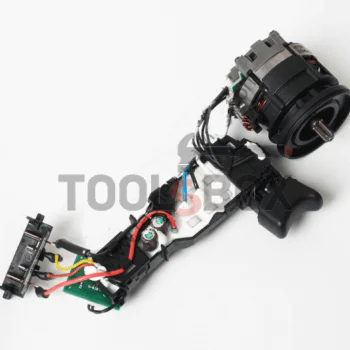
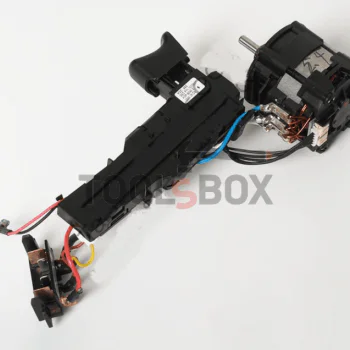
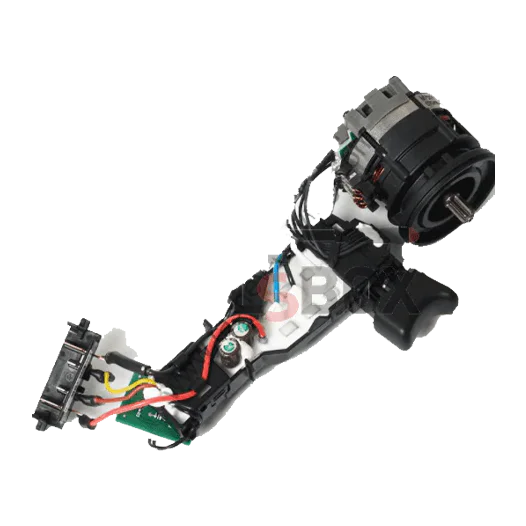
Electric Motors
Electric Motors for Machinery, Equipment, and Maintenance
Electric motors are selected for the repair, replacement, or installation of drives for machinery and equipment. They convert electrical energy into rotational motion and play a direct role in the operation of pumps, fans, compressors, gear mechanisms, woodworking machines, metal-cutting machines, agricultural machinery, and various production lines. In this section, you will find models for service, workshops, industrial maintenance, and home use, where a precise replacement part with the correct electrical and mechanical parameters is required.
Electric motors differ in power supply, power, speed, mounting method, shaft size, cooling, and housing design. When replacing an old motor, it is necessary to ensure compatibility not only in terms of power but also in terms of mounting dimensions, direction of rotation, connection type, and operating mode. This ensures that the machine maintains its normal torque, does not overload, and operates with less vibration.
Types of Electric Motors and Applications
Single-phase electric motors are used in smaller machines and equipment operating on a standard 230 V power supply. Such solutions are found in hobby machines, small pumps, fans, compressors, and workshop tools. They are often preferred where there is no three-phase power supply and the load is moderate.
Three-phase models are common in industrial machinery, production equipment, heavy-duty pumps, gearboxes, conveyors, and construction equipment. They operate reliably under continuous load and allow operation with a variable frequency drive when the system requires speed control. Induction motors are among the most widely used drive solutions due to their simple design, relatively easy maintenance, and good compatibility with many machines.
Where are they used as replacement parts
Electric motors are installed when repairing equipment with power loss, burnt-out windings, damaged bearings, overheating, noise, or mechanical wear. They are in demand for servicing water pumps, circular saws, grinders, concrete mixers, fans, lathes, milling machines, compressors, and other electrically driven machines. When replacing a motor, it is wise to check the data on the old motor's nameplate, because identical external dimensions do not always mean full compatibility.
How to Choose the Right Model
When purchasing an electric motor, the first thing to check is the electrical parameters: voltage, power, frequency, current, speed, and wiring diagram. The power must match the machine's load. A weaker motor overloads more quickly, while an overly powerful model can sometimes cause problems with starting current, the gearbox, or mounting.
Next come the mechanical dimensions. Important factors include the shaft diameter and length, the distance between mounting holes, the shaft height, and the flange or mounting feet. Common mounting configurations include foot-mounted, flange-mounted, or combined mounting. For machines with a pulley, coupling, gearbox, or fan wheel, the accuracy of the shaft and the motor's position are critical for smooth operation.
| Criterion | What to check | Why it matters |
|---|---|---|
| Power supply | 230 V or 400 V, single-phase or three-phase | Compatibility with the electrical installation |
| Power | kW or HP as indicated on the old motor's nameplate | Normal torque without overload |
| RPM | min-1 at rated frequency | Maintenance of machine speed |
| Mounting | Foot mounts, flange, combined mounting | Precise fit to the frame or gearbox |
| Shaft | Diameter, length, keyway | Compatibility with washer, coupling, or working element |
Design, cooling, and operating environment
Electric motors for machinery operate in environments with dust, vibrations, temperature fluctuations, and start-stop loads. Therefore, the housing, bearings, ventilation, and protection against contamination are crucial for the drive's long service life. When operating in a workshop or on a construction site, motors with good mechanical durability are required, while for pumps and fans, stable operation during continuous operation is essential.
Cooling is typically provided by a fan and fins on the housing. Dust buildup around the cooling vents raises the temperature, so periodic cleaning is part of routine maintenance. For single-phase motors, the condition of the capacitor is also monitored, because a weak or damaged capacitor hinders startup and reduces torque.
Compatibility and Safe Installation
Electric motors must be connected according to the diagram indicated on the terminal box or nameplate. Properly sized cables, overload protection, and correct grounding are required. For three-phase systems, check the direction of rotation before actually loading the machine. For belt drives, adjust the tension, as excessive tension strains the bearings, while a loose belt causes slippage.
For service replacements, accessories and related parts such as capacitors, terminal boxes, fans, covers, bearings, washers, couplings, and fasteners are useful when the specific machine requires them. The combination of the right motor and the correct connecting elements reduces repair time and facilitates adjustment after installation.
Electric motors for professional and home use
Electric motors are needed in service shops and production facilities as well as in a well-equipped home workshop. For professional use, models designed for more intensive operation and compatible with industrial machines and gearboxes are required. For home use, more compact single-phase motors for small machines, pumps, and auxiliary equipment are often sufficient.
Compare the models on Toolsbox.bg by power, speed, power supply, mounting type, and dimensions. This will help you select an electric motor that fits the specific machine, facilitates repairs, and restores the equipment to normal operation.