
Screwdriver riveter
Rivet gun for a screwdriver - a practical attachment for riveting during installation and repair
A rivet gun attachment for a screwdriver turns a standard screwdriver or drill into a convenient tool for setting rivets. This type of attachment is a valuable choice when working with sheet metal, aluminum profiles, thin-walled metal parts, plastic, and various mounting elements where a stable mechanical connection is needed without access from the back side. Instead of a separate manual riveter, the craftsman relies on the torque of the power tool and achieves faster riveting when working with a series of fasteners.
A riveter for a screwdriver is a compact solution for workshops, service centers, construction and renovation work, installation of ventilation ducts, cladding, metal structures, signs, enclosures, fences, and home repairs. With the correct nozzle size and compatible fasteners, the attachment helps ensure even pulling of the rivet shank and a clean bond between the joined surfaces.
Purpose and Typical Applications
Screwdriver riveters are primarily used for installation with blind rivets, where the fastener is placed on one side of the part. This makes them convenient for repairing sheet metal panels, securing profiles, and installing boxes, frames, air ducts, decorative elements, and light metal assemblies. The range also includes attachments for various types of rivet nuts, provided the specific model is designed for such work.
For professional use, models with more durable jaws, a sturdy body, and a set of interchangeable bits are preferred. For home use, a more compact version is often sufficient; it attaches easily to your existing screwdriver and covers standard fastener sizes for repair tasks. A screwdriver-mounted riveter is also a good choice for mobile teams because it saves space in the toolbox and works with an existing cordless tool.
How does one screwdriver riveter differ from another?
The differences between the various models are primarily related to the compatible rivet sizes, the type of grip, the mechanism's design, and the accessories included in the set. Some models are designed for finer fasteners and thin materials, while others are geared toward heavier-duty work with larger diameters. For a series of installations, ease of changing the nozzles, cleaning out broken stems, and stability when gripping in the chuck are also important.
| Criterion | Practical significance |
|---|---|
| Rivet size | Depends on the thickness and material of the parts being joined. |
| Fastener type | Blind rivets or rivet nuts, when the attachment is designed for them. |
| Compatibility with a screwdriver | Grip and the required torque affect stable operation. |
| Bit set | More sizes provide greater flexibility for various installations. |
| Material of working parts | The jaws and guide elements are critical for wear resistance during a series of riveting operations. |
Choosing a rivet gun for a screwdriver based on the task
When selecting a riveter for a screwdriver, consider the material, the thickness of the parts being joined, and the diameter of the fastener. Aluminum rivets are easier to work with and are practical for light-duty assemblies. Steel rivets require more force and a more robust power tool. With stainless steel fasteners, the load on the jaws is even greater, so a model with a more robust working head and good support in the chuck is recommended.
Compatibility with the screwdriver isn't limited to just the chuck. The tool must have sufficient torque, a good battery for cordless models, and smooth speed control. Excessively high speed does not always help when riveting; control during start-up and stopping is more valuable to avoid twisting, slipping, or damaging the fasteners.
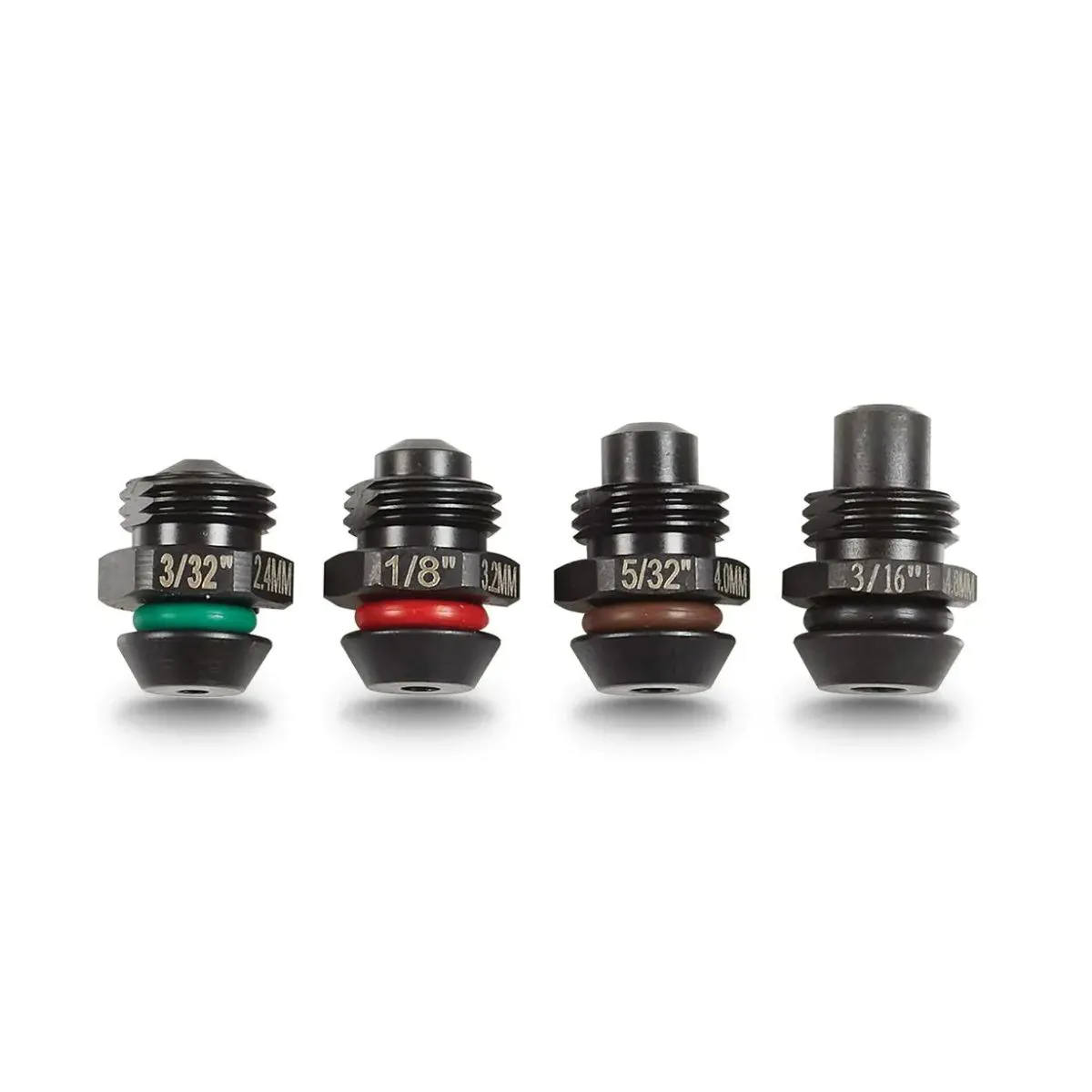
A riveter for a screwdriver with multiple nozzles is more versatile when working with different diameters. Checking the markings on the nozzles and ensuring they match the rivets reduces the risk of jamming. For more frequent professional use, it is worth paying attention to the availability of replacement jaws, a bit-changing tool, and ease of disassembly for cleaning.
Working with a screwdriver riveter, safety, and maintenance
A screwdriver riveter works best when the rivet is positioned perpendicular to the surface and the parts are properly aligned before riveting. The hole must match the diameter of the fastener, without excessive play. If the hole is incorrect, the joint loses stability, and the rivet head does not sit flush against the material.
Safety goggles are required during operation because the broken-off shank is ejected with a sudden movement. Gloves provide protection when working with sheet metal and sharp edges, but they should not interfere with control of the rivet gun. After a series of rivets, it is advisable to clean the mechanism of metal particles and debris, and to inspect the jaws for wear. Light lubrication of the moving parts, when permitted by the manufacturer, maintains the smooth operation of the attachment.
Screwdriver riveter for workshops, service centers, and on-site installation
A rivet gun for a screwdriver is a practical addition to a set of screwdriver bits because it expands the tasks a machine can perform on-site or in a workshop. It is valuable for repeated riveting, for repairing thin metal components, and in situations where using a hand tool tires the operator. The precise selection of the attachment, compatible rivets, and proper adjustment of the screwdriver ensure stable connections and a neater finish.
Browse the offerings at Toolsbox.bg and choose a rivet gun for your screwdriver based on the size of the fasteners, the frequency of use, and the type of installation you're performing.