
Soldering iron
Soldering iron for precision soldering, repair, and assembly
The soldering iron is a practical power tool for joining metal parts using solder, widely used in electronics, cable connections, maintenance work, hobby projects, and small repair tasks. It is used to work on wires, circuit boards, terminals, sockets, connectors, decorative metal parts, and various components that require controlled temperature and a clean solder joint. At Toolsbox.bg, you'll find models for everyday home use, for the workshop, and for more intensive professional work.
A properly selected soldering iron makes soldering easier, reduces the risk of overheating sensitive components, and helps ensure a strong electrical or mechanical connection. The different models vary in power, tip shape, heat-up time, ergonomics, power source, and temperature control capabilities. When choosing a soldering iron, it is helpful to consider the type of tasks, the size of the components, and the frequency of use.
What Soldering Irons Include and Where They Are Used
Soldering irons are used for the installation and repair of electronic components, repairing broken wires, tinning cables, soldering connectors, and replacing capacitors, resistors, and other elements on printed circuit boards. They are also used in automotive electrical systems, audio equipment, lighting fixtures, small appliances, and various repair tasks in workshops.
For delicate electronic work, more precise control, a fine tip, and a stable operating temperature are required. For thicker cables, larger terminals, and metal surfaces, a higher-power model is needed, one that heats the component faster and maintains the temperature during extended contact. Compact models are available for mobile work, while for a workbench, sets with a stand, a cleaning sponge, or metal shavings for tip maintenance are often preferred.
Main types of soldering irons
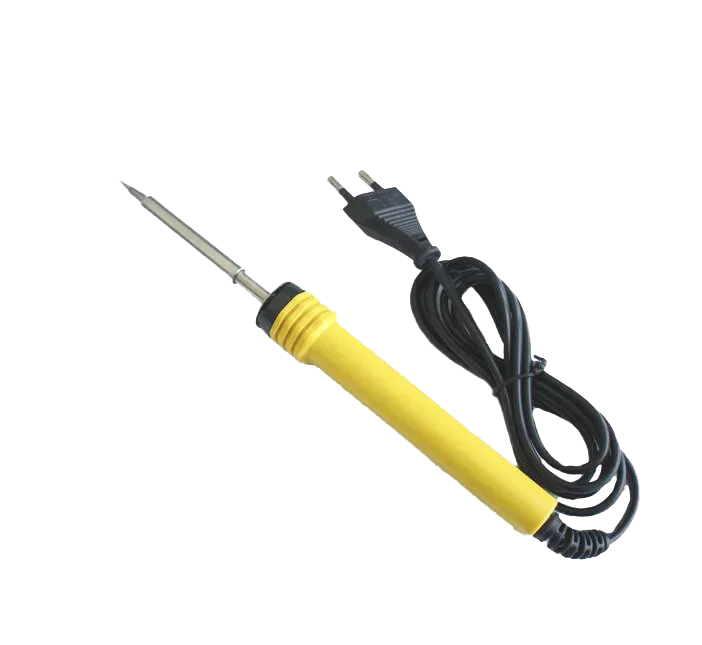
- Constant-power electric soldering iron-a practical choice for cables, terminals, general repairs, and occasional use at home or in the workshop.
- Soldering iron with temperature control-provides better control for sensitive electronic components and various types of solder.
- Pistol-style soldering iron-convenient for larger joints, cable lugs, and tasks requiring rapid heating.
- Compact soldering iron for precision work-used for small circuit boards, thin wires, and limited workspaces.
- Soldering station-a solution for repair shops, electronics, and continuous use, where temperature stability and convenience are key factors in the choice.
Power, temperature, and tip shape
Power affects the heating speed and the tool's ability to retain heat when in contact with the workpiece. Lower power is suitable for delicate electronic components, where excessive heat poses a risk to the circuit boards and components. Higher power is preferred for thick wires, solid terminals, and components that draw more heat from the tip.
Temperature control is valuable when working with different solders and materials. Tin-lead solders, lead-free alloys, and fluxes behave differently when heated. Models with temperature adjustment help achieve a cleaner solder joint, less oxidation, and better adaptation to the specific task. During continuous service, a stable temperature reduces interruptions and makes the process more predictable.
The tip is the working part that transfers heat to the soldering site. Thin, conical tips are convenient for small components and tight spots. Flat and beveled tips transfer more heat and are practical for cables, terminals, and larger solder joints. If you frequently switch between tasks, it makes sense to choose a model with interchangeable tips so the tool can adapt to different applications.
Criteria for choosing a soldering iron
When buying a soldering iron, it's best to consider not just the power, but overall ease of use. The handle should sit firmly in your hand and insulate against heat. The cord shouldn't get in the way, especially when working on fine solder joints on circuit boards. A stand is useful for safely setting down the hot tool between tasks.
- Type of work-electronics, cables, automotive installations, hobby projects, or professional repair.
- Part size-small components require a finer tip, while larger connections require higher heat output.
- Adjustment-useful for different solders and sensitive materials.
- Ergonomics - the comfortable handle reduces fatigue during long work sessions.
- Maintenance-replaceable tips, the stand, and cleaning accessories extend the tool's service life.
For occasional home repairs, a standard electric model is often sufficient. For service work, electronic circuit boards, and daily use, models with temperature control or a soldering station are more practical. When installing cables and larger connections, a soldering gun or a model with higher power ensures faster work and stable heating of the soldering area.
Consumables, Maintenance, and Safe Operation
The quality of the solder joint depends not only on the soldering iron but also on the solder, flux, the cleanliness of the tip, and proper preparation of the parts. Oxidized surfaces hinder the flow of solder, so the wires and contact pads must be clean. The tip should be cleaned regularly with a suitable sponge or metal file, and the tip should be tinned to reduce oxidation.
Safety during soldering requires a stable work surface, good ventilation, and careful handling of hot parts. The soldering iron should be placed on a stand, away from flammable materials. When working with electronics, the power to the device being repaired is turned off, and sensitive components are protected from excessive heat. After finishing, the tool is allowed to cool completely before storage.
Browse the soldering iron options at Toolsbox.bg and choose a model that suits your needs-from fine electronics soldering to cable repair, assembly work, and service environment tasks.