
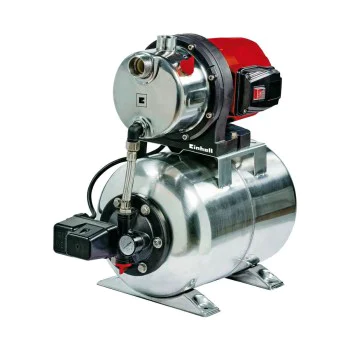
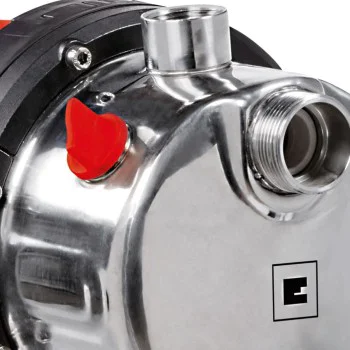
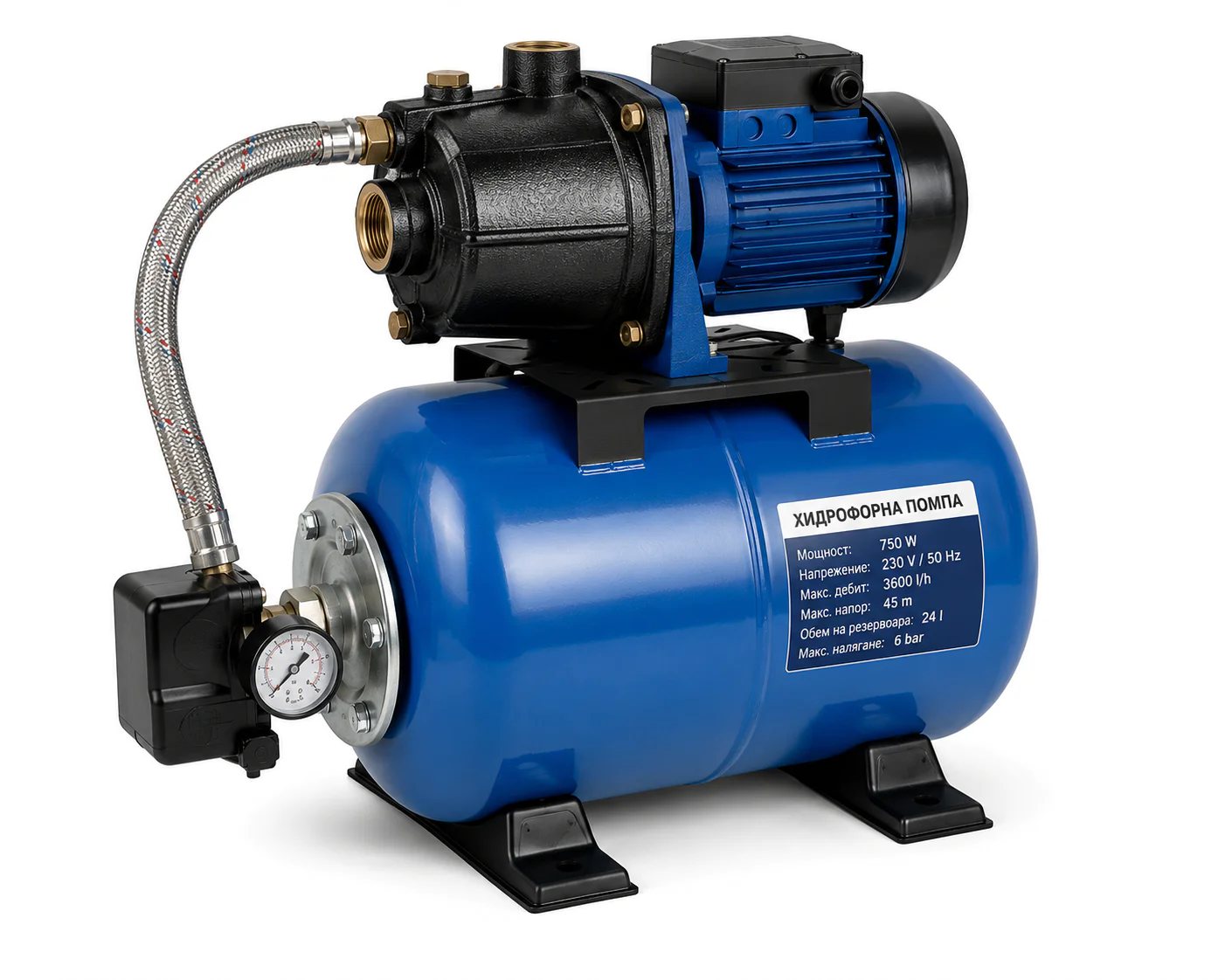
Hydrophore pump
Pressure pump for a reliable water supply in your home, yard, and workshop
A pressure booster pump is a practical choice when you need to supply water from a well, tank, cistern, or shallow water source to a house, cottage, garden, utility room, or small workshop. It maintains pressure in the plumbing system and ensures a steady supply to faucets, showers, irrigation systems, washing machines, and other points of use. This section offers models with varying power, flow rate, head, construction, and control methods, allowing you to select a unit based on the actual load and installation specifics.
Pressure booster systems are valued in locations without a central water supply or in areas where pressure is unstable. The combination of a pump, pressure switch, pressure gauge, expansion tank, and connection components allows for automatic on/off operation in response to pressure changes. This ensures water reaches consumers with smoother system operation, and the pump does not start every time a faucet is briefly opened.
Applications of a pressure booster pump
A pressure booster pump is used for domestic water supply, garden irrigation, supplying outdoor faucets, yard maintenance, filling and emptying containers, and supplying water to sanitary facilities and outbuildings. When properly sized, it works well both in a home environment and for more intensive use in small farms, vacation homes, service stations, and construction sites with a temporary water source.
For garden irrigation, the pressure pump can supply water to hoses, sprinklers, and drip lines when the flow rate and pressure are matched to the number of outlets. When supplying a residence, it is necessary to consider the number of floors, the length of the piping, the suction head, and the number of simultaneously operating appliances. For service or workshop use, the durability of the housing, ease of maintenance, and compatibility with the existing plumbing system are important.
How to Choose a Pressure Pump
When selecting a booster pump, several technical parameters are key. The flow rate indicates the amount of water the unit delivers per unit of time. The head is related to the height and distance over which the water must be transported. Power affects performance but is not the only indicator for proper selection. The depth of the water source, the diameter of the pipes, the number of bends, and the condition of the suction line must also be taken into account.
The expansion tank limits the number of pump starts and helps ensure smoother system operation. A smaller tank is suitable for compact installations and infrequent use, while a larger tank is practical for more frequent tap use and higher flow rates. The body material is also important: cast iron bodies are sturdy and robust, stainless steel bodies are preferred in wetter environments, and technopolymer solutions reduce weight and are convenient for moving.
| Criterion | What to consider |
|---|---|
| Flow rate | Number of water outlets, irrigation lines, and expected flow rate |
| Head | Delivery height, pipe length, and line losses |
| Suction | Depth to the water table and compaction of the suction line |
| Expansion tank | Volume based on frequency of operation and consumption |
| Material | Cast iron, stainless steel, or technopolymer depending on the medium |
Design types and operating characteristics
Different models of booster pumps differ in their hydraulic components, impeller, housing, control system, and connection dimensions. Self-priming models are suitable for water sources with fluctuating levels, provided the suction line is properly installed and equipped with a check valve. Centrifugal models are common for domestic water supply and garden irrigation. Multistage designs provide higher pressure at similar flow rates and are valuable for longer runs or multiple floors.
Some pressure booster pump models feature additional protections, such as motor thermal protection or dry-run protection. These features are useful in cases of fluctuating water levels, but every installation requires proper installation, a clean water source, and well-sealed connections. For water containing sand, silt, or mechanical particles, a filter upstream of the pump is recommended to reduce wear on the working parts.
Installation, Compatibility, and Maintenance
A pressure booster pump works best when installed in a dry, well-ventilated, and frost-protected location. The suction hose or pipe must be of the correct diameter, free of air leaks, and equipped with a high-quality check valve. The pressure gauge and pressure switch provide pressure control, and their settings must correspond to the pump's capabilities and the pressure in the expansion tank. When connecting to a home plumbing system, the flow direction, power supply, and moisture protection requirements must be observed.
Maintenance includes checking the pressure in the diaphragm tank, cleaning or replacing filters, inspecting for leaks, checking the cable, and periodically inspecting the pressure switch. In winter, the unit and pipes must be protected from freezing, and during seasonal use, the water is drained after operation is complete. This protects the housing, impeller, seals, and electric motor.
Accessories and Consumables for Pressure Systems
Additional components are also important for the proper operation of a pressure booster pump: suction hoses, fittings, check valves, filters, pressure switches, pressure gauges, vessel diaphragms, seals, and cables. Compatible accessories facilitate installation, maintenance, and repair, while the correct thread and pipe sizes minimize pressure loss. When replacing parts, it is necessary to verify the connection size, operating pressure, and specifications of the specific model.
Choose a booster pump from Toolsbox.bg based on the water source, required flow rate, head, housing material, and installation method. This will ensure your system operates reliably for domestic water supply, garden irrigation, repair work, and property maintenance.