
Cable pulling wire
Cable Pulling Tool for Electrical Installation and Wiring
A cable pulling wire is a practical tool for pulling wires through pipes, corrugated hoses, cable ducts, floor channels, walls, suspended ceilings, and hard-to-reach cavities. It assists installers in setting up electrical, communication, alarm, network, and low-voltage systems where the cable cannot be pulled through by hand. The right model saves time, protects the wire's insulation, and reduces the effort required when working on long or curved runs.
At Toolsbox.bg, you can explore various options for cable pullers, probes, and cable guides designed for both professional electrical installation work and precise home installations. The differences between models are mainly in length, material, stiffness, diameter, tip type, and storage method. These characteristics directly affect the cable puller's performance in tight conduits, around bends, and when pulling heavier cables.
What is a cable pull string?
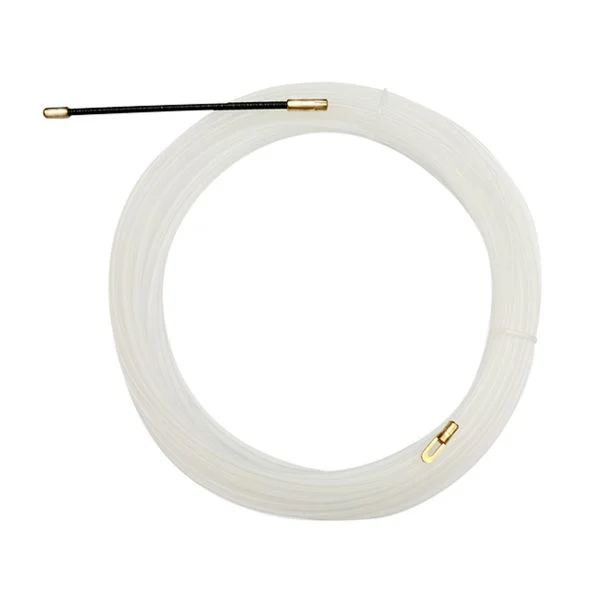
A cable pulling wire acts as a guide. It is first run through the empty conduit, after which the cable or auxiliary connection is attached to its end. When pulled, the cable puller guides the cable back through the conduit or channel. This makes installation more controlled, without unnecessary bending, twisting, or stress on the conductors.
Depending on the design, you may find flat or round pullers, cassette models, reel-mounted probes, and more flexible options for short runs. Some are equipped with a metal guide, a gripping handle, a threaded end, or interchangeable attachments. For longer wires, the cassette or reel helps keep the wire organized and makes it easier to unwind the tool during use.
Materials and Performance
The wire material determines its flexibility, resistance to pressure, and ability to navigate bends. Steel wires are preferred for straighter runs and when greater pulling force is required. They are rigid, guide well through the pipe, and withstand heavier loads, but require more careful handling in very sharp turns.
Fiberglass probes are practical for longer runs because they combine good flexibility with a stable shape. They move smoothly through pipes and ducts, and models with the right diameter can navigate several bends without excessive resistance. Polyamide and plastic probes are lightweight and convenient for shorter installations, repair work, and residential plumbing.
| Cable type | Practical use | Characteristics |
|---|---|---|
| Steel | Straight runs, stiffer pipes, higher tensile strength | Good traction, higher stiffness, requires careful handling |
| Fiberglass | Long runs, cable ducts, installation in buildings | Flexible, stable, easy to handle in turns |
| Polyamide or plastic | Short runs, lightweight cables, home repairs | Lightweight, flexible, easy to store |
Length, diameter, and tip
When selecting a cable pulling wire, length is the first parameter that must match the route. For home renovations, shorter options are often sufficient, while longer cables are needed for office, commercial, and industrial projects. It is good practice to allow for extra length beyond the actual pipe length, as the route may include bends, vertical sections, or hidden branches.
The diameter affects the ease of passage. Thinner cables pass more easily through narrow corrugated pipes, but are not as convenient when pulling heavier bundles. Thicker probes provide better control and higher pressure resistance, but require sufficient space in the pipe. The tip matters for cable grip: an eyelet, hook, flexible guide, or threaded connection can facilitate securing and reduce the risk of detachment mid-run.
Applications in Installation, Repair, and Maintenance
Cable conduits are used when installing new electrical systems, replacing old wires, and adding internet cables, coaxial lines, signal cables, intercom connections, and video surveillance systems. They are invaluable when working in finished spaces where walls, floors, and ceilings are already complete and access to the route is limited.
In maintenance work, the cable helps trace a conduit, clear a clogged pipe of small obstructions, and prepare for subsequent cable pulling. In construction, it is used for new installations before the final closing of walls, and in workshops or on-site maintenance, it enables a quick response to changes in the wiring.
Tips for the right choice
- Check the length against the actual route and allow for extra length for bends and vertical sections.
- Select the material based on the pipe's stiffness, the number of bends, and the cable's weight.
- Match the diameter to the internal size of the conduit and the available space within it.
- Choose a tip that allows for a secure connection or attachment of the conductor.
- For regular professional use, look for a model with a convenient cassette or reel for faster retrieval and better protection during transport.
Safety and Maintenance
Work on electrical conduits must be performed with the power supply disconnected and clearly marked lines. Cables should not be pulled abruptly, as excessive force can damage the insulation or jam the conductor in a bend. If there is significant resistance, it is better to release the cable gradually and lubricate it with a special pulling gel, if such a gel is permitted for the specific installation.
After use, the cable should be cleaned of dust, plaster, and lubricant residue, then stored without kinking. The ends and connections should be inspected for deformation, as a damaged end can snag the conduit or come loose during subsequent installation. Proper storage extends the service life and maintains the tool's smooth passage.
Choose a cable pulling wire from Toolsbox.bg
Browse the available cable pulling wire options at Toolsbox.bg and select a model based on the length of the route, the type of conduits, the number of bends, and the cables you will be pulling. This way, you get a practical tool for electrical installation, repair, and maintenance that makes cabling more organized, controlled, and clean.