
Organizers
Organizers for a tidy workshop, service center, and installation site
Organizers are used for sorting, transporting, and storing tools, fasteners, consumables, and small accessories that are easily lost during repair, construction, or service work. They help ensure every part has a designated place-from screws, dowels, nuts, and washers to sockets, drill bits, bits, knives, clamps, and small hand tools. With the right model, your workspace stays cleaner, task preparation is faster, and transporting the necessary supplies is more convenient.
Within the category of toolboxes and organizers, these items serve a special purpose: they are not merely storage boxes, but a practical system for sorting items by size, type, and application. Organizers are sought after by craftsmen, installers, technicians, electricians, mechanics, furniture makers, and home users who value order during repair work, equipment maintenance, or work in a garage or workshop.
What Do Organizers for Tools and Supplies Include?
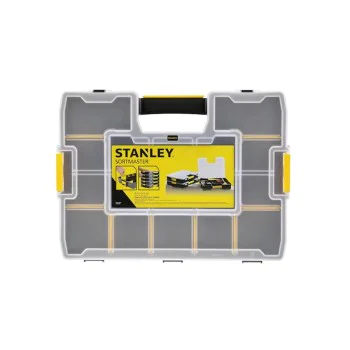
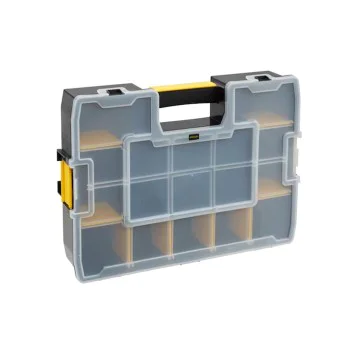
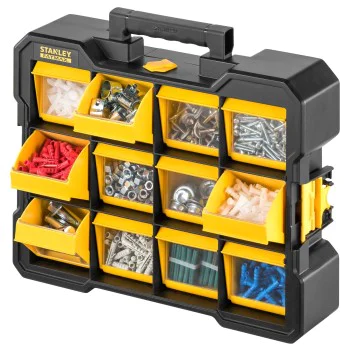
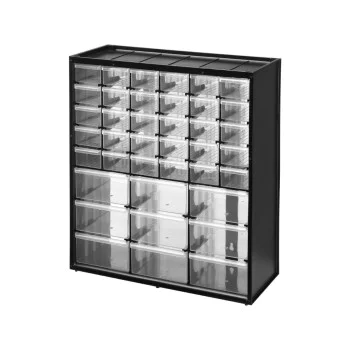
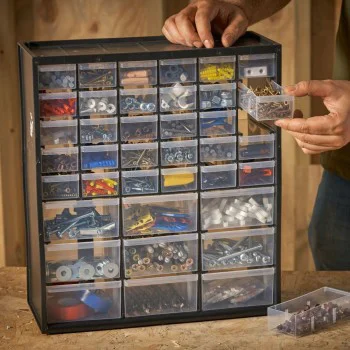
Organizers are available in various designs depending on the work method and the volume of supplies. Compact models are convenient for small fasteners and accessories that are carried in a car, tool case, or installation bag. Larger boxes with multiple compartments are practical for workshops, warehouses, and service areas where various sizes of bolts, dowels, cable lugs, gaskets, or spare parts are stored.
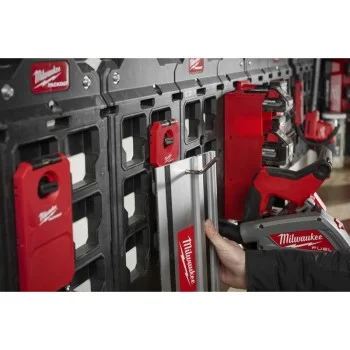
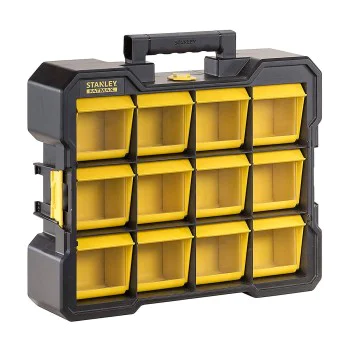
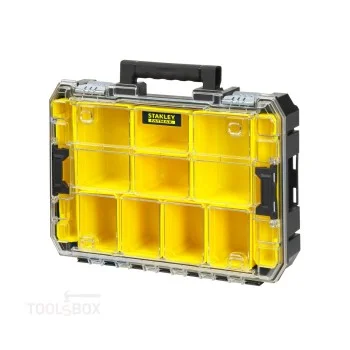
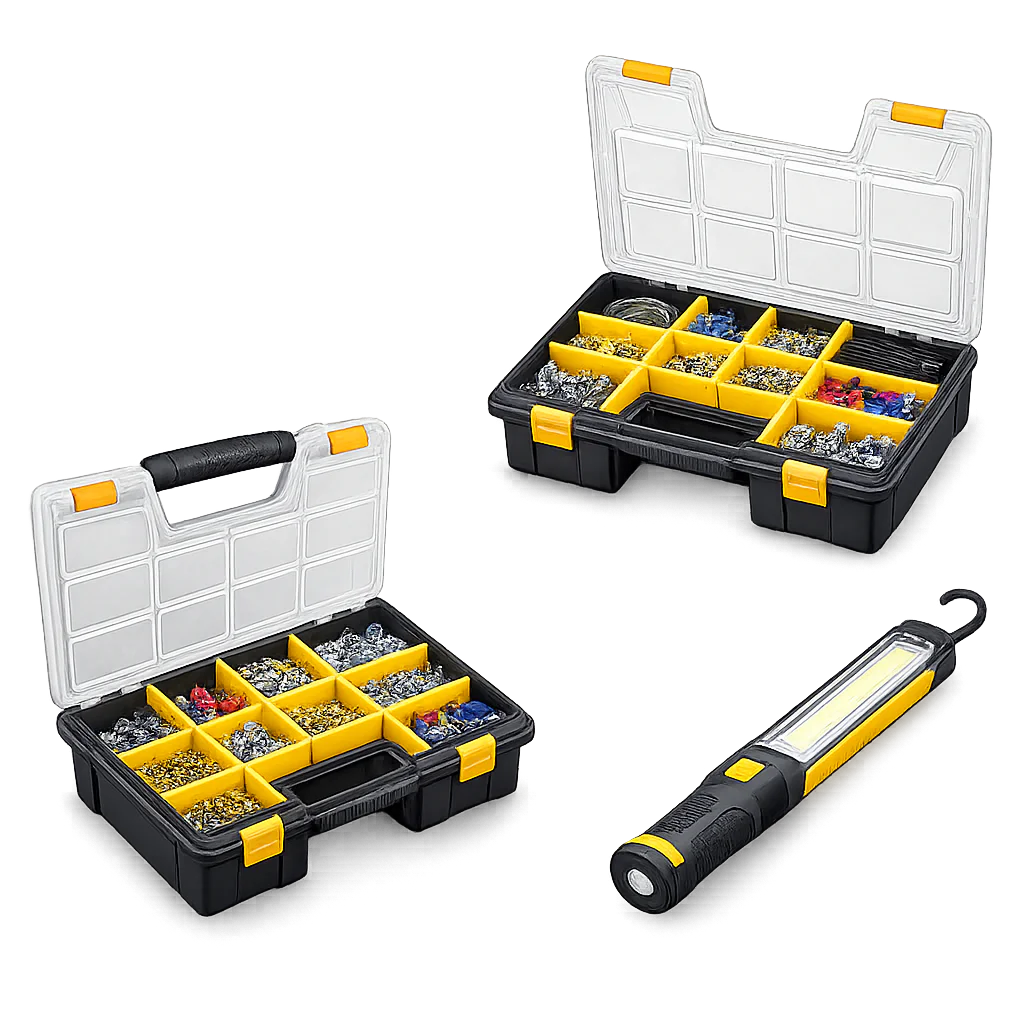
Models are available with fixed dividers, movable dividers, transparent lids, locking clips, carrying handles, deep slots for larger items, or shallow sections for precise organization. In some organizers, the lid fits tightly against the compartments to prevent small items from mixing during transport. Others are designed for stationary storage on a shelf, workbench, or rack.
Main applications in the workshop and on-site
Organizing small parts is especially valuable during installations, where every minute spent searching slows down the task. Organizers are convenient for electrical installations, furniture assembly, drywall installation, machine repair, automotive maintenance, plumbing work, structural assembly, and service calls. With them, various supplies remain separated, visible, and easy to reach.
- For fasteners: screws, dowels, nuts, washers, anchors, nails, and staples.
- For power tool accessories: bits, drill bits, sockets, sanding discs, blades, and small attachments.
- For electrical materials: terminals, cable lugs, connectors, insulating elements, and labels.
- For repair: gaskets, springs, pins, clips, replacement parts, and small mechanical components.
- For the home workshop: supplies for repairs, gardening, hobbies, and home maintenance.
Types of Organizers by Design
The differences between the various models are most evident in the number of compartments, the material, the closing mechanism, and portability. For on-site work, the lid and the lock are very important because they prevent the contents from spilling. For stationary storage, visibility, easy access, and the ability to stack several boxes on top of each other are more valuable.
| Type | Practical Application | What to Consider |
|---|---|---|
| Compact Organizers | Small fasteners, bits, terminals, mounting accessories | Compartment size, lid strength, ease of carrying |
| Models with movable dividers | Mixed supplies of various sizes | Number of dividers, stability of the dividers, internal depth |
| Boxes with transparent lids | Quick visual inspection of contents | Lid fit, scratch resistance, locking clips |
| Larger modular organizers | Service, warehouse, construction site, mobile work | Compatibility with other boxes, load capacity, handle and body |
How to choose organizers based on the task
When selecting, start with the contents you'll be storing. For small screws and electrical terminals, multiple shallow compartments are more convenient. For dowels, anchors, longer drill bits, or spare parts, a deeper body is needed. If the accessories are carried in a vehicle or between different sites, look for organizers with a secure closure, a sturdy handle, and a lid that prevents shifting between compartments.
The material matters too. Plastic cases are lightweight and convenient for daily use, while reinforced boxes with thicker walls perform better under heavy loads in a service environment. Metal components in the hinges or fasteners add durability during intensive use. The transparent lid saves time because you can see the contents without opening it, while the solid body protects the parts from dust, impacts, and dirt.
Size, Compartments, and Compatibility
The organizer's size should match the storage space and how it will be transported. A low, lightweight model is practical for a tool case or backpack. For a workbench or shelf, larger organizers provide better separation of fasteners and a clearer layout. With modular systems, check compatibility with existing cases, carts, or containers to create an organized work area without unnecessary transferring of contents.
The number of compartments isn't always a sufficient criterion. The right combination of small, medium, and large sections works best. Removable dividers allow you to adjust the interior space to accommodate new supplies, while fixed dividers provide stability when transporting heavy or small metal parts. For very small items, look for models where the lid fits snugly against each compartment.
Maintenance, Safety, and Long Service Life
Organizers work best when they are not overloaded and when the contents are distributed evenly. It is advisable to place heavy fasteners in deeper and sturdier sections, and sharp items in such a way that they do not damage the walls or the lid. When working on a construction site, clean dust, sand, and metal shavings from the hinges and locking mechanisms, as their buildup makes closing difficult.
Labeling compartments is a small habit with a big impact on service work. Markings by size, thread type, diameter, or material reduce confusion and make it easier to restock missing consumables. For electrical components and small spare parts, sorting by type prevents items from getting mixed up and speeds up pre-installation preparation.
Organizers from Toolsbox.bg for better tool organization
Organizers are a practical addition to any workshop, service vehicle, installation kit, or home repair corner. Choose a model based on the size of your accessories, the number of compartments, how you'll carry it, and the workload during use. At Toolsbox.bg, you'll find solutions for organizing fasteners, consumables, accessories, and small tools, keeping your workspace neatly organized and ready for the next task.