
Appliances for sharpening chains
Chainsaw Chain Sharpening Tools and Maintenance
Chain sharpening tools are practical equipment for maintaining the cutting teeth of chains for chainsaws, electric chain saws, and cordless chainsaws. A sharp chain cuts faster, puts less strain on the engine, and reduces excessive heating of the guide bar. The range of chain sharpening tools includes models for workshops, service centers, logging, yard and garden maintenance, as well as for users who service their own equipment.
When working with a dull chain, you'll notice slower cutting, finer dust instead of coarse chips, side-to-side pulling of the bar, and greater effort required from the operator. Precisely sharpened teeth restore the chain's correct geometry and help ensure smooth, controlled cutting. Chain sharpening tools allow for a consistent angle, uniform tooth length, and better control over the material removed with each pass.
What chain sharpeners include
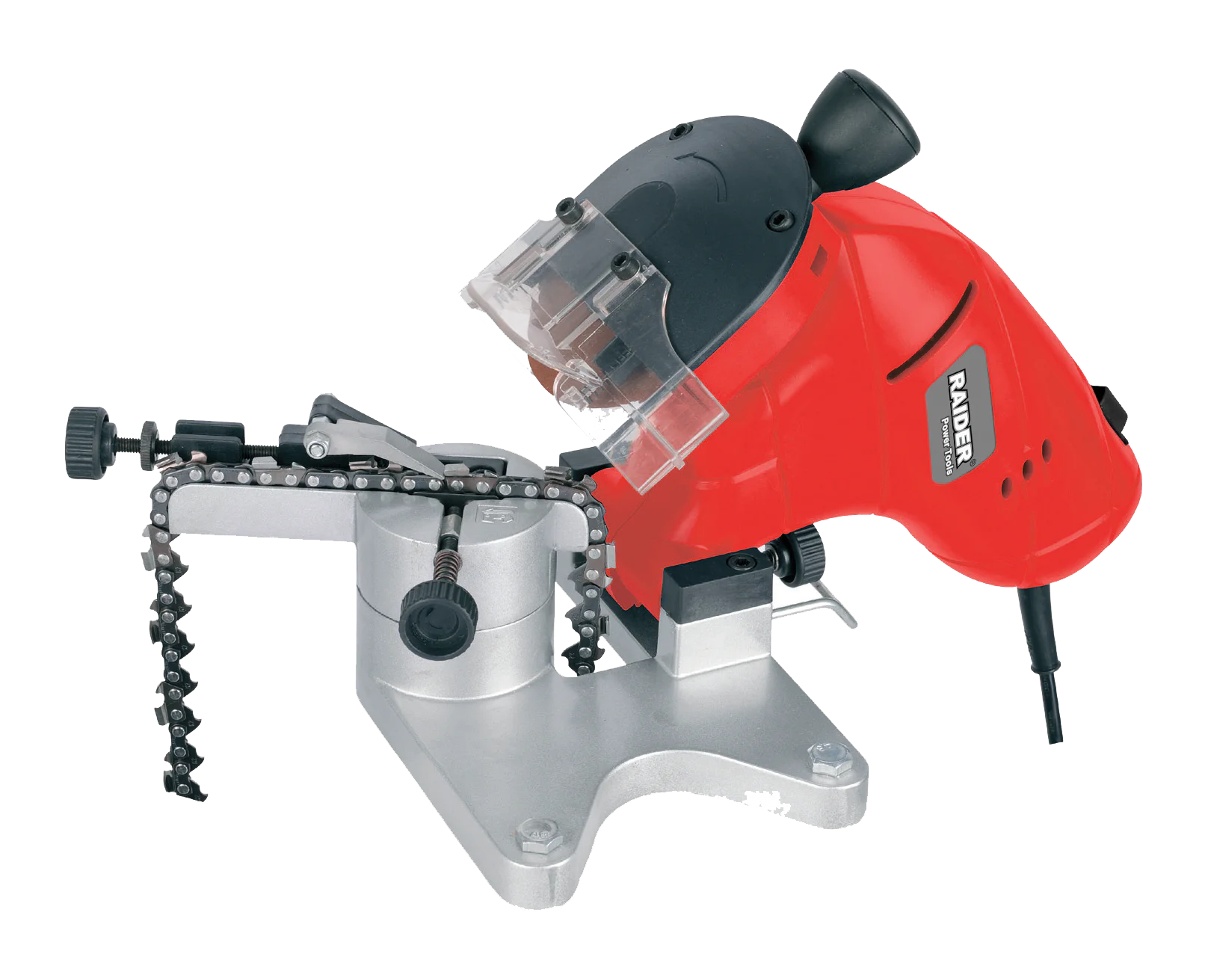
Chain sharpening tools can be compact bench-top machines, electric models with a clamping mechanism, devices with adjustable angles, options for different chain pitches, and kits with abrasive discs. Some models are designed for occasional home use, while others are built for more intensive work in a service center or workshop.
The most common are electric sharpening machines, in which the chain is secured in a guide, and the rotating grinding disc processes the cutting tooth. Angle adjustment allows for adaptation to the chain's specifications, and the stroke limiter protects the tooth from excessive material removal. For more precise models, look for a stable base, a clear scale indicator, and smooth arm movement.
Main Applications
Chain sharpening tools are used for maintaining chains for firewood cutting, pruning, orchard maintenance, construction work with timber, and seasonal equipment preparation. They are useful for chainsaw owners who cut occasionally, as well as for professional teams where chains wear out quickly when in contact with dry wood, contaminated material, or sand.
- For home use-compact models that are easy to adjust, suitable for a few chains and occasional maintenance.
- For workshops-more stable devices with precise clamping, convenient for servicing various chains.
- For service shops-models with higher power, good visibility of the tooth, and a durable mechanism for frequent use.
How to choose chain sharpening tools
When selecting chain sharpening tools, consider the type of chain, frequency of use, and required precision. The chain pitch, guide bar thickness, tooth profile, and recommended sharpening angle are all important factors. For standard household chainsaws, a compact machine is usually sufficient, while for multiple chains, different sizes, and more intensive use, stable bench-top models are more convenient.
The power of the electric motor affects performance when cutting metal, but it is not the only criterion. More important for clean work are the stable chain clamping, the precise angle gauge, the correct guide bar, and the smooth lowering of the head. Excessively aggressive grinding heats up the tooth and shortens the chain's lifespan, so good control is essential for the result.
| Tool type | Intended use | What to consider |
|---|---|---|
| Compact electric model | Occasional sharpening at home or in a small workshop | Compatible discs, angle range, stable clamping |
| Bench-top machine | Regular maintenance of multiple chains | Sturdy base, comfortable handle, clear display of settings |
| Service-grade | Frequent work with different chains | Durable mechanism, power, precision in repetitive operations |
Compatibility, discs, and settings
Chain sharpening tools use abrasive discs of varying diameters and thicknesses. The disc is selected based on the chain and the profile of the cutting tooth. A disc that is too wide can alter the tooth's shape, while one that is too thin may operate more slowly or unevenly. On some machines, discs can be swapped for different chains, which is convenient when maintaining multiple saws.
Adjustments include the sharpening angle, cutting depth, tooth positioning, and chain tension. The left and right teeth are processed symmetrically to prevent the chain from pulling to one side during cutting. During maintenance, the depth gauge is also checked and adjusted, as a gauge set too high reduces cutting performance, while one set too low makes the work more aggressive and strenuous.
Safety and Maintenance During Sharpening
Chain sharpening tools require a stable workstation, proper mounting, and a clean area around the wheel. Safety goggles, gloves, and good lighting are essential parts of the work process. The chain must be cleaned of oil, resin, and chips, as contaminants hinder precise adjustment and accelerate abrasive wear.
After sharpening, the chain is inspected for broken links, damaged rivets, and uneven teeth. Regular maintenance of the machine itself includes cleaning the guide bar, checking the fasteners, and replacing the blade when worn. This way, the machine maintains its accuracy, and the chains are serviced more predictably.
Choose the right tool for your chains
Chain sharpening tools are a practical investment for anyone who wants to keep their cutting equipment in working order and reduce the costs of frequent chain replacement. Choose a model based on the number of chains, their size, frequency of use, and where the sharpening will take place. At Toolsbox.bg, you can find tools, compatible consumables, and accessories for the reliable maintenance of gas-powered and electric chainsaws.