
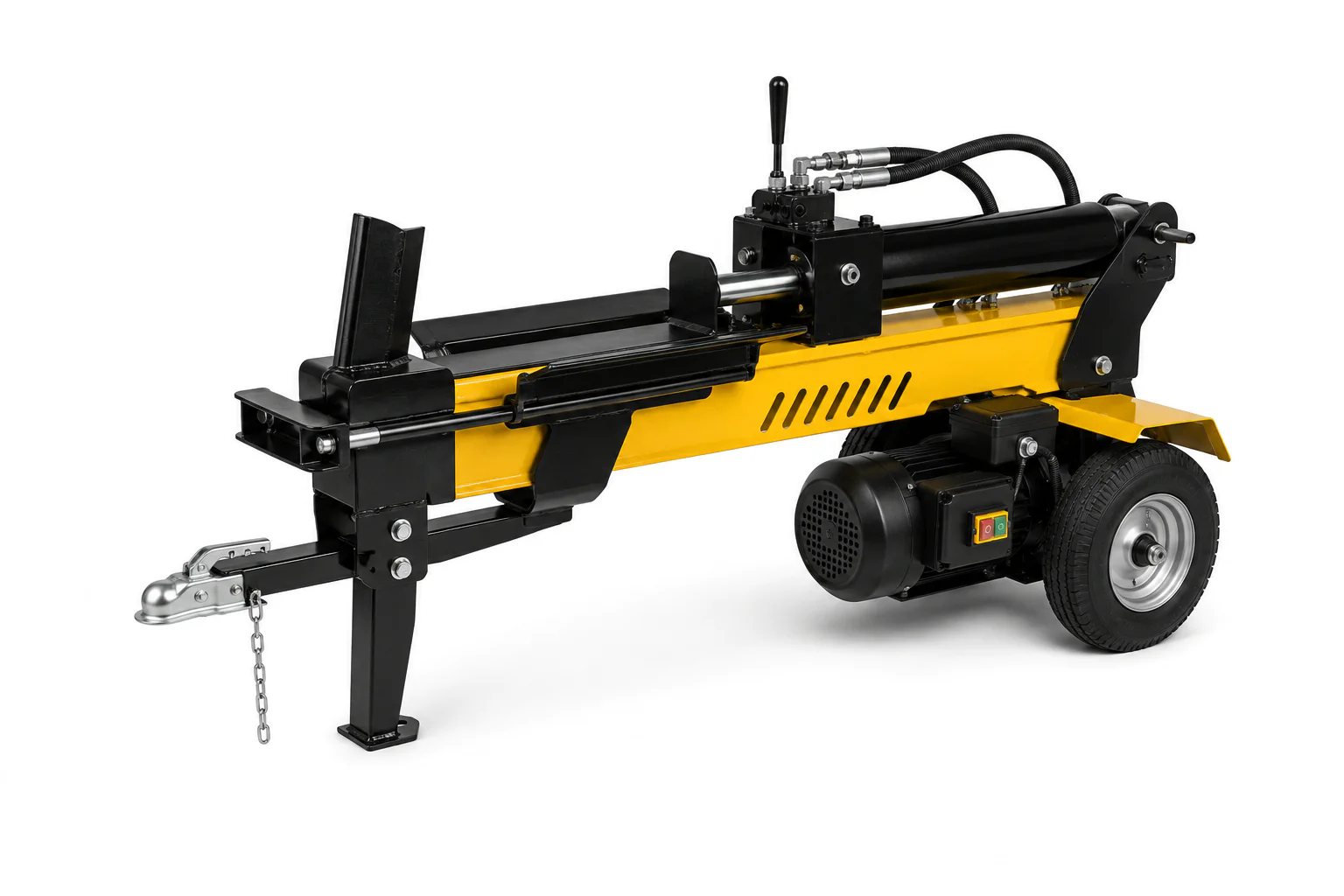
Wood splitter
Wood Splitter for Faster Firewood Preparation
A wood splitter is a practical machine for splitting logs, branches, and firewood for stoves, fireplaces, boilers, and workshops. It reduces the physical strain of handling wood and produces more uniform splits compared to using just an axe or wedge. In this section, you'll find solutions for yards, cottages, farms, service facilities, and professional firewood preparation, where a consistent work rhythm and better control over log size are essential.
A well-chosen wood splitter is a valuable piece of equipment for anyone who processes wood seasonally or year-round. The machines differ in splitting force, feed mechanism, operating position, maximum log length and diameter, piston stroke, operating speed, and ease of transport. This allows the customer to match the machine to their actual workload-from a few cubic meters of wood for home use to more intensive work on a farm.
What do the wood splitter offerings include?
The models offered cover the basic needs for splitting firewood. Electric machines are preferred for work around a house, garage, or shed where there is access to a power outlet. Hydraulic models use pressure from a cylinder and piston, allowing for even splitting of harder or knotty logs. For larger workloads, machines with higher tonnage, a stable frame, and a work surface that facilitates material positioning are preferred.
A wood splitter can be horizontal or vertical. Horizontal models are compact and convenient for shorter logs, while vertical models are more practical for longer and heavier logs, as the material is placed on the base and does not need to be lifted as high. Some machines come equipped with transport wheels, safety features, two-hand controls, an adjustable working area, or a stroke limiter, which reduces processing time when handling multiple pieces of wood of similar sizes.
Main applications in the yard, on the farm, and in the workshop
A wood splitter is useful for preparing firewood, cutting wood after using a chainsaw, maintaining agricultural properties, and tending to gardens with a lot of wood. After cutting the logs to length, the machine takes over the heavy lifting-splitting the wood into logs that are convenient for storage, drying, and burning. This makes the wood easier to stack, dries more evenly, and is more convenient to use during the heating season.
For home use, a compact electric log splitter with moderate splitting power and easy storage is often sufficient. For farmyards, logging operations, or regular processing of thicker logs, more powerful machines, a longer cylinder stroke, and a design capable of withstanding continuous operation are required. When making a selection, it is wise to consider not only the average diameter of the wood but also its type-beech, oak, hornbeam, and other hardwoods require more force than softer materials.
Criteria for choosing a wood splitter
Before purchasing, the actual workload and the size of the logs are of the utmost importance. Splitting force is measured in tons and indicates the pressure the machine applies to the material. A lower tonnage is suitable for dry, shorter, and relatively straight logs, while a higher tonnage is needed for thick, wet, knotty, or hard woods. The length of the logs must correspond to the machine's stroke and design.
- Splitting force: selected according to the hardness and diameter of the wood.
- Power supply: electric models are practical for yards and indoor workplaces with good ventilation.
- Operating position: horizontal for compact work, vertical for heavier logs.
- Log size: Check the maximum length and diameter allowed for the specific model.
- Mobility: wheels, handles, and weight are important when moving between a shed, storage area, and work site.
- Controls and safety: Two-hand control systems and safety guards minimize the risk during operation.
Comparison of the main models
| Option | Usage | Practical features |
|---|---|---|
| Horizontal electric wood splitter | Home, cottage, small yard | Compact, easy to store, good for short logs |
| Vertical wood splitter | Heavier and longer logs | More convenient positioning of the material on the base |
| Hydraulic log splitter with higher tonnage | Regular and heavy-duty use | Strong pressure, stable operation with hard and knotty wood |
Compatibility with the workflow and additional equipment
A wood splitter works best in a well-prepared area where the logs have been pre-cut to uniform lengths with a chainsaw. A level surface, good lighting, and a designated area for finished logs facilitate the entire cycle-cutting, splitting, sorting, and storage. For larger quantities of wood, it is helpful to have support stands, carts, gloves, safety goggles, ear protection, and sturdy work boots.
Compatibility with the electrical system should not be overlooked. For electric wood splitters, check the voltage, power rating, cable length, and condition of the plug. Extension cords must have a cross-section adequate for the load, and the machine must be protected from moisture and unstable surfaces. For hydraulic machines, monitor the oil level and condition, the seals, the cylinder, and the cleanliness around the moving parts.
Safe Operation and Maintenance
Operating a wood splitter requires careful organization and attention to detail. Logs must be centered, hands kept out of the pressure zone, and the machine used only on a stable surface. Do not split metal objects, stones, or wood containing foreign objects. Safety equipment reduces the risk of injury from flying chips and when working with heavy logs.
Regular maintenance extends the machine's service life and ensures smooth piston operation. After use, remove chips, bark, and dust, and inspect the fasteners, guides, and working wedge. For hydraulic log splitters, check for leaks and changes in pressure. Storing the machine in a dry place protects metal parts and electrical components, and replacing worn parts in a timely manner prevents downtime during the active season.
Choose the right machine for your firewood
A wood splitter is a smart investment for anyone who wants a more convenient, faster, and tidier way to prepare firewood. When comparing models, pay attention to splitting power, power source, log size, operating position, and portability. Choose a model from Toolsbox.bg based on the volume of work, the type of wood, and the location where you'll be processing the material.