
Jump starter
Car Jump Starter
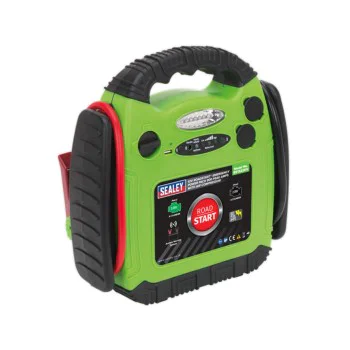
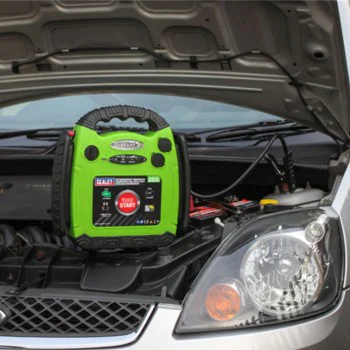
A jump starter is a portable starting device that delivers a short burst of high current to the battery and starter system when the battery is dead. It is a practical addition to the toolkit for drivers, service centers, fleets, and garages because it allows the car to be started independently without the need for a second car or standard jumper cables. Its compact design allows for storage in the trunk, a service cabinet, or a work van, while the more powerful models are suitable for larger engines and more intensive use.
This section features jump starters for passenger cars, SUVs, vans, light commercial vehicles, motorcycles, and equipment with 12 V electrical systems. More specialized models support 24 V systems for trucks, agricultural equipment, and heavier machinery. The differences between individual devices relate to starting current, built-in battery capacity, clamp type, safety features, dimensions, additional outputs, and included accessories.
What is a jump starter and what is it used for?
A jump starter stores energy in a built-in battery and releases it briefly when attempting to start the engine. This compensates for a weak or dead battery when the engine fails to turn over. The device is useful in cold weather, for a car that has been stationary for a long time, when lights are left on, when problems arise after short city trips, or when working off-road where outside help is unavailable.
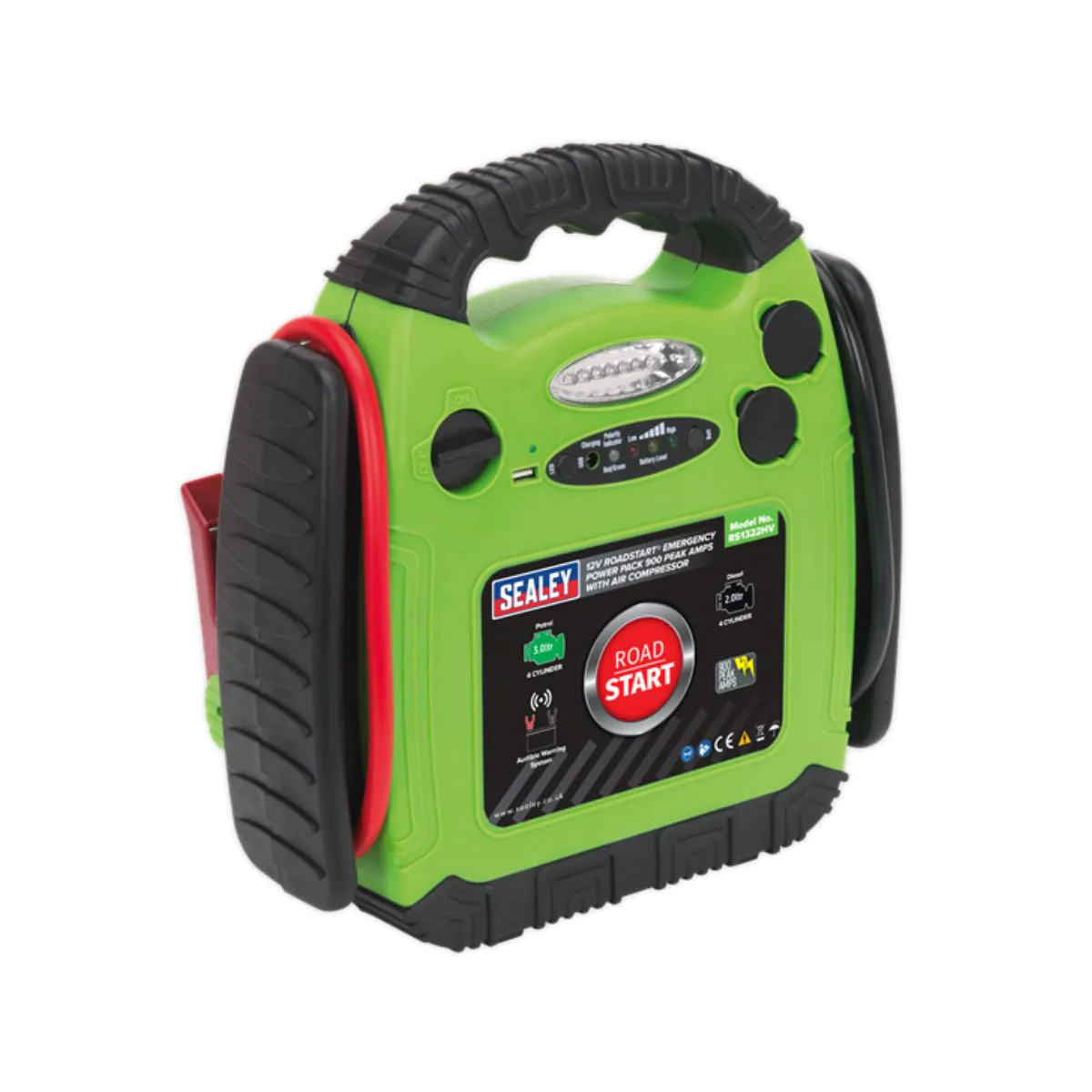
In addition to the starting current function, some models feature USB ports for charging phones, a flashlight, a battery status display, LED lighting, adapters, and protected cables. Some jump starters are combined with a tire inflator or additional 12V power outlets. Such solutions are convenient for travel, emergency kits, and mobile service teams.
Types of Jump Starters
Lithium jump starters are the most common. They are lightweight, compact, and easy to store in a car. The appropriate model is selected based on the engine, voltage, and actual starting current requirement. Larger boosters are designed for service work, car dealerships, fleet maintenance, or vehicles with higher electrical consumption during startup.
| Device Type | Practical use | What to look for |
|---|---|---|
| Compact lithium jump starter | Light vehicles, motorcycles, travel trunk | Starting current, capacity, size, USB ports |
| Powerful jump starter | Service vehicles, SUVs, vans, larger engines | Peak current, cables, clamps, mode for severely discharged batteries |
| Jump starter with additional features | Travel, emergency equipment, mobile work | LED light, air compressor, adapters, protective case |
| 12/24 V jump starter | Trucks, vans, agricultural and construction equipment | Voltage compatibility, current reserve, duty cycle |
How to choose the right jump starter
When choosing a jump starter, the first thing to consider is the voltage of the electrical system. Most passenger cars operate on 12 V, while some commercial vehicles and heavy equipment use 24 V. Incompatible voltage poses a risk to the electronics and the battery, so this parameter must match the vehicle's requirements.
The next important parameter is the starting current. Gasoline engines typically require a lower starting current, while diesel engines have higher resistance during cranking, especially in winter. The larger the engine displacement, the more powerful the jump starter needs to be. Manufacturers specify the maximum peak current and recommended engine displacement; this data serves as a useful guide when comparing models.
Battery capacity indicates how much energy the device can store. Higher capacity allows for more starting attempts between charges and longer operation of additional features such as a flashlight or USB charging. For a vehicle that travels long distances, for winter use, or for service work, it is wise to choose a model with a larger capacity.
Cables, Clamps, and Protections
The quality of the cables and clamps directly affects the starting current and safety. A good clamp should grip the terminal firmly, have a stable contact area, and feature clear color coding. Systems with protection against reverse polarity, short circuits, overloads, overheating, and reverse current are practical. Indication via LEDs or a display facilitates proper connection and reduces the risk of error when working in the dark or in cold weather.
Size, Housing, and Storage
For daily use in a car, a compact size is a major convenience. The device should fit in a glove compartment, trunk, or car accessory case without taking up too much space. For workshops and service centers, a larger housing is not an issue when it offers greater current capacity and more durable cables. A case or hard case keeps the device, clamps, and adapters organized, which is useful for mobile work.
Practical uses in the garage, service shop, and on the road
The jump starter is a valuable helper in emergency situations outside of town, for starting the car in the morning during winter, for maintaining a vehicle that isn't driven regularly, and for servicing multiple vehicles. In a service setting, the jump starter saves time when receiving, moving, and diagnosing vehicles with a weak battery. For owners of vans, campers, boats, or garden equipment with a battery system, such a device ensures additional operational readiness.
For home use, the compact model with clear indicators and built-in protections is fully sufficient for a standard passenger car. For professional use, models with higher starting current, a durable housing, longer cables, and the ability to perform multiple starts are more suitable. For diesel engines, large SUVs, or light commercial vehicles, it is wise to allow for a larger reserve, as cold weather and the condition of the battery place a strain on the starting system.
Safe Operation and Maintenance
Proper use of a jump starter begins with checking the voltage, polarity, and charge level. The red clamp is connected to the positive terminal, and the black clamp to the negative terminal or to a recommended ground point on the vehicle, when the manufacturer's instructions require it. After a successful start, disconnect the device in the specified order and let the engine run to restore some of the battery's charge.
To ensure a long service life for the built-in battery, the jump starter should be recharged periodically and protected from moisture, extreme heat, and prolonged exposure to sub-freezing temperatures. If the device is stored in the trunk, checking the charge before the winter season is a good practice. Clean car terminals and securely attached clamps improve contact and reduce power loss during starting.
Jump starter from Toolsbox.bg for peace of mind on the road
When choosing, compare voltage, starting current, capacity, size, protections, and additional features. This way, you'll get a device that suits your car, driving style, and frequency of use. Browse the models at Toolsbox.bg and choose a jump starter for emergency starts, maintenance work, or a travel kit based on your actual needs.