
Border for plasterboard
Plasterboard hole saws for clean and precise holes
Plasterboard hole cutters are specialized cutting tools for drilling round holes in plasterboard, gypsum fiberboard, and similar materials during drywall construction, renovation, and installation. They are necessary for installing spotlights, recessed lighting fixtures, electrical boxes, outlets, switches, ventilation grilles, pipe penetrations, and other installation elements. The correct diameter and type of cutting edge ensure a clean cut, less chipping on the surface layer, and a more precise fit for the installation element.
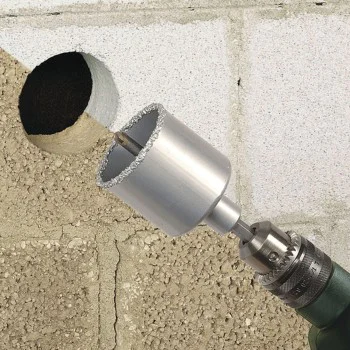
When working with drywall, the load on the tool differs from that on concrete, brick, or metal. The material is relatively soft, but the powdery core and paper facing require a sharp, even cut. Drywall drill bits are designed for controlled drilling with a drill, cordless screwdriver, or suitable drill, without excessive pressure and without tearing the surface.
Applications in drywall construction, renovation, and installation
This type of hole saw is found in every well-equipped finishing workshop. They are used by drywall installers, electricians, lighting technicians, plumbers, and DIY enthusiasts who value precise holes and a clean finish on the finished surface. For suspended ceilings, the hole saw creates openings for spotlights and LED panels, while for partition walls, it creates openings for junction boxes and cable runs.
For electrical installations, the most common diameters are those around standard junction boxes, while for lighting, sizes are selected based on the fixture, spring clips, and the manufacturer's specified hole dimensions. For ventilation, low-voltage installations, or pipe routing, larger diameters are required, where a stable centering drill bit is crucial for accuracy.
Differences between the various types of drywall drill bits
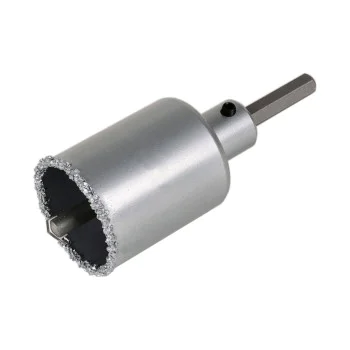
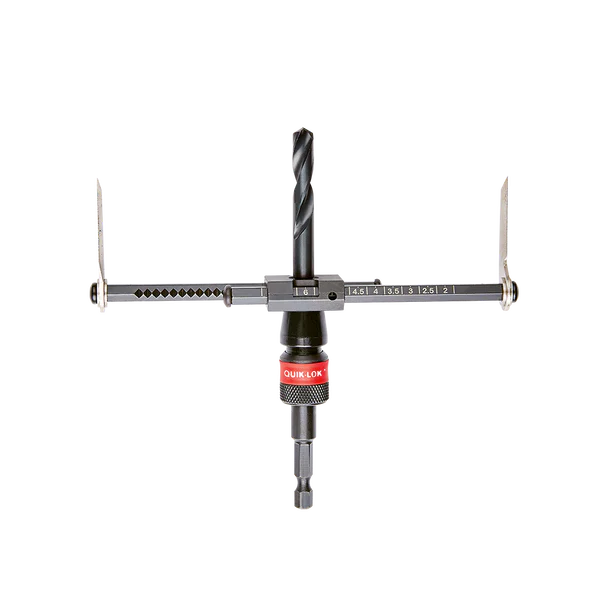
Hole saws differ in diameter, tooth material, body shape, shank, cutting depth, and package contents. Some models are single-size hole saws, while others come in sets with multiple diameters and a universal holder. Some models feature an adjustable cutting mechanism for a wider range of hole sizes, which is convenient when installing lighting fixtures of various sizes.
| Core bit type | Application | What to consider |
|---|---|---|
| Fixed hole saw | Repeating holes of a single diameter | Precise fit for a box, slot, or passage |
| Set of drill bits | Repair and installation work involving various holes | Number of diameters, holder, centering drill |
| Adjustable core bit | Non-standard-sized holes in surfaces | Stability during operation, cutting range |
| Carbide or reinforced teeth | Harder surfaces, multi-layered material | Compatibility with the material and machine speed |
Selection by size, machine, and application
Bore diameter
Size is the first criterion when purchasing. The hole for a mounting box, cutout, or passage must match the actual outer diameter of the component, not just the approximate value in the design. A small difference of a few millimeters affects the fit: a hole that is too narrow makes installation difficult, while one that is too wide leaves a visible gap or weakens the grip.
Grip and machine compatibility
Drywall drill bits work with a holder, a centering drill bit, and a chuck adapter for the machine. Hexagonal and cylindrical shanks are common; in some sets, the holder is interchangeable. When selecting a drill bit, ensure the chuck is compatible with your drill or cordless screwdriver, the available chuck type, and the recommended RPM for the specific accessory. For larger diameters, a machine with good speed control and a stable grip is more suitable.
Material and shape of the cutting edge
For standard drywall, look for sharp teeth that cut cleanly through the paper and do not crumble the core. For higher-density panels, double-layer, impregnated drywall, or combinations with a wood base, choose a more durable cutting edge. Carbide teeth and reinforced crowns are suitable for heavy-duty work, while lightweight steel crowns are practical for periodic repairs and individual holes.
Practical guidelines for clean drilling
Clean drilling begins with precise marking of the center. The center drill guides the bit and reduces slippage on the paper surface. Work at moderate speed and with even pressure, holding the machine perpendicular to the surface. For larger diameters, the pressure must be applied smoothly, as excessive force deforms the cardboard and leaves an uneven edge.
When drilling into an existing wall or ceiling, it is advisable to check the route of cables, profiles, and pipes using available measuring tools. Drywall often conceals metal framing, electrical wires, and insulation, so the drilling point should not be chosen based solely on visual judgment. After cutting, dust is removed from the drill bit, and the teeth are inspected for dullness or contamination.
Kits, Accessories, and Maintenance
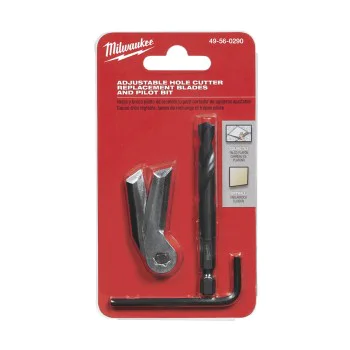
Plasterboard hole saw sets are convenient for installers who work with different hole sizes throughout the day. They save time when changing diameters and ensure organized storage. When choosing a set, check for a holder, centering drill bits, spare parts, and a case. Individual core bits are practical when a specific size is needed for a repetitive task.
Proper maintenance extends the cutting tool's service life. After use, clean the core drill of plaster dust, check the centering drill bit, and store it in a dry place, separate from heavy metal parts that could damage the teeth. Dull teeth overheat the material, tear the drywall, and strain the machine, so when visible wear occurs, it is wiser to switch to a new bit.
Drywall drill bits at Toolsbox.bg
At Toolsbox.bg, you'll find drywall drill bits for installing lighting, electrical boxes, ventilation openings, and other finishing tasks. Select the diameter, chuck type, and accessory set according to the specific task, the machine, and the frequency of use. This ensures a more precise hole, a cleaner surface, and a smoother installation process for both professional projects and home renovations.