
Milling machine for metal
Metal milling machine for precision machining
A metal milling machine is a machine for machining workpieces using a rotating cutting tool, in which material is removed in a controlled manner from the surface of the workpiece. This type of equipment is found in workshops, repair shops, production facilities, training centers, and well-equipped home workshops. It is used to machine grooves, flat surfaces, holes, chamfers, bearing seats, keyways, and various profiles in steel, aluminum, non-ferrous metals, and alloys.
When selecting a metal milling machine, customers typically compare power, table size, axis travel, spindle type, speed range, body stability, and available settings. The differences between individual machines go beyond just size. More compact models are suitable for repairs, prototyping, and small parts, while heavier milling machines provide more stable operation for deeper cuts and machining of harder materials.
What does a metal milling machine include?
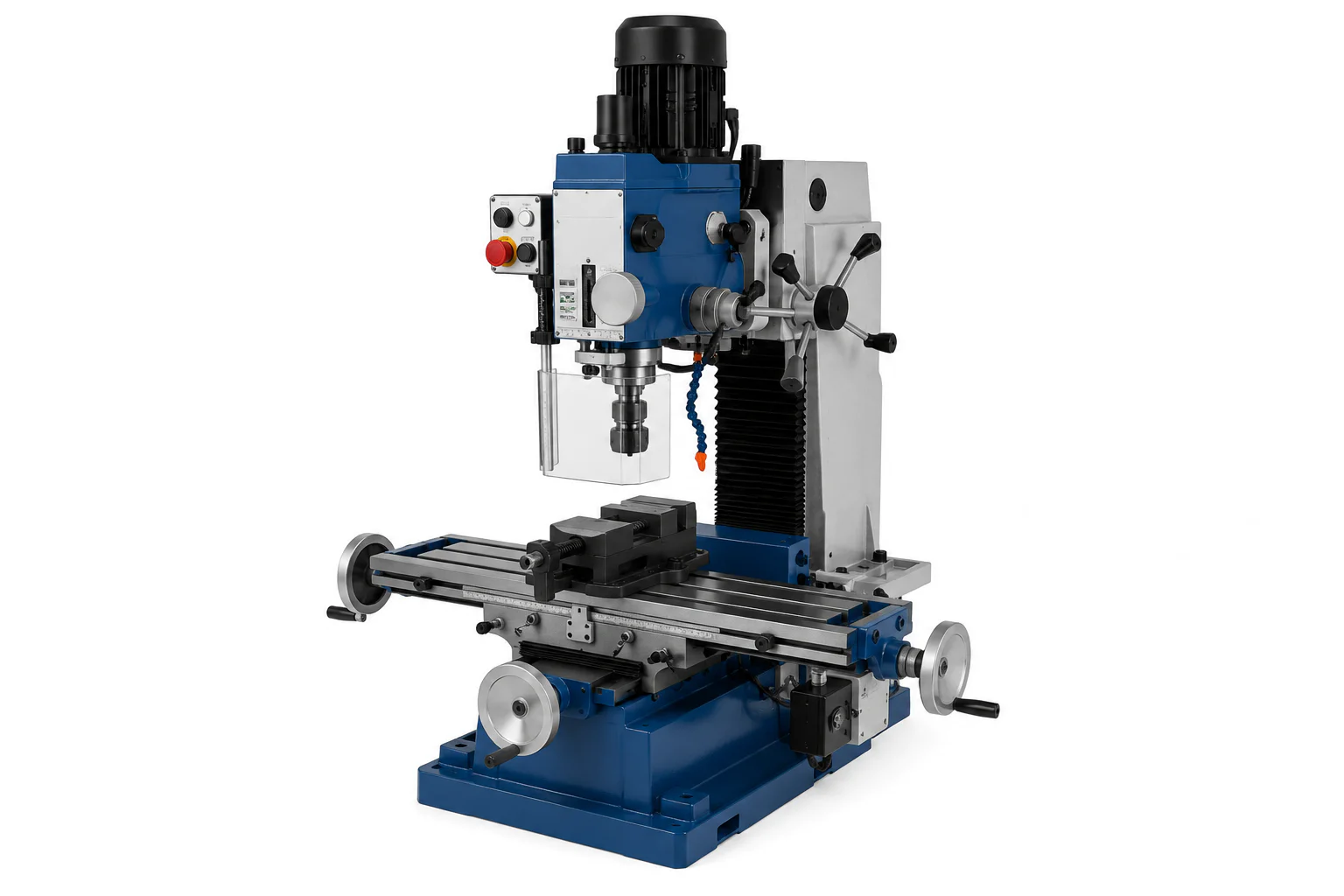
The main components of a metal milling machine are a solid base, a column, a worktable, a spindle, a feed mechanism, and a speed control system. The worktable usually has T-slots for clamping vise jaws, clamping bars, or other clamping elements. The spindle holds the cutting tool via a collet, chuck, mandrel, or other holder depending on the machine's design.
In metal-cutting operations, accuracy depends on several factors: machine rigidity, proper workpiece clamping, cutter selection, speed, feed, and cooling. Therefore, in practice, the milling machine is considered together with its accessories and consumables-cutting tools, collets, clamps, indicators, measuring instruments, coolants, and safety equipment.
Applications in workshops, service centers, and assembly
A metal milling machine is useful for one-off production, repairing machine parts, finishing components, and preparing parts before assembly. In a service environment, the machine is used for surface finishing, enlarging holes, creating slots, and precisely fitting parts. In a small workshop, it provides dimensional control when standard hand tools are insufficient.
- Flat milling-machining of flat surfaces with controlled depth.
- Groove machining-cutting keyways, slots, and technical grooves.
- Profile milling-shaping edges, chamfers, and radii with a selected cutting tool.
- Drilling and reaming-finishing holes with proper setup and clamping.
- Fine adjustment-fitting parts during repair, installation, and maintenance of equipment.
Types of machines and differences between them
For metal milling machines, the design determines the working range. Bench-top models are a good option for small parts, training, light maintenance, and hobby work with higher precision requirements. They take up less space and can be easily combined with a vise, dividing head, or collet set.
Larger column and vertical mills are designed for more intensive work and for larger parts. In these machines, the weight and rigidity reduce vibrations and help achieve a smoother surface. Some models feature multiple speeds, a tilting head, digital displays, or an automatic feed option, but the availability of these features varies by machine.
| Router Type | Typical use | What to look for |
|---|---|---|
| Bench router | Small parts, repairs, training, home workshop | Table size, stable mounting, speed range |
| Vertical router | Channels, flat surfaces, holes, maintenance operations | Axis travel, spindle, column rigidity |
| Heavier-duty machine tool | Heavier-duty machining and larger workpieces | Weight, power, feed rate, adjustability |
How to choose a metal milling machine
Before purchasing, it is wise to determine the dimensions of the parts, the material, the frequency of use, and the precision required. A small-table metal milling machine will not be suitable for long workpieces, while an oversized machine for small tasks takes up more space and requires more extensive workplace organization. Steel requires greater stability and the right cutting tool, while machining aluminum and brass is easier but still requires a secure clamping and the correct spindle speed.
Compare the technical specifications of the machines based on the following criteria:
- Motor power-affects the ability to work with harder materials and achieve greater material removal.
- Work table and travel - determine the maximum workpiece size and ease of positioning.
- Spindle speed-important for different cutter diameters and different metals.
- Chuck type-check compatibility with collets, chucks, and holders.
- Adjustments and scales-facilitate repeatability and precise feed.
- Weight and rigidity-reduce vibration and help achieve a clean machined surface.
Cutting tools, accessories, and compatibility
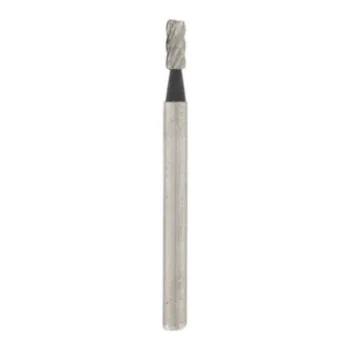
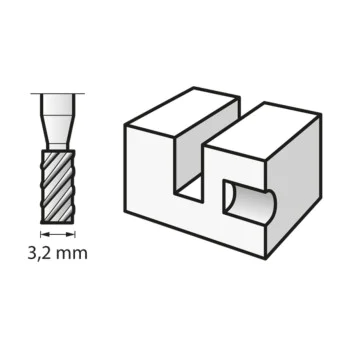
Good results when working with a metal milling machine depend not only on the machine but also on the right tool. End mills, face mills, slot mills, drill bits, and chamfering tools have different geometries, materials, and purposes. For steel, more durable cutting edges are required, while for aluminum, the shape is important for effective chip removal.
Accessories are crucial for safety and precision. The vise must hold the workpiece without twisting; clamping sets are selected according to the T-slots on the table; and measuring tools help control dimensions. When purchasing a metal milling machine, it is helpful to review what holders, collets, and fixtures are needed for specific operations.
Safe Operation and Maintenance
Metalworking requires stable workpiece clamping, a properly positioned tool, and a clean work area. Chips are removed with a brush or hook, not by hand. Safety goggles, work clothing without loose parts, and speed control reduce the risk during milling. Cooling and lubrication help extend tool life and improve surface quality when the operation and material require it.
Maintenance of a metal milling machine includes cleaning the guides, lubricating according to the manufacturer's instructions, checking for play, inspecting clamping elements, and storing cutting tools in a dry environment. A well-maintained machine retains its accuracy longer and performs more predictably during repetitive operations.
Choose a metal milling machine for your work
At Toolsbox.bg, you'll find metal milling machines for a variety of workloads-from compact solutions for precision parts to more robust machines for workshop use. Compare specifications, check compatible accessories, and choose a configuration that matches the material, workpiece dimensions, and required machining accuracy.