
Sweepers
Taps for precision cutting and repair of internal threads
Taps are used for cutting internal threads in holes, repairing damaged threaded connections, and for assembly work in a workshop, service center, or on a construction site. They are part of the group of taps and dies, but are specifically designed for work in internal holes where the thread must be precise, clean, and compatible with bolts, studs, or screws of the corresponding profile.
When selected correctly, these taps allow for the machining of steel, stainless steel, cast iron, aluminum, brass, bronze, copper, plastics, and other materials. The differences between individual items relate to size, thread pitch, type of flute, material of the cutting edge, method of operation, and whether they are intended for manual or machine threading. These parameters directly affect the accuracy, tool life, and cleanliness of the thread profile.
Where are taps used?
Taps are used in machine repair, parts manufacturing, metal structure assembly, automotive service, equipment maintenance, and fixture fabrication. For home use, they are useful for repairing threads in metal housings, replacing fasteners, or creating a new threaded hole in a part.
In a professional setting, the precision of the thread is critical to the strength of the joint. An incorrect size or pitch can lead to play, uneven tightening, or damage to the part. Therefore, when selecting a tap, one must consider not only the markings on the tool but also the material being worked on, the depth of the hole, and the method of driving.
Types of taps based on operating method
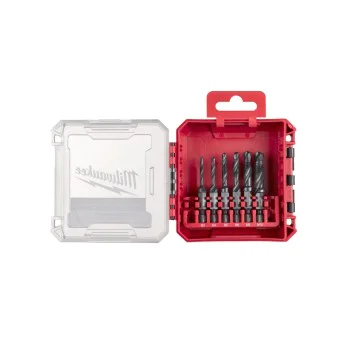
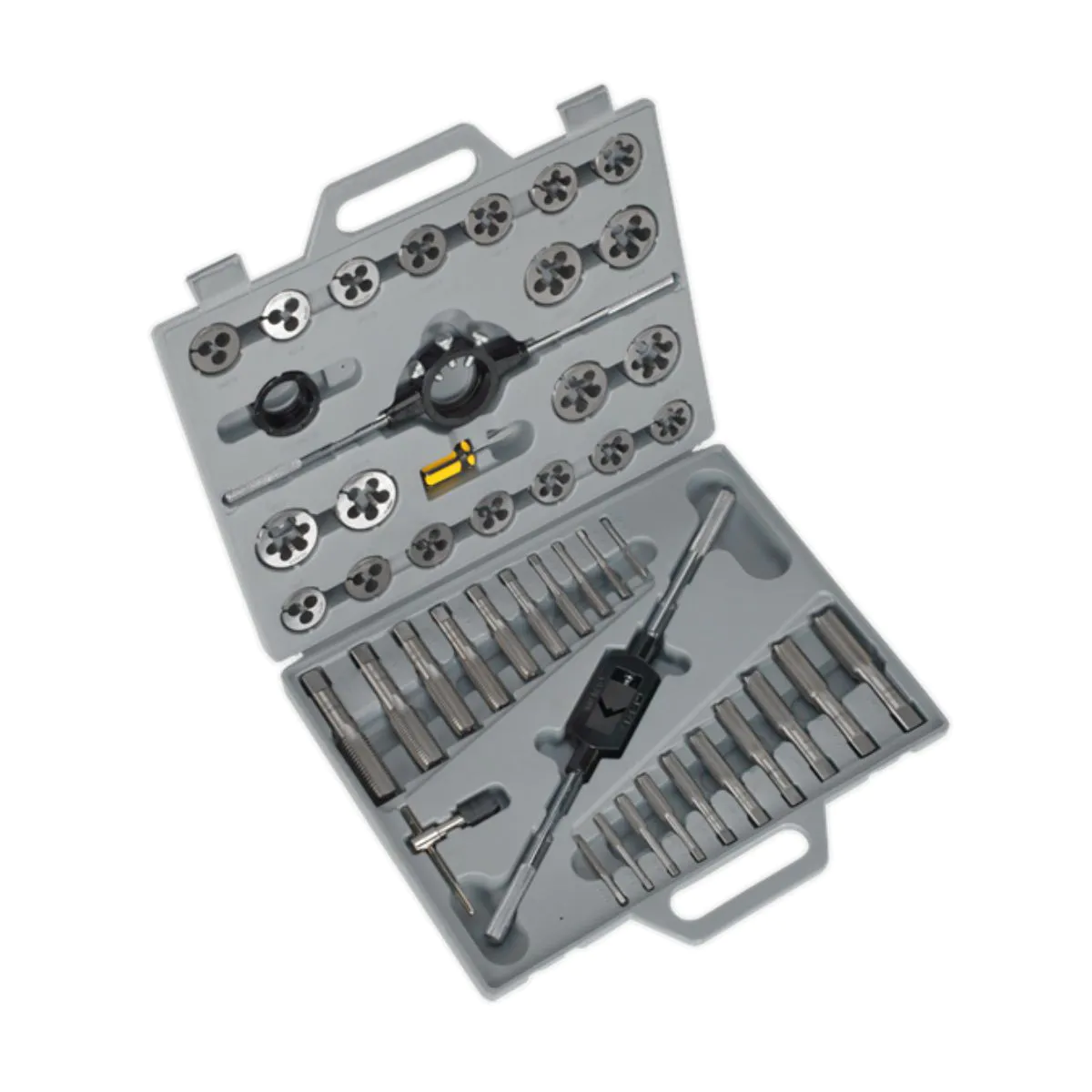
Hand taps are used with a wrench and provide good control for single holes, repairs, and finishing operations. With them, the work is performed gradually, with periodic back-turning to break off the chips. They are often offered in sets of several sizes for rough, intermediate, and finish cutting.
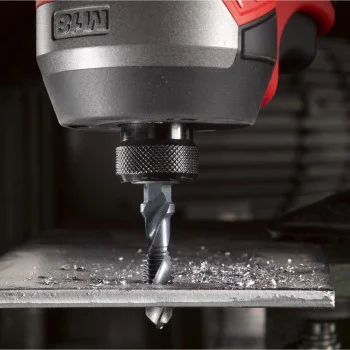
Machine taps are designed for drills, bench drilling machines, threading machines, and CNC equipment. They are engineered for smoother feed and higher productivity during batch or repetitive machining. With these, the correct speed, proper lubrication, and stable clamping of the workpiece are crucial for a clean thread and a lower risk of breakage.
- Hand taps-for repairs, single holes, and work with a tap wrench.
- Machine taps-for drilling and threading machines when consistent results are required.
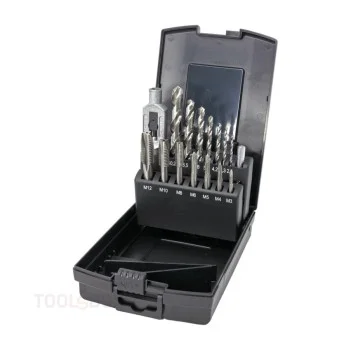
- Sets-a practical choice when working with different thread sizes.
- Specialized profiles-for metric, fine, pipe, or other thread standards depending on the task.
Sizes, thread standards, and compatibility
The most common are metric taps, designated by sizes such as M3, M4, M5, M6, M8, M10, M12, and others. In addition to the diameter, the thread pitch is also specified. The standard pitch covers many assembly tasks, while fine threading is selected for more precise connections, thinner walls, or requirements for smoother adjustment.
Before cutting, the hole must be drilled to the correct diameter. A hole that is too narrow puts stress on the cutting edges and increases the risk of breakage, while a hole that is too wide reduces the strength of the thread. For blind holes, the length of the working section and chip evacuation must be monitored, while for through holes, chips can be evacuated forward or backward depending on the geometry of the channel.
Material and coating of the cutting edge
Taps are most commonly made of tool steel or high-speed steel (HSS). HSS variants are preferred for more intensive work and machining of metals with higher hardness. Some versions feature coatings for reduced friction, better heat dissipation, and longer service life when used correctly. For aluminum and non-ferrous metals, a geometry that does not trap chips and reduces material buildup on the cutting edges is desirable.
How to Choose the Right Tap
The selection begins with the thread standard and the size of the fastener to be installed. Next, the pitch, hole type, and material of the workpiece are selected. For steel and stainless steel, more durable cutting edges are required, and the use of a coolant is mandatory. For aluminum, brass, and bronze, flutes that clear chips cleanly and do not clog the hole are beneficial.
For one-off repair work, a manual set is practical and easy to control. For mass production, assembly lines, or regular maintenance work, machine taps save time and ensure consistent thread dimensions when the machine is properly adjusted. For blind holes, models that can cut close to the bottom are preferred, while for through holes, spiral or straight flutes are often preferred depending on the material.
Operation, Safety, and Maintenance
For a clean thread, the workpiece must be securely clamped, and the tool must be guided along the axis of the hole. An angled feed damages the profile and can break the tap inside the workpiece. Lubrication reduces friction, facilitates cutting, and protects the cutting edges. When working by hand, make short forward turns and a slight backward movement to break off the chip.
After use, taps should be cleaned of chips and oil residue, then stored separately or in a case to prevent damage to the cutting edges. It is not recommended to work with a worn or chipped tool, as the thread becomes inaccurate and the risk of damaging the workpiece increases. For hard materials, deep holes, and precision joints, it is helpful to use the correct holder, maintain a steady feed, and use an appropriate speed.
Taps for workshops, service centers, and installation
At Toolsbox.bg, you can select taps for repair, installation, metalworking, and equipment maintenance based on size, thread standard, and application. Browse the available items and choose a tool that matches the material, hole, and load requirements of your task.