
Digital levels
Digital levels for precise measurement of slope and level
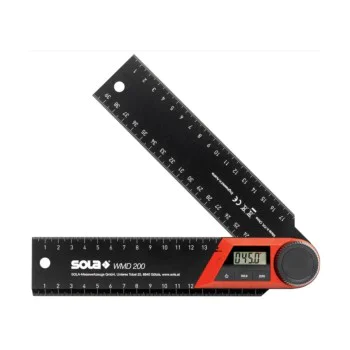
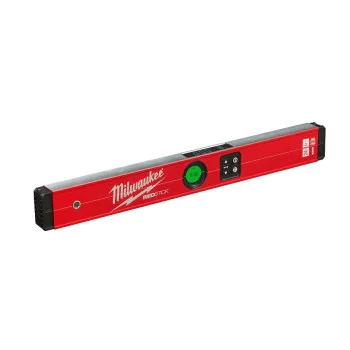
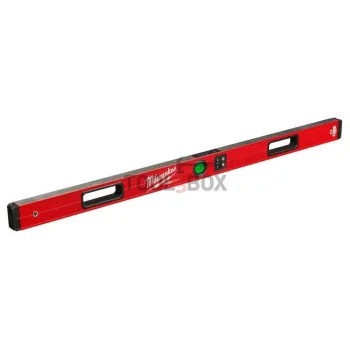
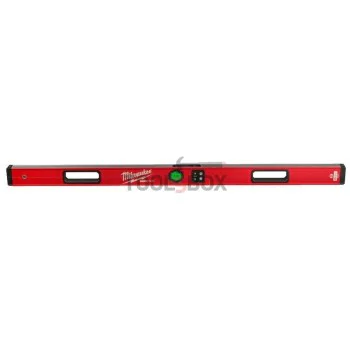
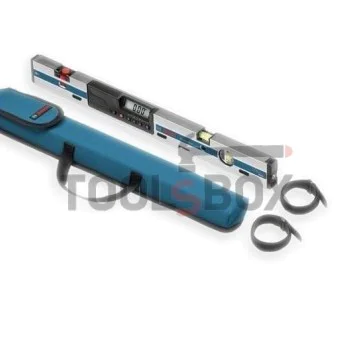
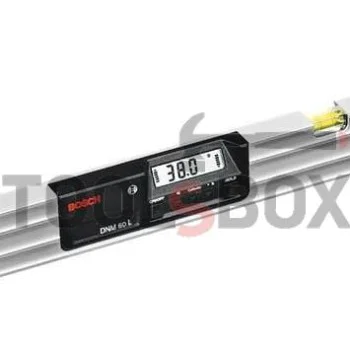
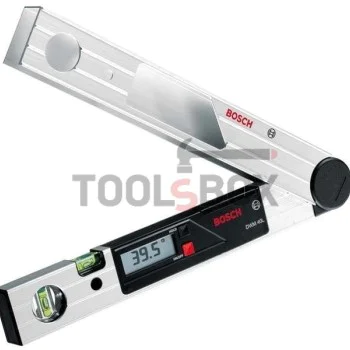
Digital levels are measuring instruments for quick and accurate checking of horizontal, vertical, and inclined surfaces. They combine the familiar form of a manual level with an electronic display that shows values in degrees, percentages, or millimeters per meter, depending on the specific model. This makes the alignment of furniture, structures, machines, profiles, pipe runs, and cladding clearer and easier to control.
For craftsmen, installers, construction crews, and discerning DIYers, the digital level is a handy tool for tasks where the visual bubble doesn't provide enough detail. Electronic readout reduces uncertainty when reading the bubble and facilitates repeatable measurements when installing identical elements, adjusting angles, and checking slopes.
What digital levels include
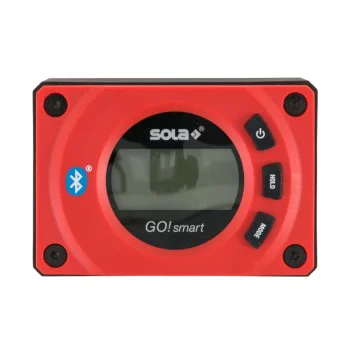
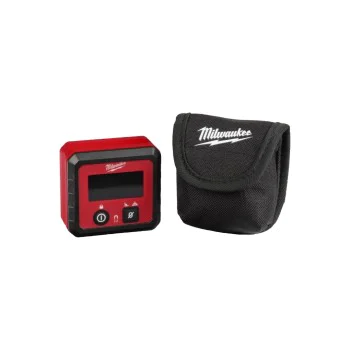
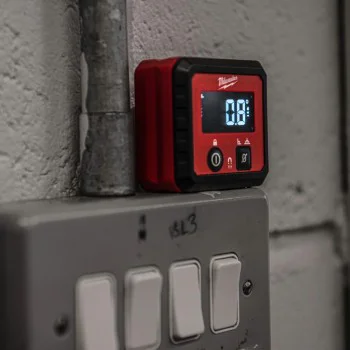
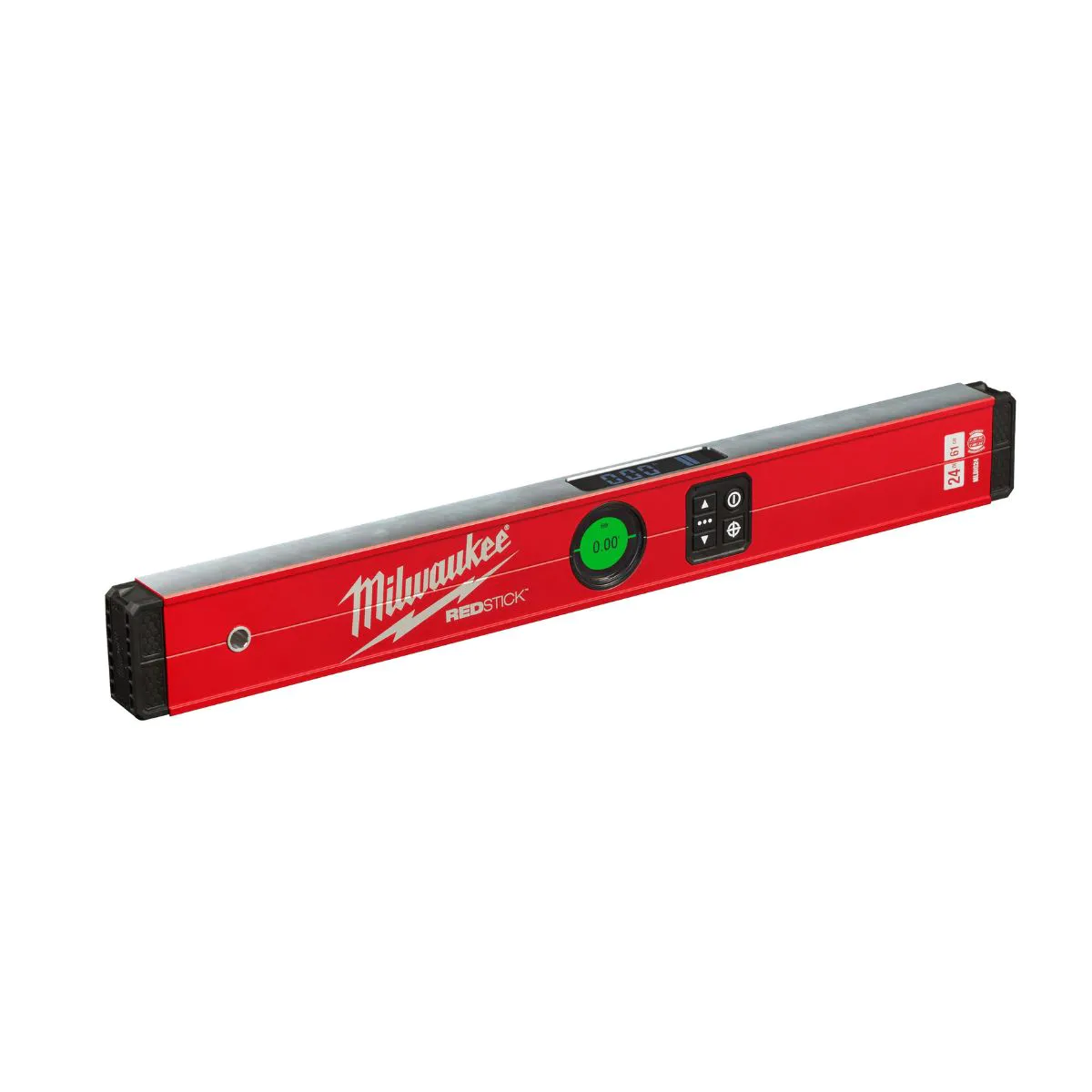
Digital levels can be compact devices for installation tasks, standard levels with a longer body for construction and repair, magnetic models for working on metal profiles and pipes, as well as more precise variants for service, workshops, and technical maintenance. Some models feature classic vials, an electronic display, a zeroing function at any angle, reading hold, and an audible signal when a set position is reached.
The differences between the individual tools are evident in the length of the body, the type of display, the measurement range, the resolution, the power source, the magnetic base, the body protection, and ease of use when working overhead or in tight spaces. A shorter device is practical for installing kitchens, doors, shelves, and racks. For drywall, formwork, metal structures, and longer surfaces, the longer housing makes it easier to check for levelness.
Applications in construction, renovation, and installation
Digital levels are used for installing windows, doors, suspended ceilings, wall cladding, countertops, railings, stair components, and metal frames. When laying flooring and cladding, they help control the slope toward drains, terraces, and drainage lines. In plumbing and heating installations, they provide a quick check of pipe sections, brackets, and supports.
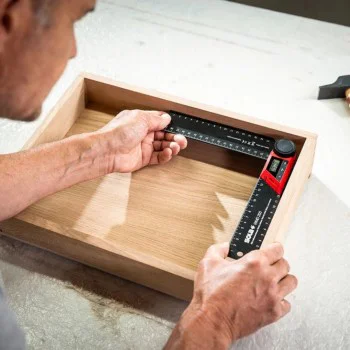
In a workshop, the digital level is useful for adjusting machines, tables, stands, guides, and fixtures. In carpentry and furniture-making, it aids in the precise alignment of cabinets, doors, shelves, and sliding mechanisms. For home use, it is invaluable when hanging TVs, pictures, cabinets, curtain rods, and decorative elements, where a straight line and precise angle make a visible difference in the final result.
How to Choose the Right Digital Level
When choosing a digital level, consider the type of work, the length of the items being measured, and the environment in which the tool will be used. For installing furniture and interior elements, compact sizes ensure maneuverability. For construction sites, profiles, and longer lines, models with greater length and a clearly visible display are more convenient. For metal structures, the magnetic base frees up your hands and holds the device securely on the surface.
- Body length: shorter models are convenient in tight spaces, while longer ones provide better control over the work surface.
- Display: Large digits, backlighting, and the ability to flip the display make it easier to work in low light or at awkward angles.
- Measurement modes: degrees, percentages, and slope in mm/m are useful for various installation and construction tasks.
- Magnetic base: valuable for metal profiles, pipes, frames, machinery, and service work.
- Housing and protection: aluminum body, well-shaped handles, and protected edges support long-term use on-site.
- Power supply: Check the battery type and ensure easy access to the battery compartment for replacement.
Comparison by type of work
| Type of digital level | Application | Advantage |
|---|---|---|
| Compact | Furniture, shelves, tight spaces | Easy to position and carry |
| Standard with a longer body | Walls, profiles, countertops, cladding | Better control of the plane |
| Magnetic | Metal structures, pipes, maintenance | Stable attachment to metal |
| With advanced features | Repeatable angles, settings, technical installation | More detailed readings and convenient control |
Accuracy, readability, and ease of use
Digital levels are most valued for their clear readings. On models with a relative zeroing function, the user sets their own reference position and tracks the deviation from it. This is useful when installing sloped elements, railings, piping, or components that are not intended to be horizontal.
The easy-to-read display is particularly useful when working overhead, in corners, or on dark surfaces. On some models, the display rotates when the tool is turned, making it easier to read from different positions. The audible signal saves time during leveling, as the user doesn't have to constantly watch the screen but can simply monitor when the desired value is reached.
Compatibility with the work environment and maintenance
Digital levels work most accurately on clean and stable surfaces. Before measuring, the contact surface must be free of dust, dried-out construction mixtures, metal shavings, or grease marks. When working on a job site, it is advisable to protect the device from strong impacts, drops, and prolonged exposure to moisture, as the electronics and display are sensitive to rough handling.
After finishing work, clean the housing with a dry or slightly damp cloth and store the device in a case or compartment of a toolbox. Replace the batteries in a timely manner to avoid interruptions during installation. For longer storage, it is advisable to remove the batteries to prevent damage to the contacts.
Selecting Digital Levels at Toolsbox.bg
Digital levels are a practical addition to equipment for construction, repair, installation, workshops, and service centers. They combine the convenience of a manual level with electronic readouts, providing clearer control over horizontal, vertical, and slope measurements. Browse the selection at Toolsbox.bg and choose a tool with the appropriate length, features, and design for your type of work.