
Cobourg for tools
Tool Holster for Organized Work on a Belt
A tool holster is a practical holder for carrying hand tools, fasteners, and small accessories directly on your work belt. It keeps your hands free while moving, working on a ladder, scaffolding, roof, or in tight spaces, and keeps the necessary accessories close at hand. A well-chosen tool holster saves time during installation, repair, and maintenance work because pliers, screwdrivers, utility knives, tape measures, markers, or bits remain organized and easy to access.
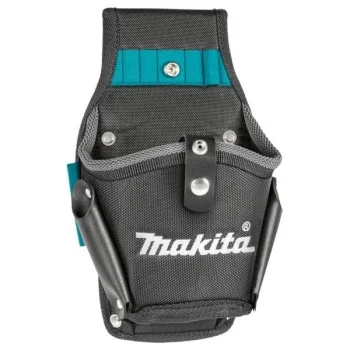
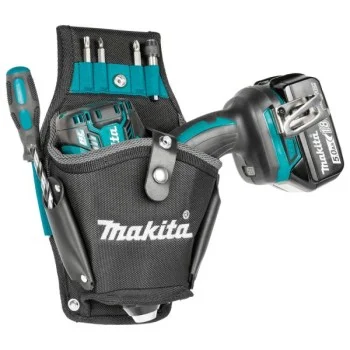
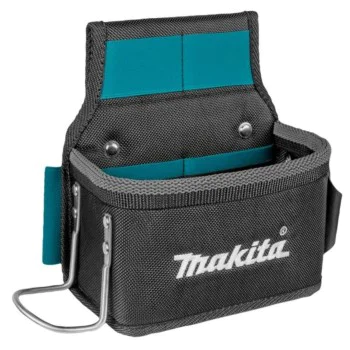
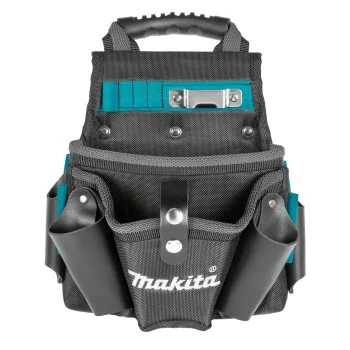
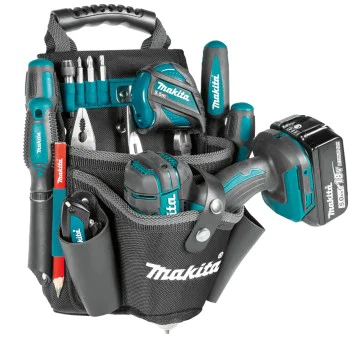
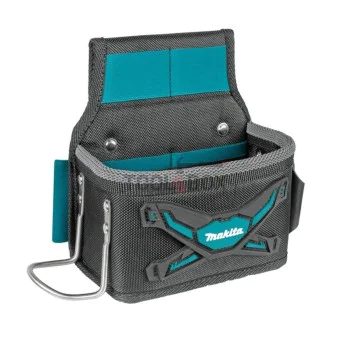
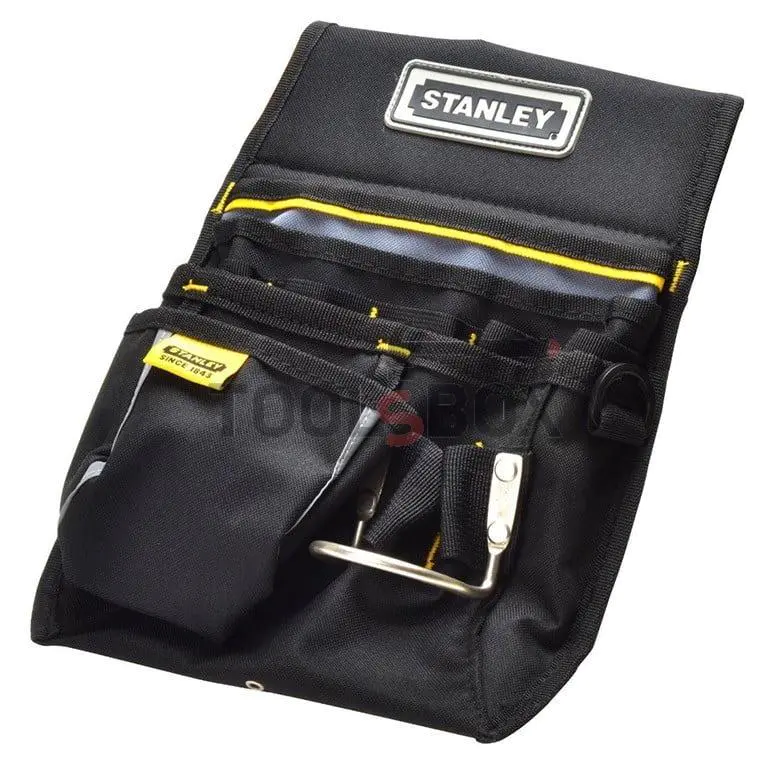
This section includes single-tool holders, multi-pocket models, tool holsters with a metal loop for a hammer, screw pockets, bit compartments, and versions with a clip or belt loop. A tool holster pairs well with tool bags, work belts, and fabric organizers when a more flexible way to carry small tools is needed on the job.
Applications in installation, repair, and maintenance
For electrical work, furniture assembly, plumbing repairs, drywall installation, machine maintenance, or finishing construction work, the tool holster provides quick access to the most frequently used hand tools. For professional teams, this is a convenience when working on job sites where constantly returning to a toolbox or bag slows down the task. For home use, a tool holster is useful for small repairs, hanging items, assembly, or working in a garage or workshop.
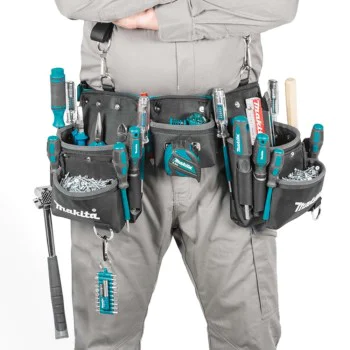
Different trades require different configurations. An electrician typically carries pliers, a phase tester, screwdrivers, and electrical tape. A furniture assembler needs bits, a pencil, a tape measure, and a small knife. A construction worker often needs a place for a hammer, nails, screws, and a marker. That's why the number of pockets, their depth, and how they're secured are crucial when choosing the right model.
Differences Between the Main Types
Models differ in shape, size, material, and fastening. A compact tool holster is convenient for one or two frequently used tools. Larger versions have several compartments and distribute the weight more evenly across the belt. Some designs are made of genuine leather, others of fabric with reinforced seams, polyester, or nylon. There are rigid and semi-rigid styles that protect the pockets from crushing and make it easier to retrieve the tool with one hand.
| Type | Practical Use | What to Consider |
|---|---|---|
| Single holster | Carrying pliers, a screwdriver, a knife, or a marker | Tool size and pocket depth |
| Multi-pocket holster | Combination of several hand tools and small fasteners | Number of compartments, weight distribution, and accessibility |
| Holster with a hammer loop | Construction, carpentry, installation work | Strength of the loop and ease of movement |
| Holster with clip | Quick attachment and removal from a belt | Stability of the grip and belt width |
Choosing a tool holster based on the task
The right choice starts with the tools you carry most often. If the job requires only pliers and a screwdriver, the compact version will be lighter and more convenient. For service work involving more supplies, a model with multiple pockets is more useful because it separates screws, dowels, bits, pencils, and small accessories. When carrying a hammer, look for a tool holster with a metal or reinforced loop that holds the tool securely while moving.
- Size and shape: the pockets should hold the specific tools without squeezing them too tightly or letting them fall out.
- Material: Leather is resistant to friction and wear, while textile materials are lightweight and flexible for daily use.
- Attachment: Consider the belt width, the type of clip or buckle, and whether you prefer to wear it on the left or right side.
- Weight distribution: if carrying more gear, choose a model that doesn't pull on the belt at a single point.
- One-handed access: Open pockets and sufficient rigidity of the body facilitate work at height and during quick assembly.
Materials, comfort, and safety
A tool holster is constantly subjected to sharp edges, metal handles, dust, and contact with rough surfaces. That's why reinforced seams, rivets, sturdy edges, and a solid back are valuable features. For leather versions, it is best to keep the material dry and clean. For textile models, dust and small construction debris can be easily removed with a brush, and pockets should be cleared of accumulated fasteners after work is completed.
Safety depends on proper loading. Sharp tools should be placed with the working end down only when the pocket is deep enough and protected. Heavy tools should not be carried in a small holder, as they can upset your balance when climbing a ladder. The right tool holster holds accessories securely but does not get in the way when squatting, bending over, or passing through narrow spaces.
Compatibility with Bags, Belts, and Accessories
The tool holster is often part of a larger carrying system. It can be used on its own with a work belt or together with a tool bag, organizer, fastener pocket, and tape measure holder. When combining with other accessories, leave enough space around the hip and waist so that movement is not restricted. For prolonged professional use, a wider, padded belt reduces pressure and makes carrying more comfortable.
Browse the options at Toolsbox.bg and choose a tool holster based on the type of work, the number of accessories carried, the material, and the fastening method. This way, your tools stay within reach, organization is improved, and every installation or repair task proceeds more efficiently.